
Vandaag of morgen in huis

Kwaliteit gegarandeerd

Welkomstaanbiedingen ontgrendelen: GRATIS bezorging | Tot 80% korting | Gratis 30 dagen JoyPlus-proefperiode
Download de app
Descaling a coffee machine sounds simple: you pour a solution into the water tank, start the programme, and rinse through. Yet many households choose a product that doesn’t suit their appliance. This can lead to inadequate limescale removal, leftover residue, or damage to components.
As a Joybuy Product Recommendation Officer, I therefore start by looking at verifiable product details: the form of the descaler, its compatibility with your machine, and the number of treatments per pack. This way, you avoid a cheap purchase that turns out to be impractical or unsuitable.
A bathroom or toilet cleaner is designed for surfaces, not for the internal water system of a coffee machine. Products such as sprays, gels, or scouring creams can contain fragrances, surfactants, or other ingredients that are not suitable for contact with the water circuit.
Therefore, only use a product that states it is suitable for coffee machines, espresso machines, or the specific brand. A descaler for an espresso machine is not automatically the same as a universal bathroom limescale remover.
A 250 ml bottle of liquid descaler might provide just one treatment, whereas a pack of tablets contains multiple descaling cycles. So compare the price per full treatment rather than just the volume on the label.
Also pay attention to the recommended dosage. A higher concentration does not automatically make the process more effective and may conflict with the manufacturer’s instructions.
Descaling removes mineral deposits from pipes and the heating system. A cleaning tablet is typically intended for coffee oils and coffee residue. These products have different purposes.
For example, a JURA Cleaning Tablet 6-Pack 24225 is a product for a cleaning programme, not the same as JURA descaling tablets. Always check whether you need a descaler or a cleaner.
First, check the brand, model, and type of appliance. With a bean-to-cup machine, the descaling programme may require a fixed dosage or a specific tablet shape. A filter coffee machine may have a simpler procedure, but even then, the manual should be your guide.
Examples of brand-specific products include:
A product may also state it is suitable for other brands in its description, but always check this against your appliance’s manual.
Liquid descaler is handy if the manufacturer recommends a liquid or if you want to measure a dose directly. The De'Longhi EcoDecalk Mini DLSC200 comes in two 100 ml bottles. Philips Saeco CA6700/10 contains 250 ml of liquid.
Descaling tablets for coffee machines are compact and easy to store. Pay attention to the dosage per cycle. The JURA pack of 9 tablets uses 3 tablets per treatment according to the product information, making it good for 3 cycles. The Siemens TZ80032A contains 9 tablets and states 9 cleaning cycles.
Descalers are chemical products. Some liquids may be irritating or corrosive to skin and eyes according to safety information. Wear gloves if necessary, avoid splashes, and keep the product out of reach of children.
Follow the machine’s descaling steps and then rinse with the specified amount of clean water. Do not use extra cleaning agents and never mix different products together.
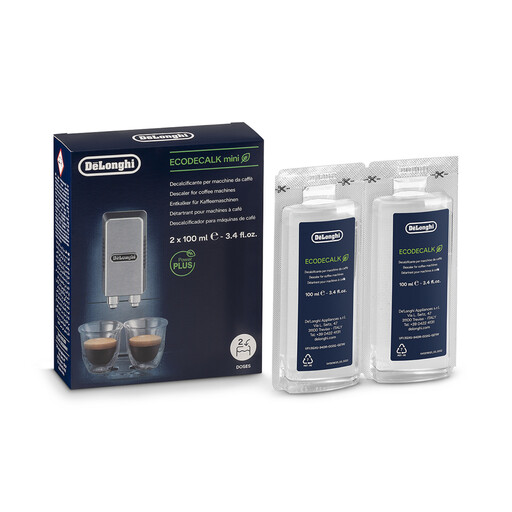
Why this fits the profile: The two 100 ml bottles offer a straightforward dosage for regular maintenance of automatic machines, filter machines, and piston machines.
It is clearly labelled as a coffee machine descaler, not a general limescale remover. According to the product information, the liquid is plant-based and biodegradable; still check compatibility in your manual.
Liquid form, 2 x 100 ml, and suitable for several types of coffee system according to the product description.
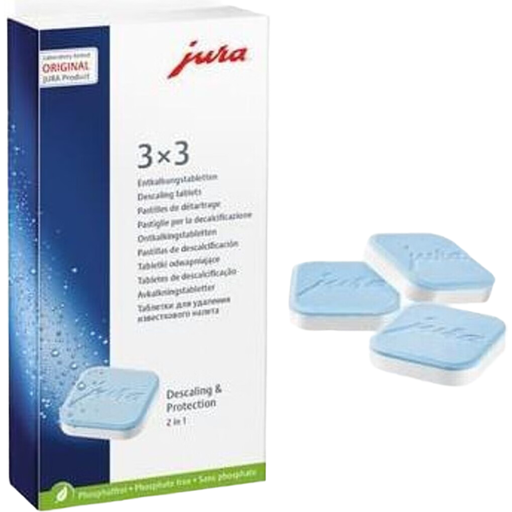
Why this fits the profile: Ideal for owners of a fully automatic JURA machine who want to use the recommended tablet form and a fixed dosage.
The pack explicitly states 3 tablets per descaling cycle. This makes the quantity per treatment clearer than with a generic product without brand-specific instructions.
9 tablets, good for 3 full cycles according to the product information; intended for fully automatic coffee machines.
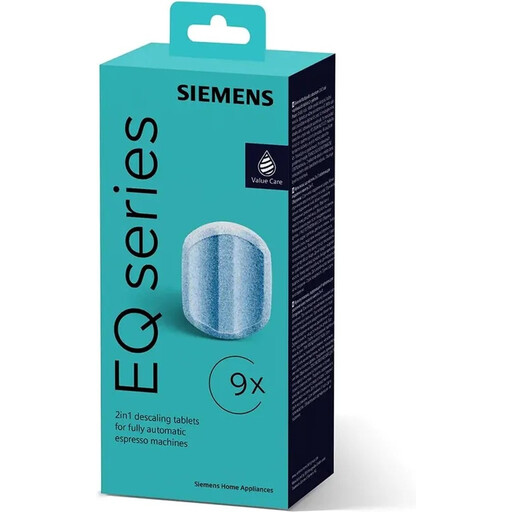
Why this fits the profile: A practical choice for households with a Siemens EQ.series bean-to-cup machine or a suitable built-in coffee machine that needs more frequent maintenance.
Compatibility is limited to Siemens EQ.series and certain built-in machines. This helps prevent you from using a general descaler without checking whether it suits your appliance.
9 tablets and, according to the product information, a 2-in-1 function for limescale removal and corrosion protection.
We have compiled a full, up-to-date list of products that fully meet these strict selection criteria and comply with current European safety regulations.
The frequency depends on water hardness, usage, and any alerts from the machine. A fixed period, such as every two to three months, may be stated on a pack as a guideline, but your machine’s instructions take priority.
This is not recommended for every machine. Vinegar can leave an odour or taste and, according to some manufacturers, may be unsuitable for seals or internal components. It is better to use a product intended for your coffee machine and follow the manual.
This varies by appliance and water quality. With heavy use or hard water, more frequent maintenance is needed. A descaling alert from the machine is a practical signal. Also check the manufacturer’s maintenance schedule.
Descaling tablets are designed to remove mineral limescale deposits. Cleaning tablets primarily tackle coffee oils and coffee residue. For complete maintenance, both may be necessary, but use them in separate programmes and according to the product instructions.
