
Vandaag of morgen in huis

Kwaliteit gegarandeerd

Welkomstaanbiedingen ontgrendelen: GRATIS bezorging | Tot 80% korting | Gratis 30 dagen JoyPlus-proefperiode
Download de app
Descaling a coffee machine seems straightforward: you buy a bottle or tablets, follow the programme and rinse afterwards. Yet many consumers choose the wrong product. A bathroom cleaner may tackle limescale on tiles, for example, but that does not automatically make it suitable for a water reservoir, pipes or a thermoblock. Not every coffee machine descaling tablet is compatible with every brand or model either.
This practical guide helps you compare a coffee machine descaler based on compatibility, dosage, ease of use and cost per descaling cycle.
Products such as Antikal, Ajax and other household limescale cleaners are generally intended for bathroom surfaces. They may contain fragrances, surfactants or other ingredients that are not designed for contact with a coffee machine’s internal water system.
Only use a product that clearly states that it is suitable for coffee or espresso machines. A universal coffee machine descaler may be an option, but always check the instructions provided by your appliance manufacturer.
A 500 ml bottle may seem good value, but the relevant question is: how many descaling cycles does it provide? According to the product information, the 500 ml De'Longhi Eco Decalk DLSC500 is sufficient for five applications. The De'Longhi Eco Decalk Mini DLSC200 consists of two 100 ml bottles, with each bottle intended for one treatment.
With tablets, the quantity required per programme matters. The Siemens TZ80032A contains nine tablets and, according to the product specification, is used for nine cleaning cycles. The JURA 70751 contains 36 tablets, enough for twelve descaling cycles when three tablets are used per cycle.
Removing limescale from a coffee machine is different from removing coffee oils and coffee residue. A descaler is intended for mineral deposits in the water system. Cleaning tablets target coffee oils and residue in the brewing unit or pipes.
The JURA Cleaning Tablets 6-Pack 24225, for example, are cleaning tablets, not standard descaling tablets. According to the product information, they work in three stages against coffee oils and residue. Use them according to the cleaning programme of a JURA machine, not as a replacement for JURA descaling tablets.
Always start by checking the manual. Pay attention to the recommended formulation, quantity of liquid or number of tablets per programme. A De'Longhi descaler may be offered for several types of machines, but the correct dosage may vary by model.
Examples of brand-specific products include:
When choosing a universal product, check whether your espresso, filter or portafilter machine is explicitly listed.
A liquid descaler is already dissolved and usually needs to be diluted with water. This can be convenient for machines with an automatic descaling programme. However, you need to measure it accurately and store the bottle safely.
Tablets are compact and easy to store. They often need to dissolve in water first. So check the prescribed quantity per treatment. “Nine tablets” only tells you something about the cost of use once you know whether one or several tablets are needed per cycle.
Descalers are chemical maintenance products. The De'Longhi Eco Decalk DLSC500, for example, lists skin irritation and serious eye damage as hazards. According to the product information, the Philips Saeco CA6700/10 lists serious skin and eye damage. Wear the recommended protection when using these products and keep them out of reach of children and pets.
Follow the instructions for your machine and the descaler label. After the cycle, rinse the water reservoir thoroughly and run one or more complete rinse programmes with clean water. Only then should you make coffee.
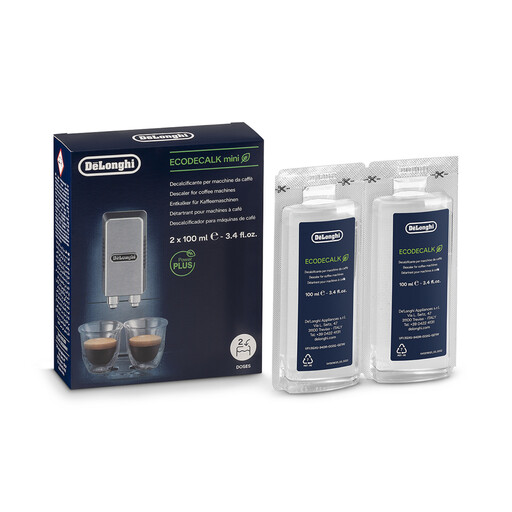
Why it suits this profile: The two separate 100 ml bottles make measuring straightforward for anyone who does not carry out maintenance often or wants a compact supply.
It is a liquid descaler for coffee machines, not a general bathroom cleaner. However, check the manual for your model.
Two 100 ml doses; according to the product information, suitable for De'Longhi espresso, filter and portafilter machines.
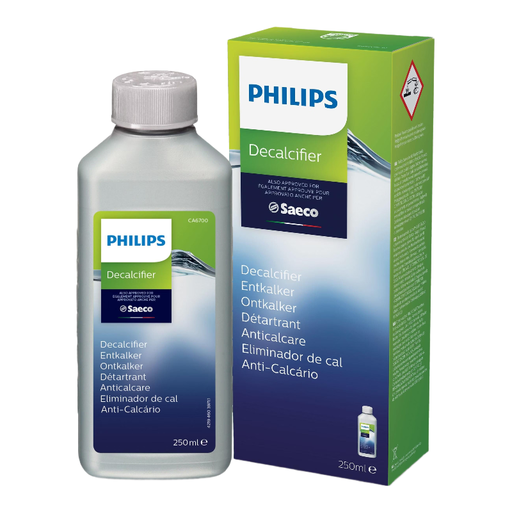
Why it suits this profile: This brand-specific liquid is a good match for Philips and Saeco machine owners who want to follow their brand’s maintenance instructions.
Its use with Philips and Saeco coffee machines is stated clearly. This means you do not have to guess based solely on the word “universal”.
250 ml of liquid; developed for coffee machines; clear instructions to rinse with clean water afterwards.
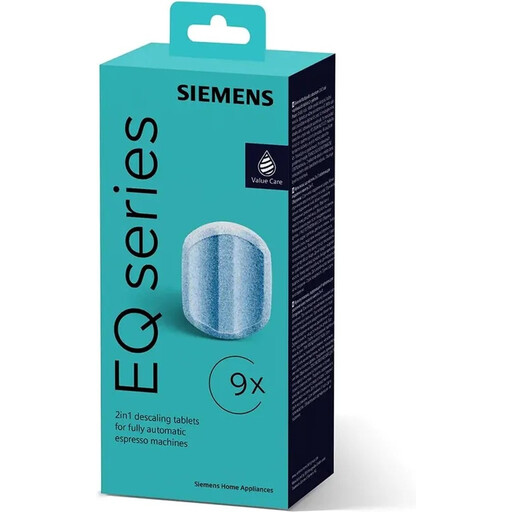
Why it suits this profile: Convenient for frequent users of Siemens EQ. automatic machines who prefer tablets to liquid and want to plan several maintenance cycles ahead.
Compatibility with Siemens EQ.series is specified. This helps you avoid choosing a random tablet without checking your appliance.
Nine tablets and, according to the product specification, nine cycles; the stated 2-in-1 function combines descaling with protection against corrosion.
We have put together a complete, up-to-date list of products that fully meet these strict selection criteria and the applicable European safety regulations.
The right frequency depends on water hardness, usage and the machine’s alerts. In areas with hard tap water, maintenance may be needed more often. A water filter can affect the amount of limescale build-up, but it does not automatically replace the descaling programme.
This is not recommended for every appliance. Vinegar can leave behind an odour and taste, and the manufacturer may prescribe a specific liquid or tablets. Always check the manual first. Do not use a product that has not been approved for your machine.
This varies depending on the brand, model, water hardness and frequency of use. Follow the machine’s alert or the maintenance schedule in the manual. Anyone making several cups every day may receive a descaling alert sooner than someone who only uses the appliance occasionally.
Compare the price per complete cycle, not just the bottle price or number of tablets. Divide the price by the number of treatments. Also check how many tablets are required per programme and whether the liquid needs to be diluted. This gives you a more realistic picture of the cost of coffee machine maintenance.
