
Vandaag of morgen in huis

Kwaliteit gegarandeerd

Welkomstaanbiedingen ontgrendelen: GRATIS bezorging | Tot 80% korting | Gratis 30 dagen JoyPlus-proefperiode
Download de app
A greasy hob, limescale in the bathroom, streaks on the windows or dust on a screen – for every cleaning job there seems to be a different cloth. Yet many households end up buying a pack that turns out to be less practical than expected. The cloth doesn’t absorb much moisture, leaves lint behind, or falls apart after a few washes.
With this buying guide, you can compare cleaning cloths, microfibre cloths, wet wipes and reusable options based on verifiable features. This way, you can make a more informed choice for the kitchen, bathroom, car, home or on the go.
A large pack may seem like good value, but the number of pieces tells you nothing about the size, thickness or lifespan. Ten thin dishcloths can prove less useful in practice than three sturdy microfibre cloths. Always check the dimensions, the material and the washing instructions.
A cloth you use to clean the floor shouldn’t then be used on the worktop or a screen without being washed first. It’s best to use different colours for different rooms. This keeps your cleaning tasks more organised and prevents dirt from being transferred from the bathroom to the kitchen.
Terms like “streak-free”, “hygienic” or “suitable for every surface” sound appealing, but the result also depends on the surface, the amount of water and the cleaning product you use. A product description is not a guarantee for every situation. Always test a new cloth on an inconspicuous area first and follow the label.
Microfibre cloths are typically made from polyester and polyamide. The fine fibres are ideal for picking up dust and dirt and can be used dry or slightly damp. Some variants are designed for glass, mirrors, stainless steel and other smooth surfaces.
Viscose cloths are often used as dishcloths or for wet cleaning in the kitchen and bathroom. They’re practical for everyday use, but check whether they’re machine-washable if you plan to reuse them.
Cotton face cloths and facial cleansing wipes are intended for skincare and personal cleansing, not automatically for household surfaces. According to the product description, the Purcotton product is made from 100% cotton and is suitable for dry and wet use. The mentioned OEKO-TEX STANDARD 100 certification and suitability for sensitive skin are brand product information; check the packaging for current details.
Non-woven and compressed cloths are handy as travel wipes. They take up little space and can be unfolded after moistening. Dispose of used disposable wipes and towels in general waste. Do not flush them down the toilet.
For a worktop or washbasin, roughly 30 × 30 cm is usually easy to handle. Larger absorbent cleaning cloths are useful for spills or bigger surfaces, while small cloths are handy for glasses, lenses and devices.
Also pay attention to the density when it’s stated. A microfibre cloth of 260 g/m² contains more material per square metre than a very thin cloth. This can be relevant for moisture absorption and durability, but it doesn’t automatically make a cloth suitable for every surface.
Reusable cleaning cloths are worth considering if you clean regularly. Check:
For some microfibre cloths, washing without fabric softener is recommended. Fabric softener can affect how the fibres work. Wet wipes and disposable cloths are quick to use, but they create more waste and can work out more expensive per clean with daily use.
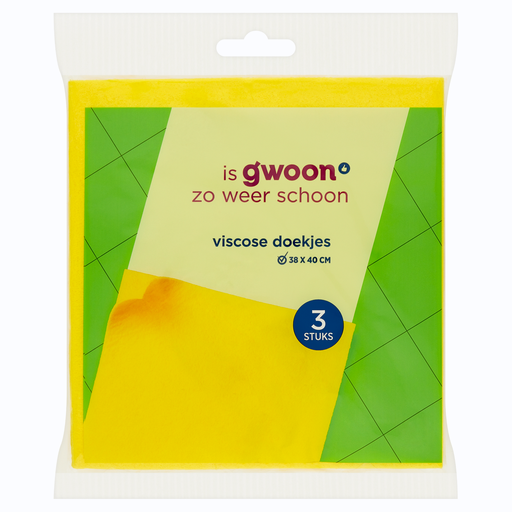
Why this fits the profile: A simple set for students, first-time renters and households that need a few dishcloths for the kitchen and bathroom.
The number of pieces is clearly stated: three cloths. Rinse them with warm water before first use, as stated in the instructions.
Set of 3; suitable for wet cleaning; store the cloths dry.

Why this fits the profile: For anyone looking for one compact cloth for the kitchen, bathroom, car, office and smooth surfaces.
The product details state the size of 30 × 30 cm and a density of 260 g/m². This allows you to compare the cloth more effectively than relying on marketing terms alone.
Machine washable up to 60 °C according to the product information; suitable for dry dusting and damp cleaning.
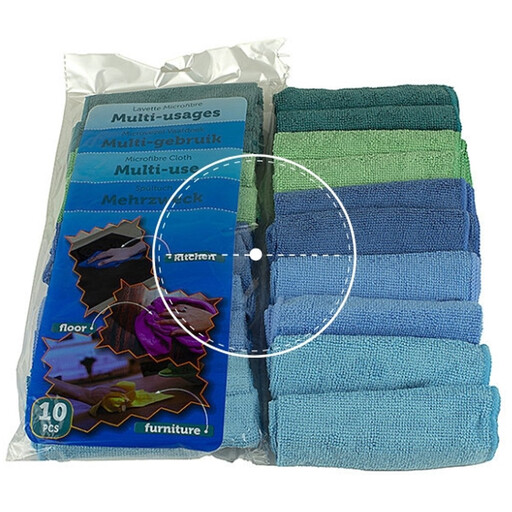
Why this fits the profile: A set for families and busy households who want to maintain multiple rooms with separate colours.
The different colours make it easier to divide cloths by room or task. The set contains ten pieces measuring 30 × 30 cm.
Ten microfibre cloths; washable and reusable; designed for dust, dirt and stains.
We’ve put together a full, up-to-date list of products that fully meet these strict selection criteria and comply with current European safety regulations.
Choose wet wipes when speed matters, for example after a small spill, during a house move or at the office. Pay attention to the packaging closure so the wipes don’t dry out. Also check whether they’re intended for surfaces, hands or the face. These uses are not automatically interchangeable.
Reusable cleaning cloths are better suited to a regular cleaning routine. They need washing, but can be used again. For on the go, travel wipes or compressed towels may be more practical. According to the product information, C&S Compressed Towels measure 24 × 30 cm after moistening and are intended for travel, camping and the gym, among other uses. Use them according to the label and do not flush them.
That depends on use, soiling, washing frequency and care. Wash them according to the label, don’t use fabric softener if it’s not recommended, and let them dry completely. Replace a cloth when the fibres start to come loose, the cloth develops a persistent unpleasant smell, or it no longer picks up dirt properly.
No. Check the packaging and test the wipe on a hidden area first. Natural stone, untreated wood, leather, screens and varnished surfaces can react differently to moisture or cleaning agents. For personal hygiene, only use wipes that are specifically intended for that purpose.
For occasional use, disposable wipes can be convenient. For daily cleaning, washable cloths are often more worthwhile because you can reuse them. Don’t just compare the purchase price – also consider the number of cloths, the size, the washing instructions and the desired lifespan.
