
Vandaag of morgen in huis

Kwaliteit gegarandeerd

Welkomstaanbiedingen ontgrendelen: GRATIS bezorging | Tot 80% korting | Gratis 30 dagen JoyPlus-proefperiode
Download de app
A ceramic electric heater can be useful when you want to heat one room temporarily. Think of a home office, bedroom, student room or chilly corner of the living room. Many models may look alike, but differences in power, controls, noise and safety can make a noticeable difference.
If you focus only on a high wattage or claims such as “energy-efficient”, you could end up buying a heater that isn’t right for your room. Read on to find out which features are worth checking and which models suit different needs.
A 2000-watt model can produce heat quickly, but at maximum power it also uses around 2 kWh per hour. At an electricity rate of €0,30 per kWh, that works out at about €0,60 per hour. The actual cost depends on the setting, how long you use it for and the level of insulation.
An energy-efficient heater isn’t defined by its ceramic heating element alone. A thermostat, ECO mode and timer can help prevent the appliance from heating unnecessarily. Always check which settings are available and whether the thermostat adjusts the temperature automatically.
A quiet electric heater can be welcome while you’re sleeping or working, but check the stated noise level in decibels. For example, the products in this guide list levels ranging from 24 to 50 dB, depending on the brand and model. Also check whether the noise level was measured on the lowest setting.
A fan heater will always make some noise as it moves air. A ceramic fan heater may have a lower setting or night mode, but “quiet” doesn’t mean you won’t hear it.
A heater with tip-over protection switches off if the appliance tips over, according to the product description. A heater with overheat protection can cut the power if it detects an excessively high temperature. These are useful features, but they don’t make unsafe use safe.
Always place a portable heater on a flat, hard surface. Follow the safety instructions and keep it at least about one metre away from curtains, bedding, furniture and other flammable materials. Never cover the heater or block its air inlet or outlet.
A compact model rated at 600 to 1500 watts may be sufficient for a desk, small bedroom or study, depending on the insulation and how quickly you want the room to warm up. Models rated at 1800 to 2000 watts are a more logical choice for a larger living room, although the stated room-size guidance is only a rough guide.
Look out for inconsistencies in product information. For some models, the power ratings differ between the title, description and specifications table. Before buying, check the current product page, the voltage of 220–240 V and the number of heat settings.
A heater with a thermostat gives you more control than one with just an on/off switch. If it has an adjustable range of, for example, 5 to 35 °C, you can select your preferred temperature. According to the product description, the heater then switches automatically between heating and standby.
A heater with a timer is handy if you want it to stop running after a few hours. Models may have a 12- or 24-hour timer, for example. A timer isn’t a substitute for switching the heater off when you leave home; always follow the instructions.
ECO mode can adjust the power according to the measured room temperature. Energy-saving claims such as “up to 40%” come from the relevant brand’s product information and depend on how the heater is used. So don’t treat them as a guaranteed saving on your energy bill.
Noise levels and display lighting matter in a bedroom or home office. A ceramic heater with oscillation spreads warm air across a wider area. Check whether the oscillation angle is 45°, 70°, 80° or 90°, and whether you can switch the function off.
Also measure the space where you plan to put the heater. A tower model takes up less floor space, while a desktop model is best suited to a small personal area. A handle is useful if you want to move the heater between the living room and home office.
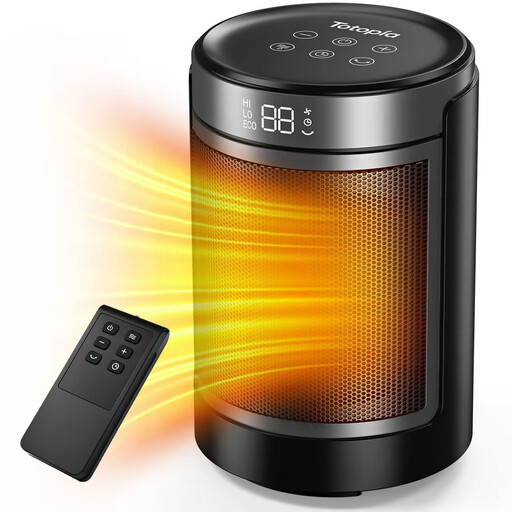
Why it suits this profile: This compact model offers fan-only, 750-watt, 1500-watt and ECO modes, so you don’t always have to heat at full power. The LED display and remote control are handy for a student room or home office.
The four settings let you match the power to the room. The 1–12-hour timer helps prevent unnecessarily long use.
1500 watts, ECO mode, oscillation, remote control, tip-over protection and overheat protection.
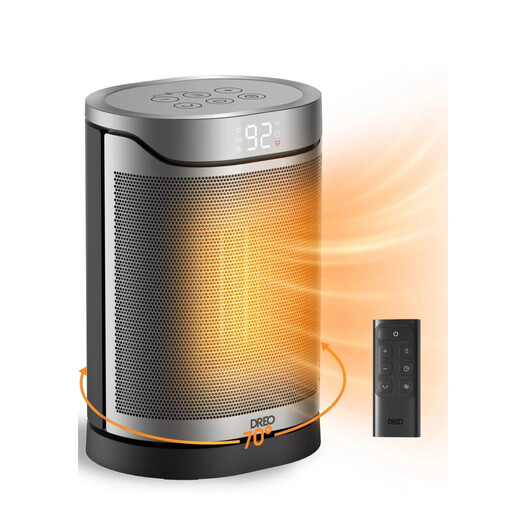
Why it suits this profile: According to the product information, this model has a 5–35 °C thermostat, a noise level of 25–42 dB and three power settings. That makes it a good fit for working or sleeping for longer periods in a quiet room.
The stated decibel range makes the noise claim more specific than simply calling it “quiet”. The thermostat and timer help prevent unnecessary continuous heating.
1500 watts, 70° oscillation, timer up to 12 hours, remote control and multiple layers of safety protection, according to the product description.
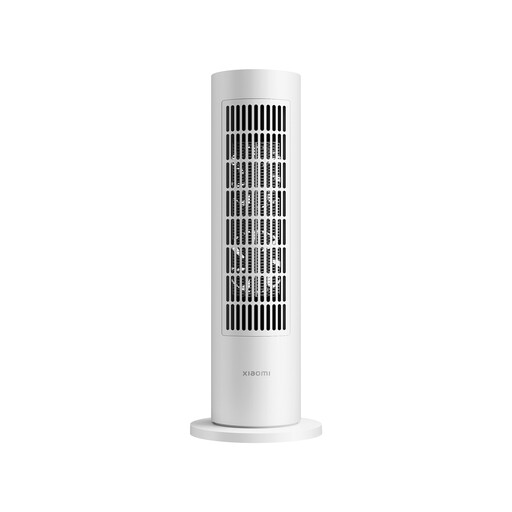
Why it suits this profile: The tower design is a good choice when floor space is limited. According to the product information, app controls, a thermostat, timer and oscillation are available for users who want to adjust the heater more frequently and remotely.
Temperature control and automatic shut-off give you more control than a basic on/off heater. Check beforehand that the app connection suits your needs.
2000 watts, 70° oscillation, PTC heating, smart thermostat and control via the Mi Home app, according to the product information.
We’ve put together a complete, up-to-date list of products that meet these strict selection criteria and the relevant European safety requirements.
Not necessarily. Both types use electricity. A ceramic element can provide heat quickly, but energy use is mainly determined by wattage, how long you use it for, the thermostat setting and insulation. ECO mode or a timer can help limit consumption if the heater isn’t running continuously at full power.
Lifespan varies by model, frequency of use and maintenance. Keep the air inlet free of dust in accordance with the instructions, don’t block the ventilation and don’t use the appliance if the cable or casing is damaged. Keep your proof of purchase and warranty details in case you need servicing.
Check the instructions first and, ideally, choose a model with a thermostat, timer, tip-over protection and overheat protection. Keep it clear of bedding and curtains. Switch the heater off and unplug it when you’re not using it, unless the manufacturer describes a specific safe night-time function.
