
Vandaag of morgen in huis

Kwaliteit gegarandeerd

Welkomstaanbiedingen ontgrendelen: GRATIS bezorging | Tot 80% korting | Gratis 30 dagen JoyPlus-proefperiode
Download de app
A carpet cleaner comes in handy for spills, muddy paw prints or a stain on the sofa. Yet many people buy a machine that doesn’t really suit their household. A compact model may be easy to store, for example, but it may have small water tanks. A machine with high suction power can remove dirty water effectively, but it may also be noisier.
So don’t focus only on terms such as “deep clean” or “extra powerful”. Look at verifiable details such as suction power, tank capacity, cable length, hose length and the type of cleaning function. That way, you can choose a spot cleaner that suits the way you’ll use it.
A higher motor power doesn’t automatically mean a carpet cleaner will clean better. The power rating mainly tells you how much electricity the motor uses. Suction power, often measured in kPa or Pa, is also important for removing moisture. Check whether the manufacturer clearly explains how this figure was measured, too.
A portable carpet cleaner with a tank holding a few hundred millilitres is easy to lift, but you may need to refill it frequently when cleaning a large rug. That may not be a problem when cleaning a sofa, stairs or car interior. Larger tanks are more practical for cleaning several rooms.
A dual-tank system keeps clean and dirty water separate. This makes filling and emptying more straightforward, and means you won’t have to keep cleaning with the same water.
Not every fabric is suitable for wet cleaning, steam or hot water. Test the cleaner on an inconspicuous area first and check the care label on the upholstery. Leather, delicate fabrics and materials labelled “dry clean only” need extra care.
With a carpet and upholstery cleaner, you spray water and cleaning solution onto the fabric, then vacuum up the moisture. A higher stated suction power may help remove more moisture, but the final result also depends on the cleaning head, the fabric and how you move the machine.
Move the cleaning head slowly over the fabric, then make a few dry passes without adding more liquid. This helps reduce any moisture left behind. Make sure the carpet, sofa or car seat is well ventilated before using it again.
Check the capacity of both the clean-water tank and the dirty-water tank. For example, a capacity of 1.5 litres of clean water and 0.8 litres of dirty water is suitable for regular spot cleaning, while a larger tank may be more convenient for cleaning several surfaces.
Empty and rinse the dirty-water tank after every cleaning session. Clean the hose, filter and cleaning head according to the instructions, and let all parts dry completely. This helps prevent unpleasant smells and a build-up of dirt.
A five-metre cable or a long hose gives you more freedom to move around the sofa or inside the car. A narrow spot-cleaning tool and a brush are useful for stairs and car seats. If you’ll mainly be cleaning sofas and chairs, look for a dedicated upholstery cleaner, sofa attachment or upholstery tool.
A wet and dry cleaner with steam or hot water needs extra care when it comes to temperature, material compatibility and safety. Only use cleaning solutions that the product information says are suitable for the machine.

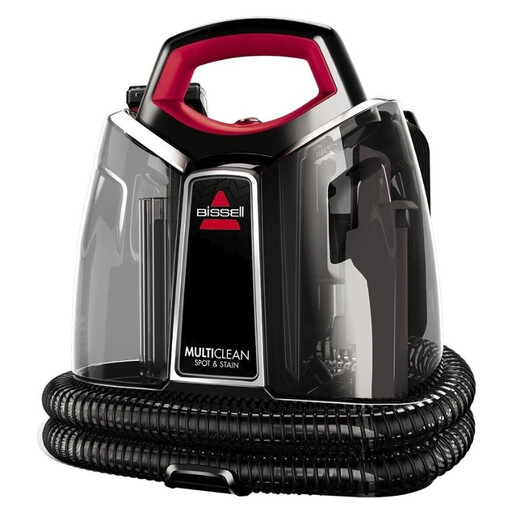
Why it suits this kind of user: This compact model is designed for spot cleaning carpets, stairs, sofas and car interiors. According to the product description, the included cleaning solution is designed to tackle stains, including pet stains.
The specifications list a 500W motor, a 1.8-metre hose and separate water tanks. So you don’t have to rely on a marketing term such as “deep clean”.
500W power, dual-tank technology and an integrated 1.8-metre hose.
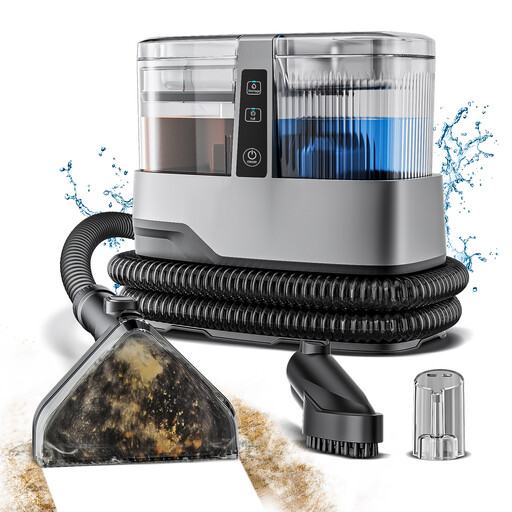
Why it suits this kind of user: The range of attachments makes this model suitable for small stains, larger areas, crevices and fabric upholstery in the car.
The product information specifically lists four cleaning tools and a 2.2-metre hose. This makes it easier to see what the machine can do than a general claim about versatility.
330W power, a noise level of 74 dB according to the product specifications, and four included cleaning tools.
Why it suits this kind of user: Its handheld design is practical for families, pet owners and motorists who want to clean a particular spot quickly.
The product specifications list 17,000 Pa suction power, a dual-tank system and a 5-metre cable. Do check that its capacity is enough for the total area you need to clean.
600W power, stated suction power of 17,000 Pa, and separate clean- and dirty-water tanks.
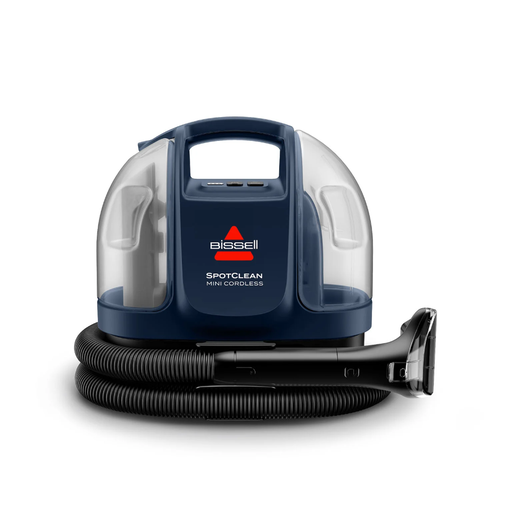
Why it suits this kind of user: This model is lightweight and cordless, so you can quickly tackle a stain on a sofa, stairs or car seat without needing a nearby socket.
The limited run time and tank capacity are clearly stated. So you’ll know in advance that this is mainly a spot cleaner for smaller jobs, not large carpeted areas.
Up to 20 minutes’ use according to the product information, a product weight of 2.6 kg and a 1.28-metre hose.
We’ve put together a complete, up-to-date list of products that meet these strict selection criteria and the applicable European safety regulations.
Many models can be used on a sofa, provided the fabric is water-resistant and its care label allows wet cleaning. Test a hidden area first. Don’t use too much liquid, and vacuum the surface dry slowly. A carpet cleaner may not be suitable for delicate fabrics or items labelled “dry clean only”.
Empty and rinse the dirty-water tank after every use. Rinse the hose and cleaning head if you can see dirt or cleaning solution inside them. Let all the parts dry completely before storing the machine. Clean or replace the filter as instructed in the manual.
As well as the purchase price, you’ll pay for electricity, water and, if needed, cleaning solution. A corded model doesn’t need time to recharge, while a cordless model offers extra flexibility but has a limited run time. So consider the tank capacity, how much cleaning solution it uses and how often you plan to use the machine.
