
Vandaag of morgen in huis

Kwaliteit gegarandeerd

Welkomstaanbiedingen ontgrendelen: GRATIS bezorging | Tot 80% korting | Gratis 30 dagen JoyPlus-proefperiode
Download de app
A stain on the rug, mud on the sofa or pet hair in the car seat: an ordinary vacuum cleaner usually cannot remove enough dirt from the fibres. A carpet cleaner sprays water or cleaning solution into the upholstery and then vacuums up the dirty liquid. This type of appliance can therefore also be used as an upholstery cleaner, spot cleaner, carpet and fabric cleaner, or car seat cleaner.
However, not every model is suitable for the same job. Marketing copy often focuses on wattage, steam temperature or a large number of accessories. For a sound purchase, the way dirt is removed, the tank layout and maintenance are particularly important.
Motor power indicates how much electricity the appliance can use at most, but it does not directly show how much dirt it can pick up. Suction power, expressed in kPa or Pa, for example, provides more information about how effectively moisture is extracted from fabric. The brush head, hose and airflow also affect the result.
A 1,700-watt model may therefore deliver different practical performance from a compact appliance rated at 400 or 600 watts. Always compare several specifications rather than looking only at the wattage.
A steam cleaner uses hot vapour to loosen dirt. Many steam cleaners do not have a dirty-water tank and do not extract moisture. This means you often still need to remove the loosened dirt with a cloth.
A carpet cleaner or spot cleaner with a dual tank works differently: clean water is applied to the fabric and then extracted together with the dirt. For cleaning a sofa, rug or recent stain, this type of spray-extraction model is often more practical. Check beforehand that the fabric is water-resistant.
A brand’s own research may indicate that an appliance can reduce bacteria, mites or odours, for example. This is not a universal result for every fabric, stain or usage situation. Base your choice on verifiable details such as tank capacity, hose length, suction pressure, accessories and cleaning method.
Always test the appliance on an inconspicuous area first. Some fabrics may fade, shrink or become damaged by water, heat or cleaning solution.
A carpet and upholstery cleaner must not only distribute water but also extract it afterwards. A higher stated suction pressure may help remove more moisture from the fibres. The product listings for the models below mention 11.5 kPa, 13 kPa and 18,000 Pa, among other figures.
Also consider drying time. Use limited amounts of water, make several slow extraction passes and ventilate the room. A soaked sofa or mattress may remain damp for a long time. Do not use an appliance on materials for which the manufacturer does not permit wet cleaning.
A dual tank keeps fresh water separate from extracted dirty water. This is more hygienic and prevents you from repeatedly working with the same contaminated water. Check the individual capacities rather than just the total volume.
A compact reservoir is sufficient for small stains. If you want to clean several chairs, stairs or a large rug, a larger tank is more useful. A removable tank makes filling, emptying and rinsing easier.
Check whether the set includes a narrow nozzle, wide brush and, if applicable, a self-cleaning function. A long hose and power cable are useful for stairs and car seats. After use, empty the dirty-water tank, rinse the filters and allow the hoses to dry.
A self-cleaning hose reduces the amount of work, but it does not replace regular maintenance. Otherwise, trapped moisture and cleaning solution may cause unpleasant odours.
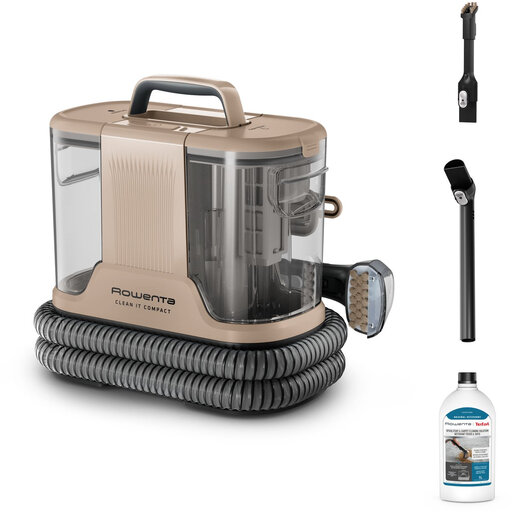
Why it suits this profile: A compact choice for households that mainly want to tackle everyday stains, pet mess, sofas and car seats without having to store a large appliance.
The product listing specifies 11.5 kPa suction pressure, two water tanks and a self-cleaning accessory. This means you can look beyond the 400-watt power rating alone.
Compact design, a 1.5-litre clean-water tank, a 0.85-litre dirty-water tank and accessories for carpets, upholstery and car interiors.
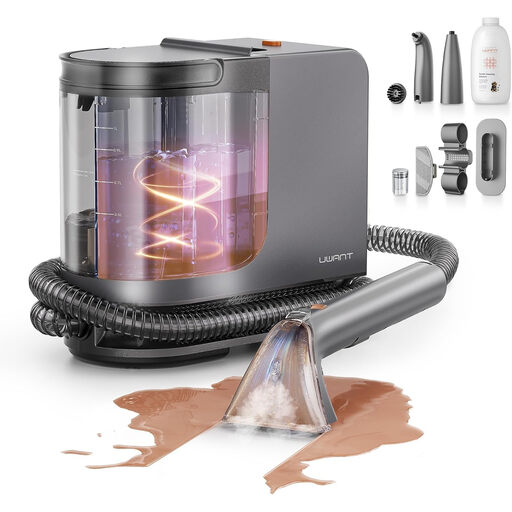
Why it suits this profile: Suitable for families with children or pets who regularly clean small areas such as sofas, beds, carpets and car interiors.
The listing specifies 18,000 Pa suction power and a 14 cm-wide brush. Clean and dirty water are also stored separately in a 2-in-1 tank design.
600-watt motor, stated noise level of 75 dB and a spot cleaner for multiple fabric surfaces.
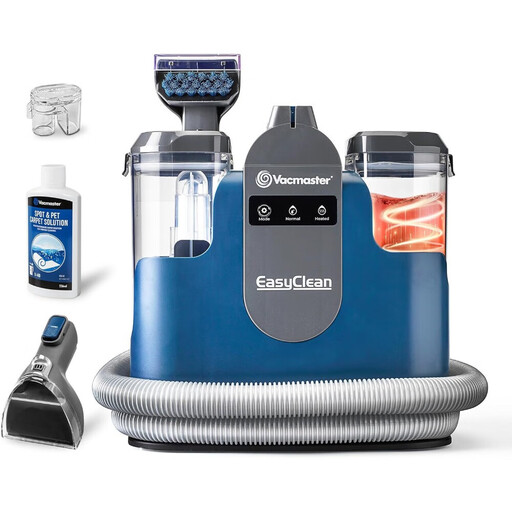
Why it suits this profile: Handy for those who regularly clean stairs, sofas, rugs and car seats and value separate tanks and a long hose.
The product details specify a 1.6-litre clean-water tank and a 0.95-litre dirty-water tank. The 1.8-metre hose has a self-cleaning connection.
500-watt motor, two cleaning modes and removable tanks for filling, emptying and rinsing.
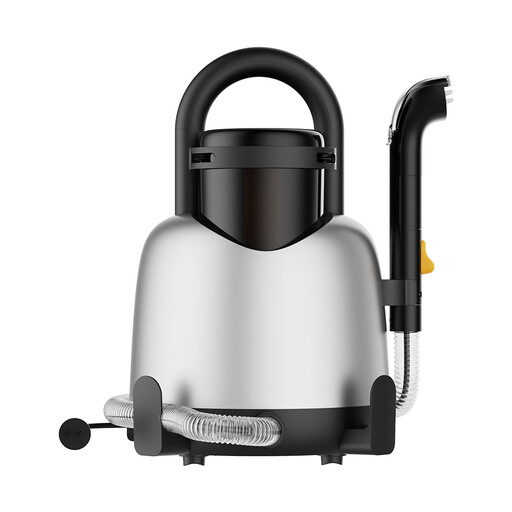
Why it suits this profile: For users who want to work with warm water or steam on suitable fabrics and surfaces, as well as spraying and extraction.
The listing distinguishes between steam cleaning, hot-water cleaning and room-temperature water. Always check first that the upholstery can withstand heat and moisture.
According to the product details, there are 1.7- and 1.4-litre tanks, 13 kPa suction pressure and five brush accessories.
We have compiled a complete, up-to-date list of products that fully meet these strict selection criteria and the applicable European safety regulations.
A wet-and-dry vacuum cleaner can be an alternative when you want to vacuum up both dry dirt and spilled liquids. For targeted stains on textiles, a portable carpet cleaner is generally easier to handle. A steam cleaner is better suited to hard floors, grout, kitchen surfaces and materials that can withstand heat.
Only if the fabric is water-resistant. Check the care label and test an inconspicuous area first. Do not use too much water and ensure sufficient ventilation while it dries.
Empty and rinse the tanks after every use. Check the filters and brush head after each cleaning session, and allow the hose to dry. With regular use, carry out a more thorough inspection in line with the instructions.
Consumption depends on the motor power and how long the appliance is used. A 400-watt appliance uses less electricity over the same period than a 1,700-watt model, but cleaning time, extraction passes and the selected heating or steam function also play a part. Use the appropriate setting for the task and avoid unnecessarily long sessions.
