
Vandaag of morgen in huis

Kwaliteit gegarandeerd

Welkomstaanbiedingen ontgrendelen: GRATIS bezorging | Tot 80% korting | Gratis 30 dagen JoyPlus-proefperiode
Download de app
At first glance, a carpet cleaner seems simple: add water, treat the stain, and suck up the dirt. In practice, machines vary greatly in suction power, tank layout, reach, and maintenance. You’ll notice this especially with dried-on wine stains, mud in the hallway, dog hair on the sofa, or pet stains on a rug.
If you only look at a high wattage or a big number in pascals, you could end up buying a machine that’s difficult to clean or not well suited to the surface you intend to use it on. Below are the most common pitfalls and points to check, followed by some suitable choices for different households.
High suction power can help draw moisture and loose dirt out of fabrics, but it doesn’t tell you everything about performance. The brush, spray nozzle, water distribution, and how you move the machine are equally important. A carpet cleaning machine with a powerful motor can also be less practical if the hose is short or the dirty water tank fills up quickly.
So don’t just focus on a Pa value. Also check whether the machine is intended as a wet cleaner, stain cleaner, or ordinary hand-held vacuum cleaner.
A steam cleaner uses hot steam and is mainly designed to loosen dirt on suitable, heat-resistant surfaces. An upholstery cleaner sprays water or cleaning solution into the fabric and then sucks the moisture back up. These two functions are not automatically interchangeable.
For sofas, mattresses, and car seats, you should always check whether the fabric is water-resistant. Steam is not suitable for untreated wood, silk, velvet, or certain heat-sensitive plastics, among other things. If in doubt, test on an inconspicuous area first.
A machine with a single tank can mix clean and dirty water together. This makes dosing and emptying less straightforward. A model with separate clean and dirty water tanks is generally more practical for repeated use. After every cleaning session, the dirty water tank must be emptied, and the hose, nozzle, and filters need to be able to dry. Otherwise, residual moisture and debris can cause unpleasant odours.
Wattage indicates how much electrical power the motor uses; it is not a direct measure of cleaning performance. Suction power is often stated in kPa or Pa. Use this value mainly to compare models within the same product category.
For a portable carpet cleaner, a good suction nozzle and control over the amount of water are at least as relevant. The more moisture left behind, the longer the carpet or upholstery will take to dry. Ventilate the room and use the machine steadily in overlapping passes.
Look at the capacity of both tanks. A larger clean water tank is handy for a sofa, several chairs, or a large rug. A compact tank is better suited for quick stain treatment and is easier to store.
Also check:
For a car, a long hose is often more important than a large tank. For a home with children or pets, a wide nozzle brush can save time.
A narrow crevice tool helps with car seats and sofa seams. A soft brush is useful for delicate upholstery, but should be tested first. For removing dog hair, a standard carpet cleaner isn’t always sufficient: loose hair sometimes needs to be picked up first with an upholstery tool, brush, or hand-held vacuum.
A wet-dry cleaner can be practical if you want to tackle both dry dirt and spilled liquids. A classic steam cleaner is more suited to hard floors, grout, windows, and other suitable surfaces than to every type of carpet.
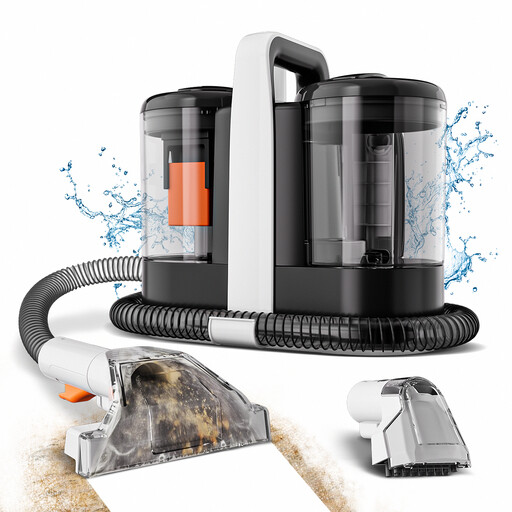
Why this fits the profile: This model is designed for spot cleaning of carpets, sofas, mattresses, and car seats. The product description mentions a 9.84 ft cord, a 4.26 ft hose, and two water reservoirs.
The separate tanks make the difference between clean and dirty water clearer. At 600 W and 15 kPa, according to the product information, the machine is aimed at stains and small areas.
Portable size, dual tanks, and included brushes for different fabric surfaces.
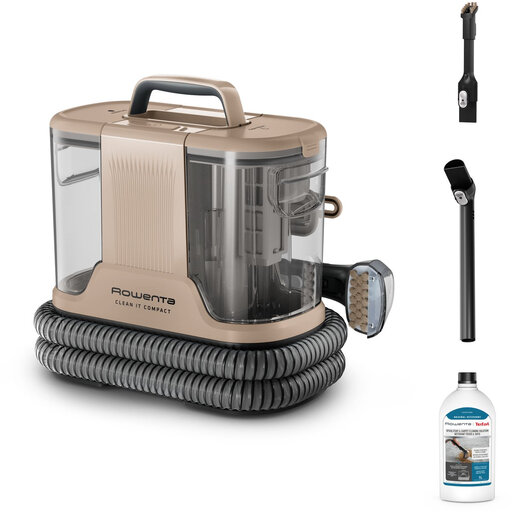
Why this fits the profile: The product information states 400 W, a maximum suction power of 11.5 kPa, a 1.5-litre clean water tank, and a 0.85-litre dirty water tank. A self-cleaning accessory is also included.
The two tanks prevent clean water from being mixed directly with sucked-up dirt. The self-cleaning accessory helps with maintenance, but parts still need to be emptied and dried according to the manual.
Compact design, two tanks, multiple nozzles, and a two-year manufacturer’s warranty as stated in the product information.
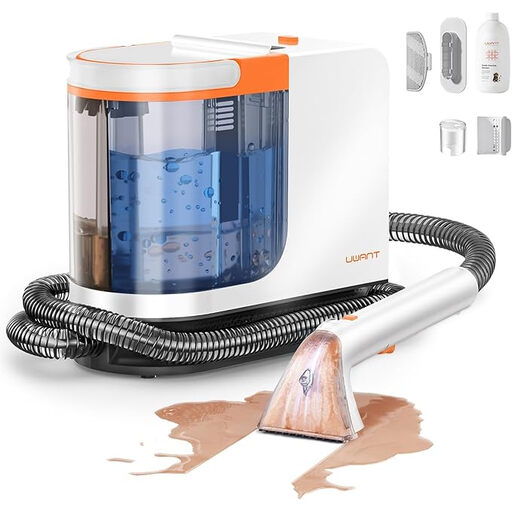
Why this fits the profile: According to the product description, this model has a 600 W motor, a maximum suction power of 18,000 Pa, and a 14 cm brush. This suits larger areas such as rugs, sofas, and car seats.
The product description mentions a combined design for clean and dirty water. Do check the available space, weight, and required drying time of your upholstery beforehand.
18,000 Pa according to the product specification, 600 W power, and a wide brush for larger cleaning jobs.
We’ve put together a full, up-to-date list of products that fully meet these strict selection criteria and comply with current European safety regulations.
You can only do this if the upholstery is water-resistant and the manufacturer allows it. Don’t apply more liquid than necessary, and slowly go over the surface to suck it up. Allow the sofa or mattress to dry completely before using it again.
A carpet cleaner usually works with water or cleaning solution and sucks up the dirty moisture again. A hand-held vacuum cleaner is mainly intended for dry dirt, crumbs, sand, and loose hairs. For removing dog hair from car seats or a sofa, a hand-held vacuum is often a handy first step; stubborn stains are better tackled with a stain cleaner.
Only use the amount of cleaning solution stated in the manual, and don’t fill the reservoir above the indicated mark. Empty and rinse the dirty water tank after each use. Clean filters and nozzles regularly and let them dry completely. This will help prevent blockages, odours, and unnecessary wear and tear.
