
Vandaag of morgen in huis

Kwaliteit gegarandeerd

Welkomstaanbiedingen ontgrendelen: GRATIS bezorging | Tot 80% korting | Gratis 30 dagen JoyPlus-proefperiode
Download de app
A stain on the carpet, a little accident from the dog or dirt on the car seat calls for more than an ordinary vacuum cleaner. A carpet cleaner sprays water and cleaning solution into the fabric, then sucks up the dirty water. This makes these appliances suitable for removing stains and cleaning upholstery, sofas and seats.
However, not every model is right for every household. Marketing copy often focuses on high suction power or steam, while giving less attention to other practical details. Watch out for these three common pitfalls:
A carpet cleaner with a water-suction function needs to remove enough of the moisture it sprays into the fabric. Product specifications may list figures such as 13,000, 15,000, 17,000 or 18,000 Pa. Treat these as a point of comparison, not a guarantee of a particular cleaning result.
Motor power, measured in watts, is also relevant. A 400 to 600-watt appliance may be suitable for spot-cleaning, sofas and car interiors. A higher figure doesn’t automatically mean an appliance is better suited to your needs. Check the hose length, brush width and weight too.
Move the suction nozzle slowly over the fabric, then make a few passes without spraying again. This helps to remove any moisture left behind. Allow carpets and upholstery to air thoroughly before using them again.
A dual water tank keeps clean water separate from dirty water. This is practical and means you won’t keep cleaning with the same water. Check the capacity of each tank. For example, a model may have a 1.5-litre clean-water tank and a 0.8-litre dirty-water tank.
After each use, you should:
Moisture and product residue left behind can cause unpleasant smells. Don’t use boiling water or mix different cleaning products.
For a sofa, stairs or car interior, a compact spot cleaner is often more practical than a large carpet washer. A long power cable or hose makes it easier to clean corners and car seats. A cordless model gives you more freedom to move around, but check how many batteries are included and how long it’s expected to run.
Not every appliance is suitable for leather, silk, delicate wool or fabrics labelled “dry clean only”. A carpet cleaner is designed for surfaces that can be wet-cleaned according to their care label.
The selection below is based on the stated product specifications, such as wattage, tank layout, suction power, cable length and included features.
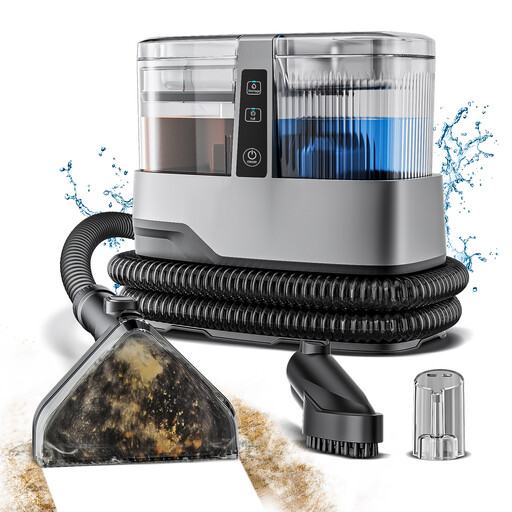
Why it suits this type of buyer: This handheld model is designed for spot-cleaning carpets, sofas, stairs and car seats. The stated cable length is 5 metres.
The product specifications state that it has a dual tank, keeping clean and dirty water separate. This means you won’t have to work with a single reservoir.
600 watts, stated suction power of 17,000 Pa and a handheld design that’s easy to store in a cupboard.
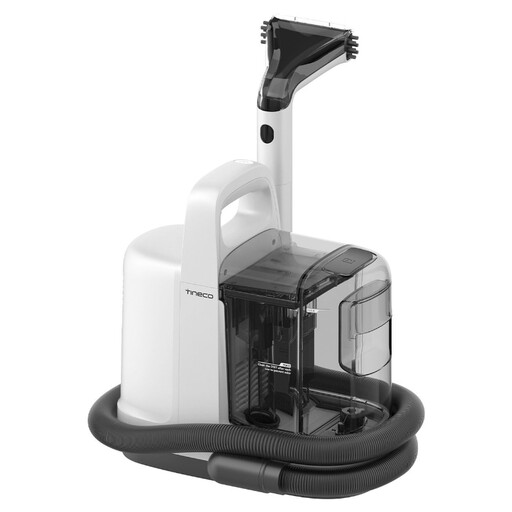
Why it suits this type of buyer: This compact machine is designed for carpets, mattresses, furniture and car upholstery. The product information lists a rotating brush and a separate upholstery attachment.
The dual tank keeps clean water separate from the dirt it sucks up. The product specifications state that both tanks are removable.
400 watts, a portable design and support for multiple surfaces.
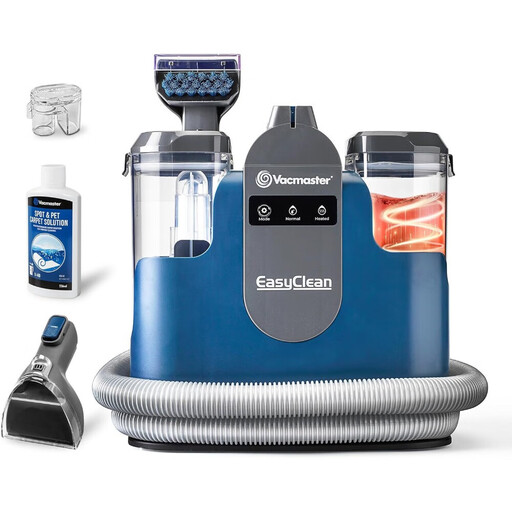
Why it suits this type of buyer: This model is designed for regular use on carpets, sofas, stairs and car seats. The hose is 1.8 metres long.
According to the product information, the dual tanks hold 1.6 litres of clean water and 0.95 litres of dirty water. A self-cleaning tool is included.
500 watts, two cleaning modes and an integrated 180-centimetre hose.
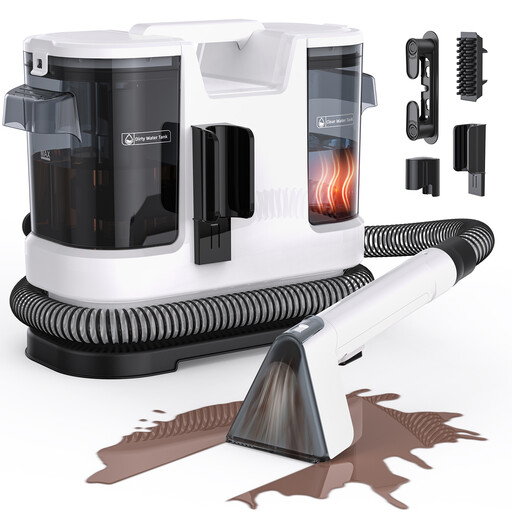
Why it suits this type of buyer: This model is a good choice if you want to clean larger areas of carpet, a sofa or a car interior as well as dealing with small stains.
The product title mentions a large tank and a long mains cable. Check the current capacity and accessories on the product page before ordering.
1,400 watts and stated suction power of 15,000 Pa, suitable for carpets, upholstery and car interiors.
We’ve put together a complete, up-to-date list of products that meet these strict selection criteria and current European safety regulations.
When removing pet stains, it helps to act quickly. First, blot up as much moisture as possible, then use a product suitable for the fabric. An enzymatic spray, such as Excellent Pets Urine Control Spray, is described as suitable for tackling urine odours and residue on appropriate surfaces. This is a claim made by the manufacturer, so test it on a small, inconspicuous area and follow the label.
You can then use a carpet cleaner on urine stains on carpets. Don’t use too much water, and make sure the area is well ventilated. A pet stain cleaner isn’t a substitute for cleaning the machine itself.
Yes, if the fabric can be wet-cleaned. Check the care label, test on a hidden area first and use a suitable upholstery brush. Use only a little liquid and go over the area several times to suck it up.
Empty and rinse the tanks after every use. Clean the spray nozzle, brush and filters according to the instruction manual. Let all parts dry completely before putting them back. This helps prevent stagnant water and unpleasant smells.
As well as the purchase price, you’ll need to pay for water, cleaning solution and electricity. Consumption depends on the cleaning time, dosage and size of the area. For a small stain, a portable spot cleaner will generally use less water and solution than a full-size carpet washer.
