
Vandaag of morgen in huis

Kwaliteit gegarandeerd

Welkomstaanbiedingen ontgrendelen: GRATIS bezorging | Tot 80% korting | Gratis 30 dagen JoyPlus-proefperiode
Download de app
A coffee stain on the sofa, mud on the rug or a pet accident on the carpet: an ordinary vacuum cleaner usually won’t remove moisture and ingrained dirt completely. A carpet cleaner sprays water, with cleaning solution if needed, into the fabric, brushes the surface and then sucks up the dirty water.
However, not every machine is right for every situation. Marketing often focuses on high suction power or extra features, while practical details such as tank capacity, cable length and maintenance determine whether you’ll enjoy using the machine over time.
A high figure in Pa or kPa sounds impressive, but it doesn’t tell you everything about cleaning performance. The results also depend on the brush, the nozzle, the airflow and how well you move the nozzle over the fabric. A spot cleaner with a wide brush can be efficient on larger areas, while a narrow head is more practical for stairs or car seats.
So use suction power as a point of comparison, not as your only purchase criterion.
A compact machine is easy to store, but a small clean-water tank means more frequent refills. A larger tank allows you to clean for longer, but usually adds weight. Also check whether the clean- and dirty-water tanks are separate. This prevents you from cleaning with dirty water again.
A steam function may seem appealing for stubborn dirt. According to the product information provided by certain brands, steam or hot water can help with specific cleaning tasks. That doesn’t mean every fabric is suitable for it. Always test on an inconspicuous area first and follow the care label for your carpet, sofa, mattress or car seat.
Don’t use water on materials that can only be dry-cleaned or aren’t water-resistant.
For effective deep carpet cleaning, a three-step system is practical:
A machine with this combination is more versatile than a dry vacuum cleaner. Also check which attachments are included. A wide brush is useful for carpets and rugs; a smaller nozzle is better suited to a carpet cleaner for sofas, stair upholstery or car interiors.
Don’t just look at the total capacity; check how it’s divided between clean and dirty water. Examples from the range include a 1.5-litre clean-water tank and a 0.8-litre dirty-water tank on the Omeser W07, or 1.4 litres and 1.2 litres on the ROUNY U2 Heat.
A long hose and a cable of around five metres make a difference when cleaning a corner sofa, stairs or a car. A cordless portable carpet cleaner works without a mains socket, but has a limited run time. According to the product information, the BISSELL SpotClean Mini Cordless runs for up to 20 minutes. That’s suitable for isolated stains, but not always enough for an entire living room.
A carpet cleaner is generally noisier than a hand brush. The specifications for the models mentioned list noise levels ranging from around 68 to 84 dB. So check whether you’ll mainly be cleaning during the day and whether the machine will fit in a cupboard.
After every use, you should:
This helps minimise odours and residue. It won’t prevent every material from fading or being damaged, so testing beforehand is still essential.
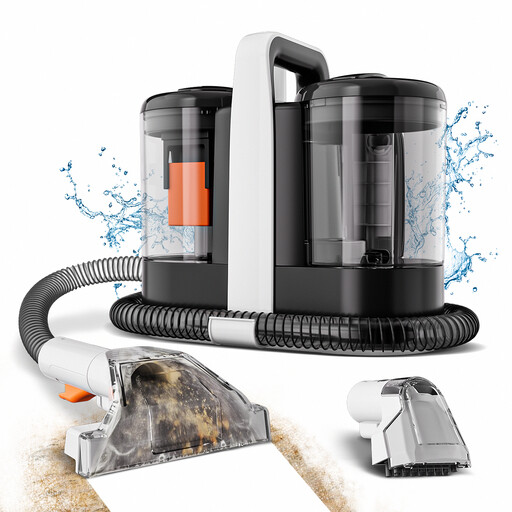
Why it suits this profile: Its portable design, two tanks and 4.26 ft hose make it practical for occasional stains on sofas, carpets or car seats.
The clean- and dirty-water tanks are separate. The tank capacities of 1.5 and 0.8 litres are clearly stated in advance.
600 W, 15 kPa according to the product listing, three functions and two included brushes.
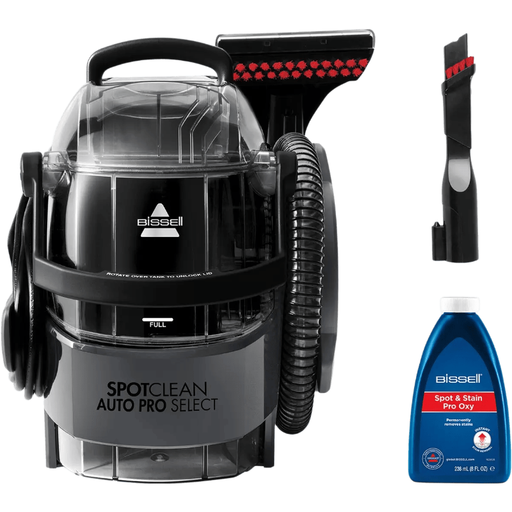
Why it suits this profile: This model is designed for households that regularly clean sofas, stairs, carpets and car interiors, and value larger tanks.
The two XL water tanks mean fewer interruptions. The included brushes are designed for different stain sizes.
750 W, a 1.9-metre hose and a spray, brush and suction system according to the product information.
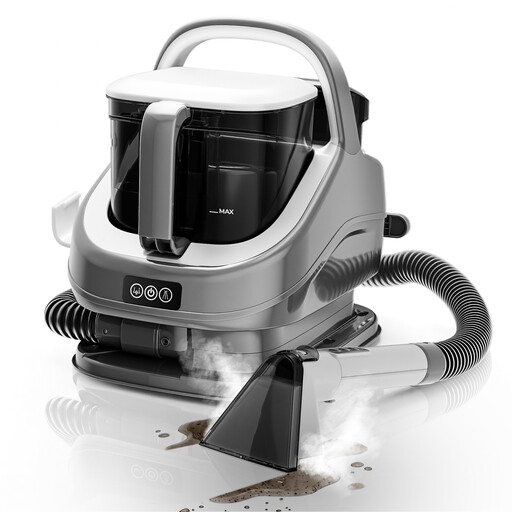
Why it suits this profile: Its three cleaning modes are useful for people cleaning different water-resistant surfaces, from sofas and stairs to car interiors.
The product information distinguishes between cold water, hot water and steam. This lets you choose a mode to suit the material, provided it’s water-resistant.
1300 W, 13 kPa, a 1.4-litre clean-water tank and a 1.2-litre dirty-water tank.
We’ve put together a complete, up-to-date list of products that meet these strict selection criteria and the applicable European safety regulations.
Vacuum the surface while dry first. Then test water and cleaning solution on a small, inconspicuous area. When treating a stain, work from the outside in to prevent it spreading. Then make several passes with the suction function without spraying more water. This leaves less moisture in the fibres.
When removing pet stains, it’s important to act quickly, but always check that the product is suitable for the fabric in question. Don’t use harsh cleaning products unless the manufacturer explicitly allows it.
You can use one on water-resistant upholstery, but check the care label first. Use a narrow upholstery nozzle, apply only a small amount of water and let the sofa dry completely. A carpet cleaner isn’t automatically suitable for leather, delicate fabrics or items labelled “dry clean only”.
Use a spot cleaner when there’s an accident or a visible stain. You’ll usually need to clean carpets or upholstery thoroughly less often; how often depends on usage, children, pets and ventilation. Cleaning with water too frequently can put unnecessary strain on materials.
As well as the purchase price, you’ll pay for water, electricity and possibly cleaning solution. A corded model doesn’t have a battery that needs charging, but it does use electricity while running. The overall cost mainly depends on how often you clean, the tank capacity and how much solution you use each time.
