
Vandaag of morgen in huis

Kwaliteit gegarandeerd

Welkomstaanbiedingen ontgrendelen: GRATIS bezorging | Tot 80% korting | Gratis 30 dagen JoyPlus-proefperiode
Download de app
A spilt drink, muddy paws or a pet accident on the carpet: a regular vacuum cleaner will remove visible dirt, but it won’t always deal with moisture and liquid stains. A carpet cleaner sprays water and cleaning solution into the fabric, then sucks up the dirty water. This makes it a useful appliance for households, families with children, pet owners and motorists.
However, not every spot cleaner is suitable for every job. Before you buy, look out for these common pitfalls.
A higher wattage tells you how much power the motor draws, but it doesn’t automatically mean better cleaning results. Suction power, water flow, the shape of the nozzle and how well it seals all play a part too. Compare several specifications, such as wattage and the stated vacuum pressure in kPa.
A compact tank is handy for stairs, car seats or a few small stains. For a large rug, you’ll need to refill it more often and empty the dirty-water tank more frequently. Check whether the appliance has separate clean- and dirty-water tanks. This helps prevent dirty water from being pumped through the system again.
A spray-extraction cleaner removes dirty water, but that doesn’t mean it cleans itself completely. Any moisture left behind can cause unpleasant smells. Empty and rinse the dirty-water tank after every use, and let the hoses, filters and nozzles dry completely. In practice, an appliance that’s easy to take apart is often easier to maintain regularly.
Product information often lists both wattage and kPa. Watts indicate electrical power; kPa refers to the stated vacuum pressure or suction power. According to the stated specifications, a carpet cleaner with, for example, 13 to 17 kPa may be suitable for extracting moisture from fabrics. Use these figures mainly to compare models in the same product category.
Also check whether the manufacturer states the figures under the same conditions. A higher number doesn’t mean every stain will disappear without pre-treatment.
A dual-tank system with separate clean- and dirty-water reservoirs is practical for sofas, rugs and car interiors. Check the capacity in litres and think about how much area you usually clean. A portable carpet cleaner with smaller tanks is easy to store, while a larger wet and dry vacuum cleaner needs refilling less often.
For stairs and furniture, a handle, flexible hose and low weight are important. For a car, hose and cable length matter most. Check whether the appliance comes with a narrow nozzle, upholstery nozzle or brush. For removing pet stains, a spray function with controlled water flow is more useful than an appliance that only dry-vacuums.
Only use a cleaner on water-resistant fabrics, and follow the manufacturer’s care instructions. Test the cleaning solution on an inconspicuous area first; dyes and delicate upholstery can react differently.
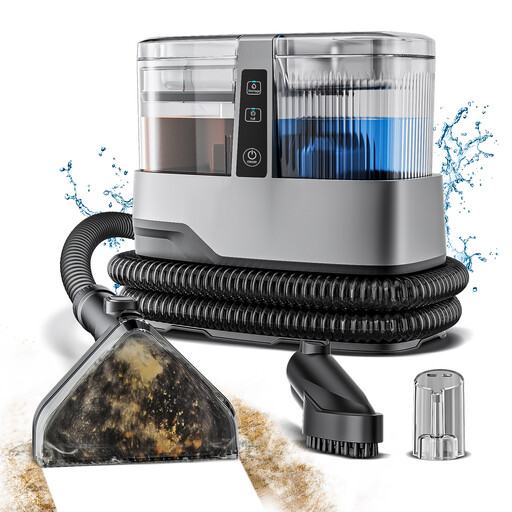
Why it suits this type of user: This compact model is designed for stains on carpets, sofas, stairs and car seats. Its 5-metre cable means you don’t need to stop and recharge while cleaning.
The product information specifies separate clean- and dirty-water tanks and a transparent nozzle. This lets you monitor the water flow and empty the tank after use.
600 W power, stated suction power of 17,000 Pa, portable design and a dual-tank system.
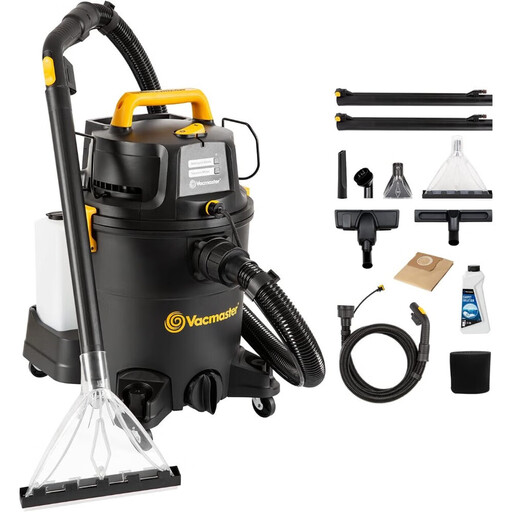
Why it suits this type of user: This larger model is a good fit for households that want to clean dry materials, upholstery and car interiors as well as carpets.
The stated capacities of 23 litres for collection and 6 litres for cleaning solution mean fewer interruptions when cleaning larger areas. Different filters are specified for wet, dry and carpet cleaning.
1300 W power, 3-in-1 use, a 23-litre tank and a stated noise level of 72 dB.
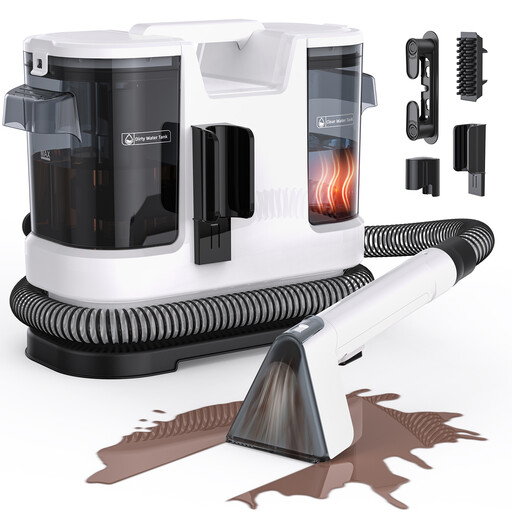
Why it suits this type of user: This model is designed for bigger cleaning jobs involving carpets, sofas and car interiors, and the product listing specifies a long cable.
The stated specifications include 1400 W power, 15,000 Pa suction power and a large tank. Before use, check that the fabric is suitable for wet cleaning.
1400 W power, stated suction power of 15,000 Pa and suitable for carpets, sofas and car interiors.
We’ve put together a complete, up-to-date list of products that meet these strict selection criteria and the applicable European safety regulations.
A narrow upholstery nozzle can be handy for car interiors. For sofas and stairs, a more compact upholstery cleaner is often easier to handle than a large appliance. If you only need to treat a stain occasionally, you could also consider a small sofa or upholstery cleaner.
Only if the upholstery is water-resistant and the manufacturer allows wet cleaning. Check the care label, test an inconspicuous area and use no more moisture than necessary. Then let the sofa dry completely.
Empty and rinse the dirty-water tank after every use. Also clean the nozzle, hose and filters according to the instructions. Let any removable parts air-dry before putting the appliance away. This helps prevent smells and blockages.
The running costs mainly include electricity, water and suitable cleaning solution. A model with a larger tank may be more efficient for large areas, while a portable spot cleaner uses less water and solution on small marks. Always check the recommended cleaning solution and maximum water temperature in the product manual.
