
Vandaag of morgen in huis

Kwaliteit gegarandeerd

Welkomstaanbiedingen ontgrendelen: GRATIS bezorging | Tot 80% korting | Gratis 30 dagen JoyPlus-proefperiode
Download de app
A spilt drink, muddy paw prints or a stain on the sofa calls for a different approach from everyday vacuuming. A carpet cleaner sprays water mixed with cleaning solution into the fabric, then sucks up the dirty liquid. This makes these appliances useful as stain removers, upholstery cleaners and car seat cleaners too.
However, not every machine is suitable for every job. Marketing terms such as “extra powerful suction”, “steam cleaning” and “deep cleaning” don’t tell you much on their own. Pay close attention to the technical details and think about how you plan to use the appliance.
A model rated at 18 kPa may seem stronger than one rated at 13 kPa. In practice, brush width, the hose, airflow and the shape of the suction nozzle all play a part too. So don’t just look at the figure: check whether the appliance is suitable for the surface you want to clean.
A narrow nozzle is handy for stairs, car seats and small stains. But cleaning a large rug with the same nozzle will take longer.
A steam cleaner for carpets may be described in the product specifications as suitable for several surfaces, but not all fabrics can withstand heat or a lot of moisture. Always check the care label on your carpet, sofa or car seat, and test the cleaner on an inconspicuous area first.
Don’t use a steam function on materials that aren’t water-resistant. If you’re unsure, a carpet cleaner that uses cold water and controlled suction is a more cautious choice.
A small clean water tank can be handy for a quick stain, but you’ll need to refill it more often when cleaning several rooms. A separate dirty water tank stops dirty water from being used again. After every cleaning session, empty the tank, flush the hoses and leave the parts to dry. Otherwise, leftover moisture and cleaning solution can cause unpleasant smells.
Look at the stated suction power in kPa and motor power in watts, but only compare these figures between appliances with a similar design. A higher figure doesn’t guarantee that every stain will disappear.
A wide brush covers carpet more quickly. A narrower brush gives you greater control on a sofa, mattress, stair runner or car seat. For families with children and pets, a separate brush for upholstery or pet messes can be useful.
A two-tank system keeps clean and dirty water separate. Check:
For occasional stains, a compact portable carpet cleaner is often enough. A larger tank is more convenient for bigger areas, as you won’t have to stop as often.
A long cable and flexible hose determine how much room you have to move around. For car interiors, a hose of around 1.8 metres is handy for reaching seats and awkward corners. Also check whether the cleaner comes with an upholstery nozzle, crevice brush or self-cleaning function.
Pay attention to the noise level too. An appliance rated at around 80 dB or more may be clearly audible in a small room. Try to use it at a time when it’s least likely to disturb other people in your home or your pets.

Why it suits this type of user: Its compact design is intended for smaller cleaning jobs around the home, on stairs and in the car. The product specifications list a 500 W motor, a 1.8-metre hose and separate water tanks.
The two tanks keep clean and dirty water separate. Do bear in mind the stated capacity of 0.8 litres, and remember to empty and rinse the cleaner after use.
500 W motor, 1.8-metre hose, removable tanks and a cleaning solution included for stains and pet messes.
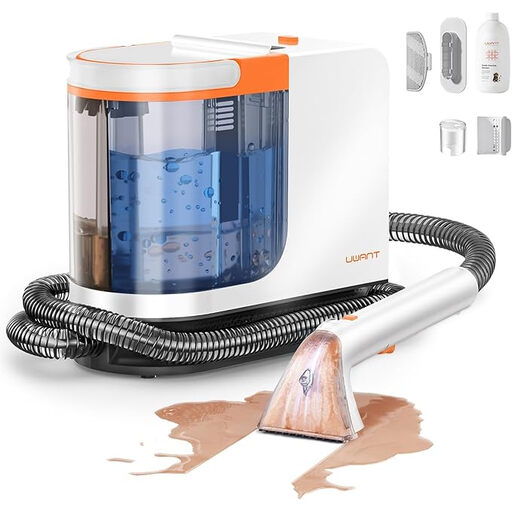
Why it suits this type of user: According to the product information, this model is designed for carpets, sofas, car seats and pet stains. Its stated suction power is up to 18 kPa, and the brush is 14 cm wide.
The product description lists a 2-in-1 tank design and a self-cleaning function. Before buying, check exactly how the tanks and hose need to be maintained.
Stated suction power of up to 18 kPa, 600 W floating motor, 14 cm brush and a design for several types of fabric.
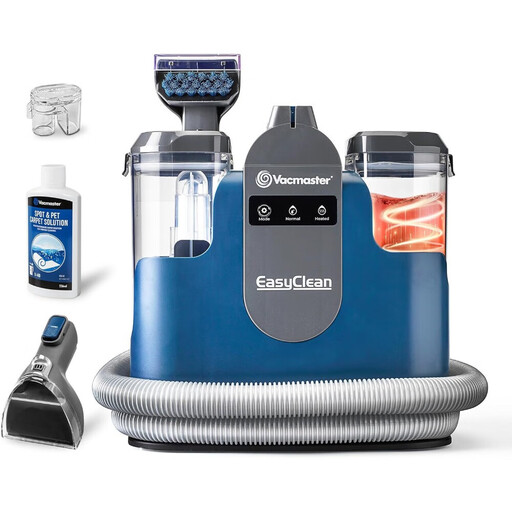
Why it suits this type of user: For households that regularly clean sofas, carpets, stairs and car seats, this model has a heated cleaning function, two tanks and a self-cleaning hose.
The standard and heated modes are listed separately. Only use heat if the fabric’s care label says it’s suitable.
500 W motor, 1.6-litre clean water tank, 0.95-litre dirty water tank and a 1.8-metre hose with a self-cleaning attachment.
We’ve put together a complete, up-to-date list of products that meet these strict selection criteria and current European safety requirements.
Before use, always check the manual, the fabric’s care label and the supplied safety instructions. A CE mark, clear manufacturer details, warranty information and a manual in a language you understand are useful things to check when buying within the European market.
You can, if the upholstery is water-resistant and the manufacturer says it’s suitable for that surface. Use a narrow upholstery nozzle and test it on a hidden area first. An upholstery cleaner with a controlled spray and suction function is generally more practical than a large carpet-cleaning machine.
Use a carpet cleaner when there are visible stains or when fabric needs a thorough refresh. You usually won’t need to clean every day. Too much moisture and cleaning solution can increase drying time and maintenance. Vacuum regularly and treat spills as soon as possible.
Running costs mainly include electricity, water and, if needed, cleaning solution. An appliance with a larger tank may be more efficient for several rooms, while a portable carpet cleaner uses less water and cleaning solution for small stains. So compare more than just the purchase price: consider tank capacity, maintenance and the cost of suitable cleaning solutions.
