
Vandaag of morgen in huis

Kwaliteit gegarandeerd

Welkomstaanbiedingen ontgrendelen: GRATIS bezorging | Tot 80% korting | Gratis 30 dagen JoyPlus-proefperiode
Download de app
A bulk pack of instant noodles is handy for students, families, offices, catering businesses and Asian supermarkets. You get a long-lasting supply and don't have to keep ordering individual packets. However, a large box isn't automatically better value or more practical. The flavour can disappoint, the portions may be smaller than expected, and allergens are sometimes overlooked.
With these checks, you can compare Asian instant noodles in a straightforward way and choose a pack that suits your needs.
A box of 30 pieces looks appealing, but also check the weight per portion. A pack of 30 × 60 g contains significantly less product than a box of 20 × 120 g. Always work out the total net weight and, if you like, compare the price per 100 g.
The front might say "seafood", "shrimp" or "beef", for example. That doesn't automatically mean there's a large amount of that ingredient inside. Check the ingredients list and the allergen information. With some products, it's about flavourings, extracts or powders. According to the product information for ACECOOK Siu Kay Seafood Spicy, the seasoning mix contains shrimp, fish and squid extracts. The exact composition is on the packaging.
Spicy instant noodles are not all the same. Korean ramen often uses a powerful seasoning powder, while Thai noodles can have sour, spicy or lime-like notes. Also, some noodle soups are prepared with all the cooking water, whereas other varieties need to be drained after soaking. If you ignore the instructions, you could end up with a bowl that's too salty or too strong.
For a household or office, 20-pack instant noodles are often easy to manage. A box of 30 is better suited to daily use, catering or resale. Pay attention to these three details:
A ramen multipack with separate sachets is also easier to portion than a large package with combined contents.
Choose based on when you'll be eating them:
Also look out for extra sachets. A product with separate seasoning powder, sauce and vegetables may require more preparation steps, but gives you more control over the intensity.
Under EU rules, relevant allergens must be clearly stated on the label. Check especially for wheat and gluten, soya, fish, crustaceans, milk, sesame, mustard and peanuts. This is important for households, workplace canteens and catering.
Also compare the nutritional information table per 100 g. Instant noodles can differ in energy, fat and salt. The stated values depend on the dry product and how the manufacturer calculates them. Use the original packaging as your guide.
Origin alone doesn't tell you anything about flavour or quality. In the range you'll find products from South Korea, Thailand, Vietnam and China, for example. Look at the cooking time, ingredients, portion size and best-before date, rather than just the country of production.
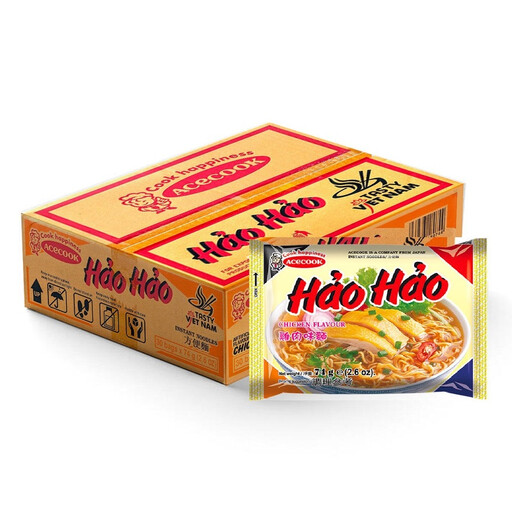
Why this fits the profile: The box contains 30 individual portions of 74 g with chicken flavour. This makes it a straightforward choice for students, families and a shared store cupboard.
The number of pieces and the weight per portion are clearly stated. The classic chicken flavour is less dependent on an unknown level of spiciness.
30 individual packs, preparation with boiling water and a familiar chicken flavour. According to the product information, contains wheat and soya.

Why this fits the profile: This bulk pack is aimed at fans of Korean ramen who want a 120 g portion and a distinctly spicy broth.
The box contains 20 portions of 120 g, making the portion size transparent. The cooking instructions state approximately 550 ml of water and around 4.5 minutes of boiling.
Korean origin according to the product information, 20 generous portions and dried vegetables in the seasoning mix. Check the label for the stated allergens.
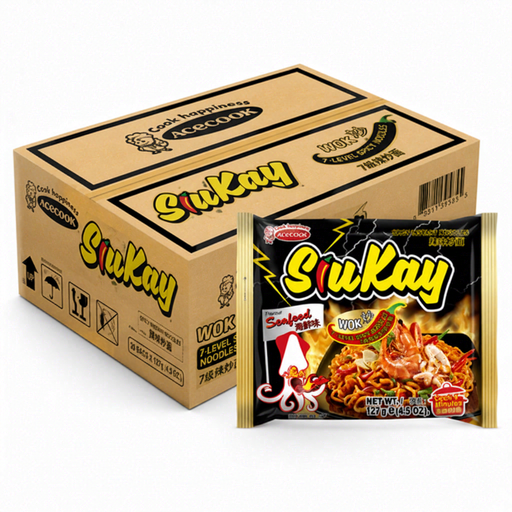
Why this fits the profile: With 24 portions of 127 g and a total weight of 3.048 kg, this box is suitable for a busy office, catering environment or large household.
The flavour description is backed up by an ingredients list that includes shrimp, fish and squid extracts. The box size is clear from the start.
24 generous portions, spicy seafood flavour and a product weight of 3.048 kg. According to the product information, contains wheat, fish, shrimp, squid and milk constituents.
We've put together a full, up-to-date list of products that fully meet these strict selection criteria and comply with current European safety regulations.
Store a bulk pack of instant noodles in a cool, dry place, out of direct sunlight and away from moisture. Don't place boxes directly on a damp floor. On arrival, check that the packs are undamaged and look at the best-before date on the individual sachets before use.
For an office or catering kitchen, a simple stock rotation system helps: put older boxes at the front and note the delivery date. This stops a large supply from sitting unused.
That depends on the price, the weight per portion and the delivery costs. A box of 30 smaller sachets may offer more portions, while a box of 20 larger packs contains more product per meal. Compare the price per 100 g and per portion.
Always follow the instructions on the individual sachet. Many noodle soups are prepared with around 400 to 550 ml of boiling water and are ready in 3 to 5 minutes. With dry or stir-fried varieties, you sometimes need to drain the water before adding the sauce.
The shelf life varies by product and batch. Check the date on the packaging. Store the sachets dry, cool and unopened. It's best not to use a damaged or damp pack.
