
当日/次日达

品质保障

开启新人专享福利: 全场免邮 | 低至 2 折 | 免费试用 30 天 JoyPlus 会员
下载 Joybuy
Asian sausages are a quick way to add flavour to rice, noodles, stir-fries and barbecue dishes. However, Chinese, Taiwanese and Vietnamese pork sausages can differ significantly in seasoning, texture, packaging and preparation methods. If you focus only on the product image or words such as “authentic”, you may choose a product that does not suit the dish you have in mind.
This guide will help you compare Asian sausages objectively and choose the right option for your household in the Netherlands.
“Chinese sausage”, “Cantonese sausage” and “Taiwanese sausage” refer to a style, but do not automatically tell you how sweet, spicy, fatty or firm the sausage is. Cantonese sausage often contains sugar and spices and works well with rice. A Sichuan-style sausage may contain chilli and Sichuan pepper. Japanese sausage is usually more mildly seasoned and is often already cooked and smoked.
Always check the ingredients list, country of origin and preparation instructions.
A frozen sausage must be stored in the freezer, usually at -18 °C or below. Once thawed, you must not refreeze the product, according to the product information. Other sausages can be stored outside the fridge while the packaging remains sealed. Once opened, different storage periods often apply.
When ordering online, check the storage requirements and plan your purchase around the space available in your freezer. A large 500-gram pack is convenient for a family, but less practical if you only need a small portion.
Many Asian sausages are ready-to-cook and still need to be heated thoroughly. The instruction “grill”, “fry” or “boil” is different from “ready to eat”. For raw or uncooked products, use a core temperature of at least 70 °C, unless the packaging gives different instructions.
Do not look only at the name; check the percentage of meat as well. Examples from the range include:
A higher meat content does not guarantee a particular flavour, but it is a measurable criterion when comparing products.
Match the sausage to your dish:
Check the ingredients list for soya, wheat, milk, celery, mustard and fish. For example, La Wei Ju Taiwanese Grilled Sausage with Glutinous Rice and Corn contains soya and gluten from wheat. The Freshasia variant with melted cheese contains milk. Mooijer Vietnamese pork sausage contains fish sauce.
Salt and fat content also vary. Wanderfort Guangdong Style Sausage lists 32 grams of fat and 3 grams of salt per 100 grams. Meng Fu chicken sausages list 9.7 grams of fat and 1.15 grams of salt per 100 grams. Use these figures to compare products, not as a medical assessment.
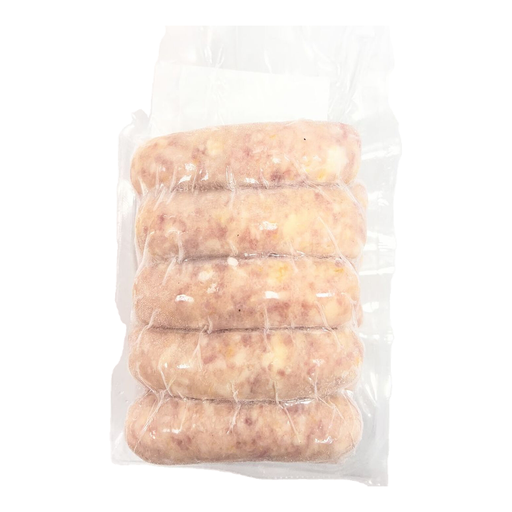
Why it suits this profile: The 500-gram pack is suitable for several portions, and the sausage can be grilled, fried or cooked in the oven. The combination of pork, glutinous rice and corn creates a different texture from an ordinary pork sausage.
The preparation methods and storage requirements are clearly stated. Thaw fully in the fridge and do not refreeze the product after thawing.
500 grams; suitable for the grill, frying pan and oven; contains glutinous rice and corn as distinctive ingredients.
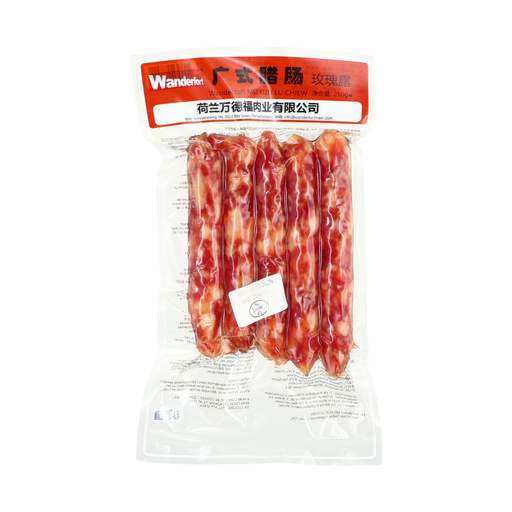
Why it suits this profile: This Cantonese sausage is intended for rice dishes, stir-fries and steamed meals. The product information lists 72% pork and 14% pork fat, along with sugar and Mei Kuei Lu Chiew for the sweet, aromatic flavour profile described.
The ingredients and minimum meat content of 86% are specified. This allows you to compare the sweeter, richer style with milder sausages.
Suitable for fried rice; preparation instructions involving boiling followed by frying; 250 grams per pack.
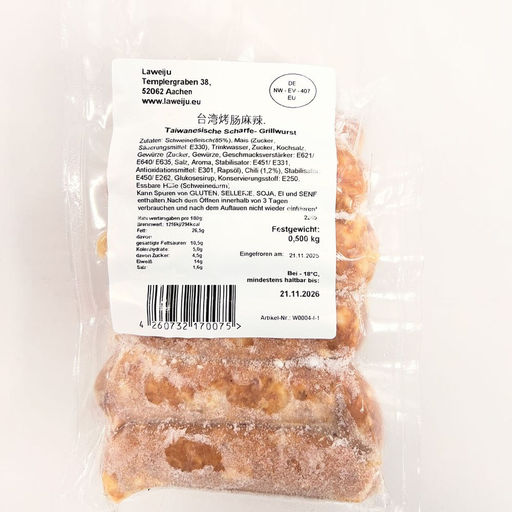
Why it suits this profile: According to the product description, this spicy sausage is suitable for grilling, stir-frying, rice dishes and hotpot. The ingredients list 85% pork, chilli and Sichuan pepper.
The level of spiciness is not inferred from the product name alone: chilli and Sichuan pepper are explicitly listed in the ingredients. The sausage must be heated thoroughly.
500 grams; suitable for barbecues, stir-fries and hotpot; store frozen at -18 °C or below.
Preferably thaw frozen sausages in the fridge. Fry or grill over a medium heat, turning them regularly so that the outside does not brown too quickly while the inside is still cold. Exact cooking times vary depending on the size and brand. Examples from the product information include 8 to 10 minutes in a frying pan for some Taiwanese sausages and approximately 15 minutes of boiling followed by frying for the Wanderfort Guangdong Style Sausage.
For stir-fries, use thin slices and only add them once the sausage is cooked. For rice dishes, you can steam a Cantonese sausage in slices or briefly fry it. Compact Taiwanese sausages are practical for a barbecue, but first check that they have thawed completely.
Also be aware of cross-contamination: use separate tongs or dishes for raw and cooked products. Always follow the packaging if its instructions differ from general cooking times.
We have put together a complete, up-to-date list of products that fully meet these strict selection criteria and the applicable European safety regulations.
A Chinese or Cantonese sausage is a natural choice because of its sweet and savoury profile. Wanderfort Guangdong Style Sausage lists fried rice, stir-fries and steamed dishes as suitable uses. Slice the sausage thinly after boiling or frying.
Not always. Some Japanese sausages are already cooked and smoked, but still need to be reheated. Other products, such as many Taiwanese, Vietnamese and Chinese sausages, are intended to be cooked thoroughly. Therefore, check for the words “cooking required” or the preparation instructions in Dutch on the packaging.
Store them at -18 °C or below and follow the date on the packaging. Once thawed, many products must be kept chilled and used within the stated period. Do not refreeze a sausage once it has fully thawed.
