
Livraison le jour même et le lendemain

Qualité garantie

Débloquez vos offres de bienvenue: Livraison GRATUITE | Jusqu'à -80 % | 30 jours d'essai gratuits à JoyPlus
Téléchargez l'application
Anyone looking to buy Chinese sausage will soon notice major differences in flavour, size, heat level and storage requirements. A Taiwanese sausage is not the same as a Cantonese variety, while a Sichuan sausage can taste very different from a sweetly spiced dried Chinese sausage thanks to green pepper and chilli.
The product name alone does not tell you enough. Pay particular attention to the ingredients, preparation method and storage instructions. This will help you avoid buying a sausage that is too spicy, unsuitable for your dish or likely to sit around for too long after opening.
“Chinese sausage” is a broad search term. Cantonese sausage often has a sweeter, aromatic flavour with rice wine or five-spice. A Sichuan sausage usually contains chilli and Sichuan pepper, which can create a tingling or numbing sensation in the mouth. Taiwanese varieties may instead be peppery, juicy or slightly sweet.
So, check the region and flavourings. Words such as green Sichuan pepper, black pepper, five spice and glutinous rice provide more information than simply “Asian sausage”.
Not every sausage is packaged in the same way. Some varieties must be kept at -18 °C or below at all times. Other dried products can be stored unopened in a cool, dry place. A chilled sausage, such as a Harbin variety, requires storage at around 0–4 °C.
When ordering online, also check that you have enough room in your freezer. A 500-gram pack is convenient for several meals, but less practical if you only use a small portion occasionally.
Product pages may state “ready to cook”. This means the product has been prepared but still needs to be heated thoroughly. Some dried sausages state that they can be sliced immediately after cooking; always follow the instructions on the packaging.
Also check the allergens. Soy sauce may contain soya and wheat. Additives such as preservatives, colourings or flavour enhancers are listed in the ingredients and may vary between varieties.
For nasi goreng, fried rice and stir-fries, a Cantonese or Taiwanese variety is often a practical choice. If you want a distinctive spiced flavour for hotpot, noodles or a spicy topping, look for a spicy Chinese sausage with chilli and Sichuan pepper.
The description “very hot” indicates a more intense flavour than “spicy flavour”. If you are not yet familiar with mala flavours, it is better to start with a Taiwanese black-pepper variety or a milder Cantonese sausage.
Pay attention to both the net weight and the proportion of meat. For example, the 250-gram Wanderfort Guangdong Style Sausage lists 72% pork and 14% pork fat, with a minimum meat content of 86%. The 500-gram La Wei Ju Spicy Grilled Sausage lists 85% pork.
The weight determines how many meals you can make with it:
A dried Chinese sausage is often steamed, then sliced or briefly fried. Some varieties can be cooked directly in a frying pan from frozen, while others must first be defrosted in the fridge.
Always check:
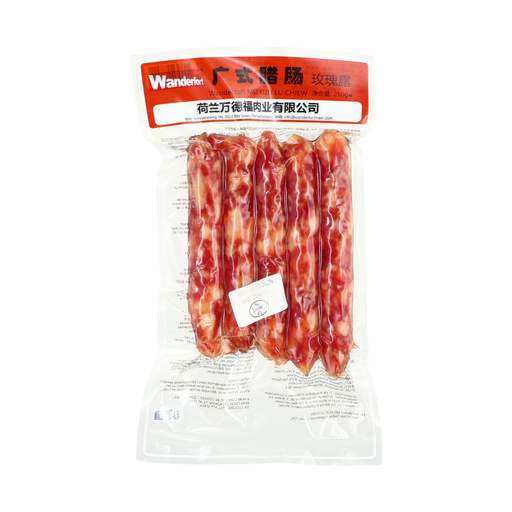
Why it suits this profile: The 250-gram pack is a manageable size for anyone trying Cantonese sausage for the first time. According to the product description, it has a sweet, savoury and aromatic flavour, partly from sorghum alcohol.
The product clearly states the weight, composition and a set cooking method: boil for 15 minutes, then fry until golden brown.
At least 86% meat content according to the product information; suitable for fried rice, stir-fries and steamed meals.

Why it suits this profile: According to the product information, this Taiwanese sausage combines black pepper with pork and is suitable for grilling, frying or cooking in the oven. The 500-gram pack is a good choice for regular cooking.
The storage instructions are clear: keep frozen at -18 °C or below and cook the product thoroughly after defrosting.
500 grams per pack; suitable for the grill, frying pan and oven; soya and wheat allergens are listed.
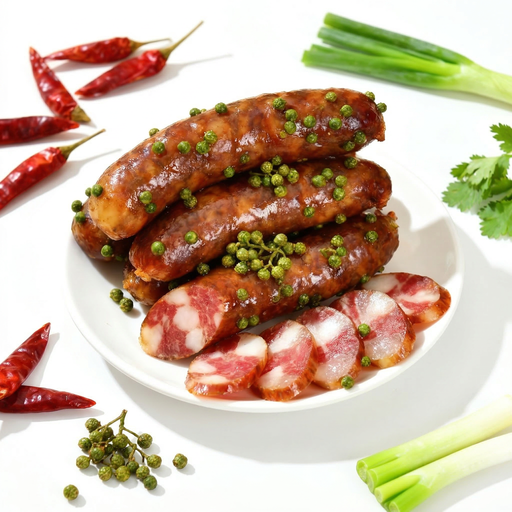
Why it suits this profile: This dried Chinese sausage is aimed at fans of a distinctive Sichuan flavour with green pepper and chilli. The sausage can be steamed or fried in slices.
The packaging lists several storage options: unopened, keep cool and dry until the stated date, or refrigerate or freeze for longer storage according to the product instructions.
260 grams; suitable for rice, noodles and stir-fries; the instructions specify 15 minutes of steaming.
We have put together a complete, up-to-date list of products that fully meet these strict selection criteria and the applicable European safety regulations.
Only slice the sausage after cooking if the instructions specify this. With Cantonese sausage, boiling followed by a brief frying works well: this lightly colours the outside while keeping the inside warm. For nasi goreng, you can then fry the slices with rice, spring onion, egg and vegetables.
For frozen varieties, slowly defrosting them in the fridge is usually practical, unless the product page explicitly states that they can be cooked from frozen. Use a clean chopping board and heat raw sausage thoroughly. Exact cooking times vary depending on the thickness and product, so always follow the packaging instructions.
A Cantonese variety with a sweet and savoury profile, such as lap xuong, pairs well with fried rice. A Taiwanese sausage can also be sliced and fried with the other ingredients. For spicy nasi goreng, choose a Sichuan variety with chilli and Sichuan pepper.
That depends on the type. A frozen product should be stored at -18 °C or below until the date shown on the packaging. A chilled sausage should generally be kept at 0–4 °C and eaten within the stated period after opening. An unopened dried Chinese sausage can be stored outside the fridge if the packaging permits this.
Not always in the same way, but raw or “ready to cook” sausage must be heated thoroughly. Possible methods include steaming, boiling, frying or grilling. A product described as ready to eat may also be sliced cold according to the instructions, but always check the label and the storage period after opening.
