
Livraison le jour même et le lendemain

Qualité garantie

Débloquez vos offres de bienvenue: Livraison GRATUITE | Jusqu'à -80 % | 30 jours d'essai gratuits à JoyPlus
Téléchargez l'application
Asian instant noodles are ideal for a quick lunch, stocking the cupboard or enjoying a late-night snack. However, the cheapest pack is not always the best-value option. The number of sachets, weight per serving and preparation method can vary considerably. Terms such as “rich broth”, “authentic flavour” or “extra spicy” can also create expectations that you can only assess after buying.
With this practical buying guide, you can compare Korean ramen, Chinese instant noodles, Thai instant noodles and Indonesian instant noodles based on clear, verifiable points. That way, you can choose a noodle soup, dry noodles or instant noodles in bulk to suit your taste and how you plan to use them.
A box with five sachets may appear cheaper than a larger box, but the number of grams per sachet can vary. For example, a pack of 5 × 70 grams contains considerably less product than 5 × 130 grams. Always compare:
An instant ramen multipack is particularly practical if you eat that flavour regularly. For families, student houses or food-service use, a box of 20 or 30 sachets may be more convenient than several individual multipacks.
Spicy noodles can differ in both the type of heat and the flavour. Korean ramen often contains chilli, garlic and a rich broth or sauce. Thai instant noodles tend to focus more on sour-spicy seasonings, lime-like notes or a prawn flavour. Chinese instant noodles may instead feature a spiced beef broth or a Sichuan-style flavour.
Product names such as Buldak ramen, hot chicken, kimchi or tom yum indicate a general flavour direction, but do not always tell you how much of each ingredient is present. Check the product description, seasoning sachets and allergen information before buying.
Many Asian instant noodles contain wheat and gluten. Soya, milk, fish, crustaceans, sesame, celery and mustard are also common ingredients. For example, Indomie Instant Noodle Shrimp states that the product contains wheat and crustaceans. Nongshim Neoguri lists fish, prawns, molluscs, soya and wheat, among other ingredients.
Nutritional values vary by brand and flavour. In the product information provided, for example, salt content ranges from 2.3 grams to 10.3 grams per 100 grams. Always check the label on the packaging, as product information on a website may change. According to the product listings for some brands, the packaging may contain more or different information than the online description.
Sachets weighing 60 to 75 grams are common for a light snack. Larger portions of 100 to 130 grams are more suitable for a meal or when you plan to add extra ingredients. When buying instant noodles in bulk, also check the total box contents:
Cups are convenient at the office or when travelling, while sachets generally offer more flexibility when cooking in a pan.
The preparation method is not the same for every product. According to the product information, MAMA Pork Flavor requires around 350 ml of boiling water and three minutes covered. According to the listed instructions, Nongshim Shin Ramyun is prepared in a pan in approximately four to five minutes, using around 500 ml of water.
Dry or stir-fried noodles, such as certain Buldak varieties, are mixed with a sauce after cooking. Noodle soup, on the other hand, is served with the broth. Check whether you need a pan, bowl, colander or simply a kettle.
Choose according to the flavour profile:
The term “spicy” is not based on a standardised European scale. If you are unsure, start with a smaller multipack and use only part of the chilli powder or sauce sachet if necessary.
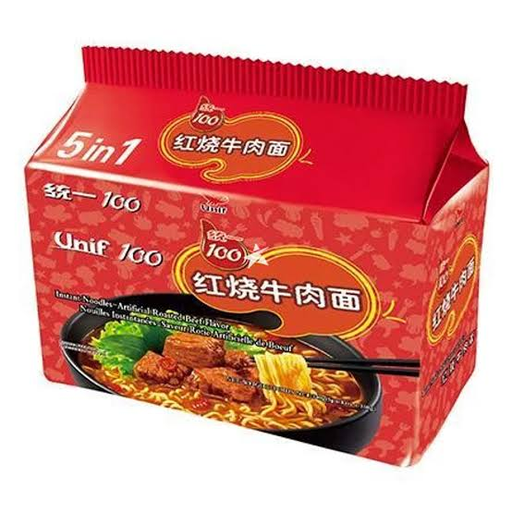
Why it suits this profile: A pack of five sachets is a manageable choice for anyone who wants to try beef flavour without immediately buying a large box. According to the product information, the noodles are ready in around five minutes.
The weight is clearly stated as 5 × 100 grams. This makes it easier to compare the multipack with other portion packs.
100 grams per sachet, five individual portions and dehydrated vegetables in a separate vegetable sachet.
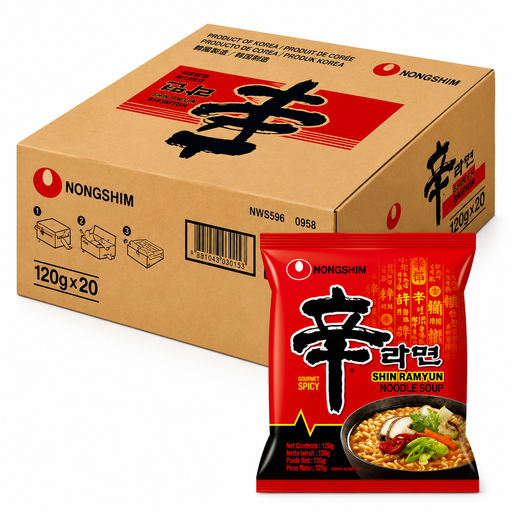
Why it suits this profile: This large pack is designed for fans of Korean ramen who regularly enjoy a spicy noodle soup. The product listing states a preparation time of four to five minutes.
The pack states the number of portions and the weight per sachet. The ingredients and allergens are available for checking in advance.
20 portions of 120 grams, firm noodles and a soup base with chilli, garlic and dried vegetables according to the product information.
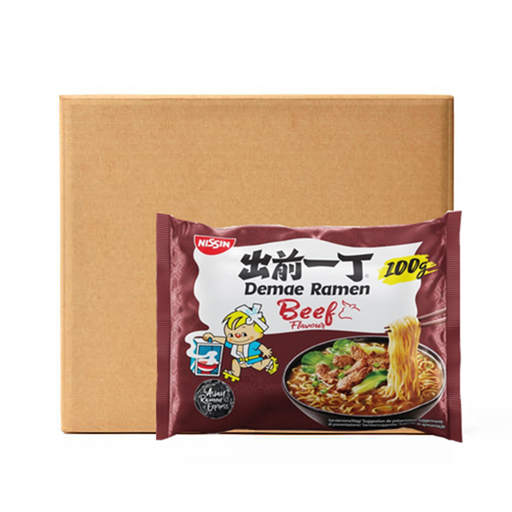
Why it suits this profile: A box of 30 sachets is ideal for households, student houses and food-service businesses that regularly use beef-flavour noodles.
The box contains 30 individual sachets of the same weight, so there is no need to combine several smaller packs.
30 × 100 grams, suitable for stocking up and listed with wheat and soya allergens.
We have put together a complete, up-to-date list of products that fully meet these strict selection criteria and the applicable European safety regulations.
Most varieties taste even better with a few simple additions:
Follow the instructions on the individual packaging. Preparation times and water quantities may vary by brand.
Yes, most varieties are ready in approximately three to five minutes. Sachets prepared in a pan give you more control over the cooking process. Cups are convenient when you have limited kitchen equipment. Add vegetables or egg if you want to make the meal more substantial.
Always check the best-before date on the packaging. Store the sachets in a dry, cool place away from direct sunlight. Do not use a pack if it is damaged. With bulk packs, it is sensible to work out first how many boxes you are likely to use.
That depends on the price per 100 grams, the number of portions and how much you consume. A multipack of five is suitable for trying a flavour. A box of 20, 30 or 40 sachets may be more practical for regular use, but only if you can accurately assess the flavour, storage space and shelf life.
