
Same-day & Next-day Delivery

Quality Guaranteed

Unlock Your Welcome Offers: FREE Delivery | Up to 80% OFF | Free 30-day JoyPlus trial
Download the APP
Choosing the right 3D printer filament can be the difference between a perfect print and a failed project. However, the market is flooded with options, and not all filament is created equal. Many users waste money on material that doesn't perform as promised. Let's discuss the most common pitfalls and how you can avoid them.
Pitfall 1: Inconsistent Diameter Leads to Clogs A common problem with cheaper filament is an uneven diameter. A spool is sold as 1.75mm filament, but in reality, the thickness varies. This variation can cause your extruder to jam, leading to failed prints and frustration.
Pitfall 2: Moisture is the Enemy of Your Prints Filament, especially PETG and nylon, attracts moisture from the air. If a manufacturer cuts corners on vacuum packaging, you're buying a spool that is already damp. This results in weak, brittle prints with a rough surface, no matter how well your printer is calibrated.
Pitfall 3: Misleading "Specialty" Materials A filament labelled "carbon fiber filament" sometimes contains so little carbon fibre that it offers no additional strength. However, it is abrasive enough to ruin your standard brass nozzle. You end up paying a premium for a name, not for performance.
To avoid these problems, it's important to focus on a few key specifications. These are not marketing terms, but objective criteria that determine the quality of your 3D print material.
The most common diameter for FDM printers is 1.75mm. More important than the diameter itself is the tolerance, indicated as '±'. A low tolerance, such as ±0.02mm, means the diameter is very consistent. This ensures reliable filament throughput and minimises the risk of clogs. A filament with a tolerance of ±0.05mm or higher is a risk.
The choice of material depends entirely on your project.
A quality 1kg filament spool is always delivered in a vacuum-sealed bag with a desiccant packet (silica gel). This guarantees that the filament arrives dry and is ready for immediate use. Loose packaging or the absence of a desiccant is a sign of low quality.
Based on these objective criteria, we have selected a number of filaments suitable for different user profiles.
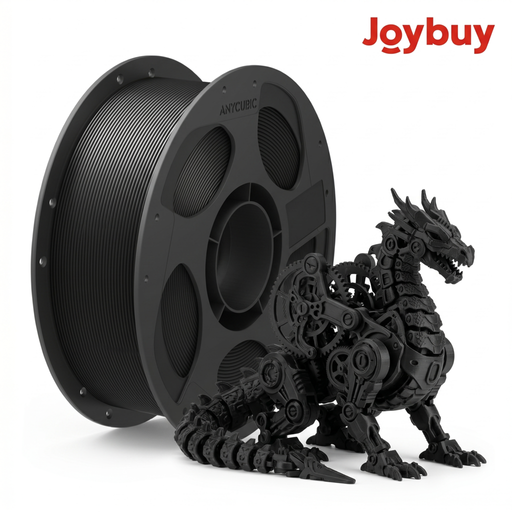
Why This Fits Their Persona: This is an ideal starting point. PLA is the most forgiving material to print with, which significantly shortens the learning curve for beginners. Perfect for printing models, prototypes, and decorative items without the complexity of other materials.
Directly addresses the pitfall of inconsistent diameter with a specified tolerance of ±0.02mm. This ensures reliable and smooth throughput, reducing the chance of clogs.
Very user-friendly with a low tendency to warp. The consistent quality ensures predictable results, which is essential when learning to 3D print.
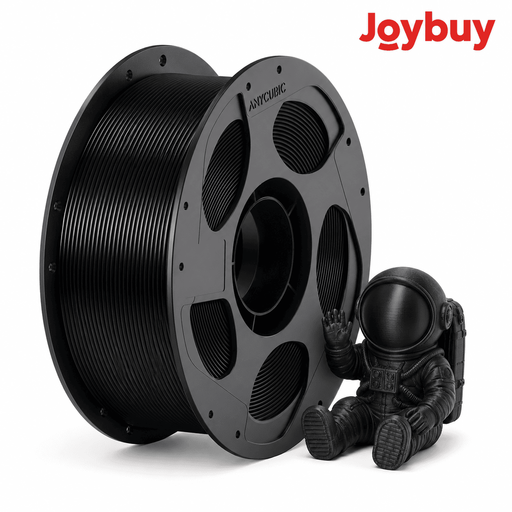
Why This Fits Their Persona: For users printing parts that need to be durable, such as brackets, hinges, or enclosures. PETG filament offers better durability, flexibility, and heat resistance than standard PLA, making it suitable for practical applications.
This filament is delivered in proper, moisture-free packaging. This avoids the pitfall of damp filament, which is crucial for good layer adhesion and strength with PETG.
Good balance between strength and ease of printing. It is chemically resistant to oils and many cleaning agents, which extends the life of functional parts.
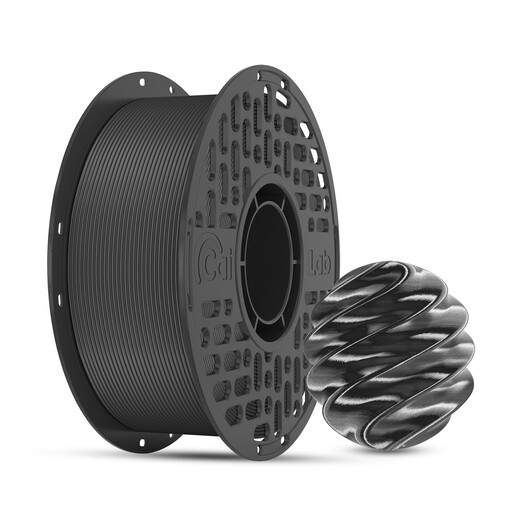
Why This Fits Their Persona: For those who prioritize the visual quality of the print above all else. Silk PLA is specially formulated for a glossy, smooth finish that hides layer lines. Ideal for vases, sculptures, and other decorative objects where appearance is key.
This isn't just standard PLA with a 'silk' sticker. It's a specifically formulated material that delivers a unique finish, thus avoiding the pitfall of misleading marketing claims.
Produces a striking, high-gloss finish that looks luxurious. It prints just as easily as standard PLA, so no special knowledge or hardware is required.
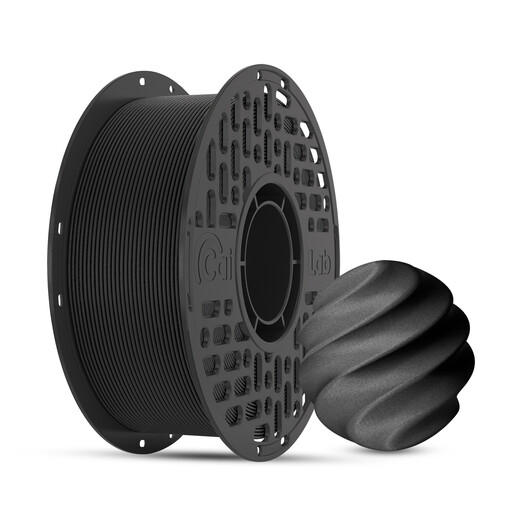
Why This Fits Their Persona: For professionals and serious hobbyists who need parts with high stiffness and low weight, such as for drones, racing components, or engineering prototypes. This carbon fiber filament on a PETG base offers superior mechanical properties.
The product information explicitly warns that this material is abrasive and requires a hardened steel nozzle. This prevents the pitfall of unexpected damage to your printer from a misleading 'specialty' filament.
Offers significantly higher stiffness and strength than standard PETG. The matte, professional finish is an added benefit for technical parts.
We have compiled a complete, up-to-date list of products that meet these strict selection criteria and current regulations. Check out our full range of black filament.
In its original, unopened vacuum-sealed packaging, filament can last for several years. Once opened, its lifespan depends on the material and the ambient humidity. PLA and PETG can absorb moisture within a few months, which degrades print quality. It is advisable to store opened spools in an airtight container with a desiccant (silica gel).
This is a common problem with several possible causes. Check the following points:
Yes, absolutely. Carbon fiber filament is highly abrasive and will wear out a standard brass nozzle in a short amount of time. This leads to inaccurate extrusion and failed prints. Always use a hardened steel or other wear-resistant nozzle when printing with carbon fibre-reinforced materials.
