
Vandaag of morgen in huis

Kwaliteit gegarandeerd

Welkomstaanbiedingen ontgrendelen: GRATIS bezorging | Tot 80% korting | Gratis 30 dagen JoyPlus-proefperiode
Download de app
Black filament is popular for enclosures, prototypes, decorative models and parts that need a clean, understated appearance. However, colour says little about whether a spool is suitable. Material, diameter, dryness and print settings have a much greater impact on the final result.
If you focus only on a low price or a promise such as “high-speed printing”, you may end up with disappointing layers, warped corners or an unsuitable surface finish. Use these practical checks to compare black 3D printer filament more effectively and avoid buying the wrong product.
Black PLA, PETG, PLA+ and PLA Silk are not interchangeable. PLA is often an accessible choice for indoor models. PETG is more suitable when a print needs greater toughness, moisture resistance or temperature resistance. The precise properties depend on the composition and manufacturer.
A glossy spool can also make small layer transitions appear differently from matte 3D filament. Choose based on the intended use first, and appearance second.
High-speed 3D printer filament sometimes comes with high maximum print speeds. That does not mean every printer, nozzle and geometry can handle those speeds. The temperature, material flow, cooling and movement settings all need to work together.
According to the product description, eSUN states speeds of up to 300 mm/s for ePLA-Basic, with a flow rate of 35 mm³/s using a 0.4 mm nozzle. Treat this as a product specification under certain conditions, not as a universal guarantee for every FDM printer.
Moisture can cause popping during extrusion, stringing, rough layers or less consistent feeding with many types of filament. Check whether the spool is vacuum-packed and store opened 1 kg filament in a dry, sealed box or bag with desiccant. This is particularly relevant for PETG and filled materials.
1.75 mm filament is standard for most modern FDM printers. Always check which diameter your printer and extruder support. The wrong diameter can result in an incorrect material feed. Also check the tolerance if the manufacturer provides it; a consistent thickness helps ensure steady extrusion.
Also check that the spool physically fits in the holder and that the filament is wound neatly. A loose or crossed winding can block the feed.
For a functional bracket or mounting component, layer adhesion, dimensional accuracy and material behaviour are more important than shine. For a display model, a matte texture or silk finish may take priority. Check the recommended nozzle temperature, bed temperature, print speed and ventilation before ordering.
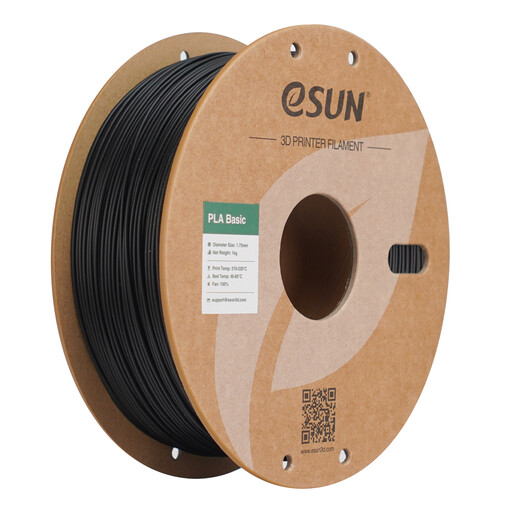
Why it suits this profile: This spool combines the common 1.75 mm diameter with a 1 kg capacity. According to the product description, the filament is intended for most FDM printers and designed for fast projects.
The product information states that it offers minimal warping and consistent extrusion. However, always check the recommended settings for your own printer.
1.75 mm diameter, 1 kg per spool and a stated maximum speed of up to 300 mm/s according to the product description.
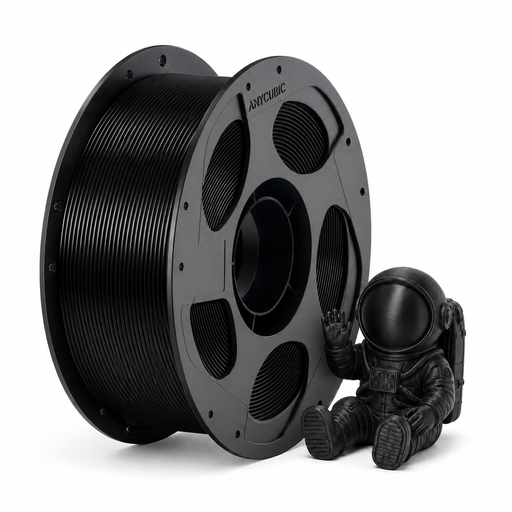
Why it suits this profile: This PETG spool is aimed at functional prototypes and parts. According to the product description, it contains 1 kg of black PETG and is vacuum-packed with desiccant.
The vacuum packaging with desiccant helps protect the spool on arrival. Even so, store opened PETG in a dry place.
PETG material, 1 kg capacity and compatibility with most FDM/FFF printers according to the product description.
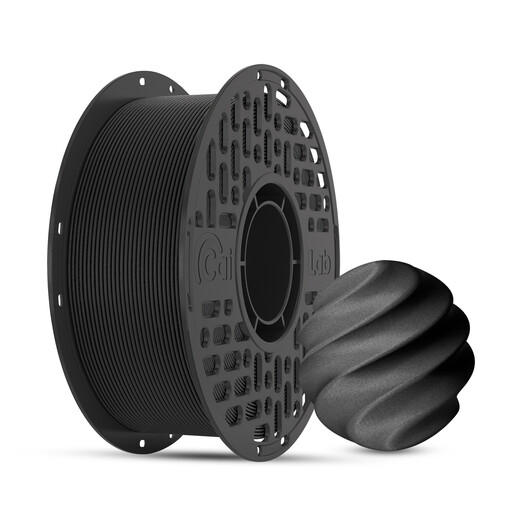
Why it suits this profile: PETG with carbon fibre is a specialist choice for makers who want to work with a filled material. Check the nozzle requirements, temperature settings and printer compatibility beforehand.
The material name makes it clear that this is not a standard PLA spool. Do not use it without checking that your nozzle and extruder are suitable.
PETG base with carbon-fibre filling and a black finish; intended for users who are deliberately choosing a composite material.
For decorative prints, CAILAB PLA Silk in Midnight Black and the PLA Silk Dual Color Red & Black variants are worth considering. Silk filament generally creates a glossier visual effect; check the product settings and colour changes before printing a large model.
If you prefer a more subtle surface, consider eSUN PLA-Matte 1.75mm Black 1kg or CAILAB PLA Matte Black. A matte texture can make layer transitions less noticeable, but the result still depends on layer height, lighting and model geometry.
For general use, you could also consider CAILAB PLA+ Bio-Black. The safety information states, among other things, that the filament should be stored dry and away from direct sunlight. Do not use printed parts for food contact, medical applications or use in an oven or microwave if the product information excludes these applications.
We have put together a complete, up-to-date list of products that fully meet these strict selection criteria and the applicable European safety regulations.
For many beginners, PLA is a practical starting point because there is a wide range available and the settings are often straightforward. First check whether your printer uses 1.75 mm filament. A 1 kg spool of PLA is useful when you want to print several models without having to change spools frequently.
Its lifespan depends on storage, use and moisture absorption. Keep the spool sealed, cool and dry, preferably with desiccant. Filament that becomes brittle, has visibly absorbed moisture or extrudes inconsistently may need drying in accordance with the manufacturer’s guidelines.
The purchase price varies by brand and spool. PETG and carbon fibre can also place additional demands on the nozzle, temperature and calibration. As a result, maintenance and failed prints can affect the total cost. So do not compare only the price per kilogram; also consider the required hardware and settings.
