
Workshop leader serving individual tasting portions
Wants to give each participant their own lidded jar and matches the number of jars to the group size. Severin and Rommelsbacher list models with several portion jars.


For individual tasting portions, the number of jars supplied matters just as much as their capacity: match the number of jars to the number of participants in each batch. A timer or automatic shut-off can make planning easier, but it won’t shorten fermentation. One yoghurt recipe we consulted calls for 12–15 hours of fermentation followed by several hours of chilling, so prepare the yoghurt in advance if participants are to taste it during the workshop.
Wants to give each participant their own lidded jar and matches the number of jars to the group size. Severin and Rommelsbacher list models with several portion jars.
Needs to plan fermentation and chilling in advance rather than expect the yoghurt to be ready at the end of a short session. A recipe from Yoghurt.nl calls for 12–15 hours of fermentation followed by several hours of chilling.
Wants to demonstrate different preparations, so checks the programmes on the exact model and the relevant recipe. Rommelsbacher and Steba list extra programmes or temperature control on specific models.
| What to consider | What should you check? | Who is this important for? |
|---|---|---|
| Number and capacity of the jars | Count the jars and participants in each batch separately. Compare the capacity of each jar too, and check whether compatible replacement jars are available. | I want to give each participant their own tasting portion and make sure it suits the recipe. Around 36% of consumers prioritise the number of portions and their size. |
| Fermentation and planning | Compare the recipe time and chilling time needed with the workshop schedule. A timer or automatic shut-off won’t shorten the recipe time. | I need to plan the preparation in advance so there’s something to taste during the workshop. Around 29% of consumers prioritise planning around the workshop schedule. |
| Hygiene and storage | Read the cleaning instructions and make room in the fridge for the prepared yoghurt. The Netherlands Nutrition Centre recommends setting your fridge to 4 °C. | I want to serve portions hygienically and keep the dairy chilled after preparation. Around 21% of consumers prioritise hygienic portioning and storage. |
| Preparation options | Check that the programme or temperature setting suits your chosen recipe and the supplied cups or containers. | I want to demonstrate other preparations as well as plain yoghurt, and be able to choose the right settings. Around 14% of consumers prioritise a choice of programmes or temperature settings. |
A timer or automatic shut-off ends a programme, but doesn’t reduce the recipe time you’ve chosen. The Yoghurt.nl recipe we consulted calls for 12–15 hours of fermentation followed by several hours of chilling.
Plan backwards from when participants want to taste the yoghurt, allowing time for preparation and chilling.
An appliance with large containers won’t necessarily provide enough small portions for a group. For example, the Rommelsbacher JG 80 comes with four 125 ml portion cups alongside larger containers; other models have seven, eight or nine jars.
Compare both the number and capacity of the supplied jars with the group size for each batch.
A model name in the title isn’t enough to confirm the appliance’s identity or which parts are included. One product description for the Rommelsbacher JG 80, for example, describes a freezer basket, while the manufacturer describes the model as a yoghurt and cream cheese maker.
Before buying, check the full model name, product description and included parts.
The JG 3518 is an option if seven individual 150 ml jars suit the portions you have planned.
The JG 40 is designed for eight 150 ml portions; the JG 80 combines smaller portion cups with larger containers and several programmes.
The JM 3 may suit you if temperature control is important and 180 ml portions work with your recipe.
The Ligne 459002 is designed for nine individual jars, making it an option if you want to prepare more portions per batch.
These Joybuy products include yoghurt makers with individual jars for tasting portions, including models with a timer or temperature control.
 No image available
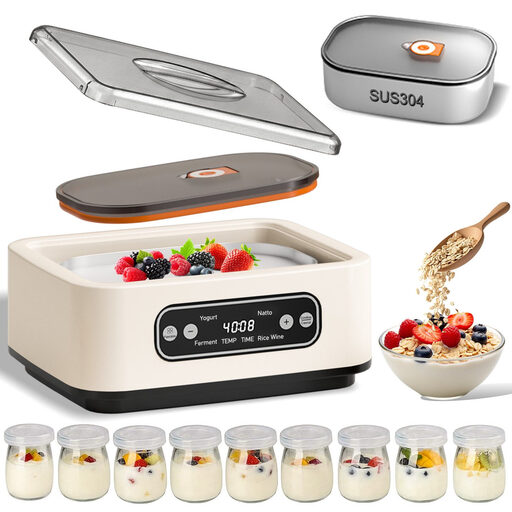
The nine glass jars listed may suit individual portions; check the capacity of each jar and match it to your recipe.
The product name lists a 1.6 L inner pot, temperature and timer settings, and an OLED display.
 No image available
The eight jars listed may suit a workshop batch of up to eight individual portions; check the jar capacity for your recipe.
The product name lists a capacity of 1440 ml, digital temperature control and a 48-hour timer.
 No image available
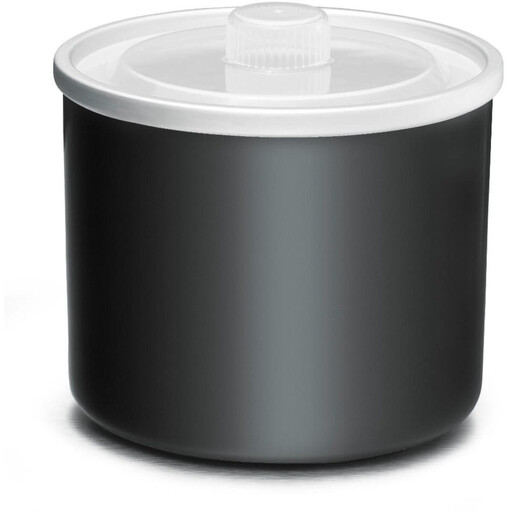
This model may suit you if four small individual portions per batch are enough; check that the product description and included parts match what you’re looking for.
Rommelsbacher lists four 125 ml ceramic cups and two 1.2 L glass containers for the JG 80.
 No image available
The eight individual jars suit a batch of up to eight participants; check that the jar capacity works for the portions in your recipe.
Rommelsbacher lists eight 150 ml glass jars, a timer and automatic shut-off.
 No image available
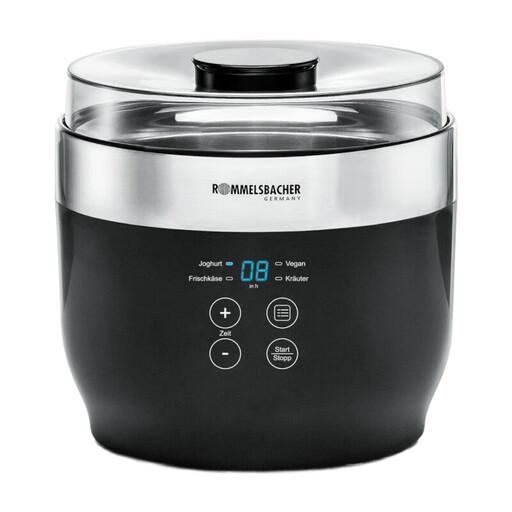
This model may suit you if four small individual portions per batch are enough; check that the product description and included parts match what you’re looking for.
Rommelsbacher lists four 125 ml ceramic cups and two 1.2 L glass containers for the JG 80. The manufacturer lists four programmes.
Not with the Yoghurt.nl recipe we consulted, which calls for 12–15 hours of fermentation followed by several hours of chilling. Prepare the yoghurt in advance if participants are to taste it during the workshop; if you use another recipe, follow its instructions.
The Netherlands Nutrition Centre recommends keeping perishable dairy products chilled and setting your fridge to 4 °C. Use clean spoons. The 5–7-day storage period on the page we consulted applies to opened full-fat yoghurt in its packaging; don’t assume it also applies to homemade yoghurt for a workshop.
Before buying, check whether compatible replacement jars are available for the exact model. According to the Dutch government, there is no fixed statutory period for the legal guarantee in the Netherlands; if a product is faulty, contact the retailer.
It depends on how the workshop is organised and what activities it involves. The NVWA states that businesses working with food must register, and that businesses preparing, processing or selling food must follow a food safety plan based on HACCP or an applicable hygiene code. Calling an activity a ‘cookery workshop’ alone doesn’t determine whether these requirements apply to you.
If you’re offering unpackaged yoghurt as a business, NVWA rules require information about any allergens present, including information that customers can access when the food is offered. Check the ingredients in the milk, culture and any additions you use. Whether these requirements apply to a private workshop has not been established separately here.