
Hosts who need extra chilled storage
You want to keep yoghurt and other chilled food neatly organised for guests. So, consider the usable fridge capacity and check the temperature.


Choose a fridge that fits the space available, offers enough usable fridge capacity and lets you control the temperature. A table-top fridge takes up less space, while a fridge without a freezer compartment uses all its capacity for chilled food. Choose a fridge-freezer only if you also need freezer space. Voedingscentrum recommends setting your fridge to 4 °C: check the temperature with a thermometer and follow the yoghurt packaging instructions too.
You want to keep yoghurt and other chilled food neatly organised for guests. So, consider the usable fridge capacity and check the temperature.
You’re looking for a fridge that fits into a small space. Compare its external dimensions with the space available, and check how much usable fridge capacity it offers.
You want to compare models by their annual energy use, not just their energy rating. Check the annual consumption in kWh on the energy label too.
First, work out how much fridge space you need for yoghurt and other food, and whether the appliance will fit in the space available. Then compare the temperature controls and annual energy use.
| What to consider | What to look for | Who it matters to |
|---|---|---|
| Storage temperature | Check whether the temperature can be adjusted, then measure it after installation with a fridge thermometer. Voedingscentrum recommends 4 °C. | If you want to keep yoghurt safely chilled, you’ll want to know the temperature the fridge actually reaches. Around 36% of consumers prioritise being able to check the storage temperature of yoghurt. |
| Usable fridge capacity | Compare the capacity of the fridge compartment and its shelf layout. Don’t count freezer space as room for chilled food. | If you need to store several packs and other food for guests, usable fridge capacity matters. Around 29% of consumers give storage capacity the highest priority. |
| Space and installation | Measure the height, width and depth. For a built-in model, also check the niche dimensions, door fitting and ventilation instructions. | If your kitchen has limited space, the appliance needs to fit properly. Around 21% of consumers put the space available at the top of their list when choosing. |
| Annual energy use | For models that fit in terms of size and capacity, compare both the energy rating and the annual consumption in kWh shown on the energy label. | If you want to factor in energy use, compare the annual consumption of suitable models. Around 14% of consumers say this is their top buying priority. |
In a fridge with a freezer compartment, not all the stated capacity is available for yoghurt and other chilled food.
Compare the fridge compartment’s capacity and layout, not just the total number of litres.
A feature description or thermostat setting doesn’t automatically tell you what temperature the yoghurt reaches where it’s stored. Bosch describes SuperCooling as helping to cool newly added food more quickly, but that doesn’t prove a full fridge—or the yoghurt inside it—will reach 4 °C straight away.
Measure the temperature after installation with a fridge thermometer and adjust the settings if needed.
The energy rating indicates efficiency, while the energy label also shows annual consumption in kWh. Actual energy use may differ from the figure on the label.
For models that fit in terms of dimensions and fridge capacity, compare the annual consumption in kWh too.
With a built-in fridge, the niche dimensions and door fitting are important too.
Measure the niche and check the door fitting and model-specific ventilation instructions before choosing a model.
The Beko TS190340N is an example of a compact table-top fridge for a small space.
The Bosch KSV33VLEP is a freestanding fridge without a freezer compartment, for anyone looking for fridge space without a freezer in the same appliance.
Liebherr offers freestanding and built-in models, such as the Rd 4200 and IRd 4000, for different installation requirements.
These products suit different needs: a compact table-top fridge, a fridge-freezer or a built-in fridge. Choose according to the space available, the fridge capacity you need and whether you also need freezer space.
 No image available
A table-top model for anyone looking for a compact fridge for chilled food.
129 litres capacity; 54 cm wide; energy rating E; stated consumption 92 kWh per year. The product information lists a reversible door and two glass shelves.
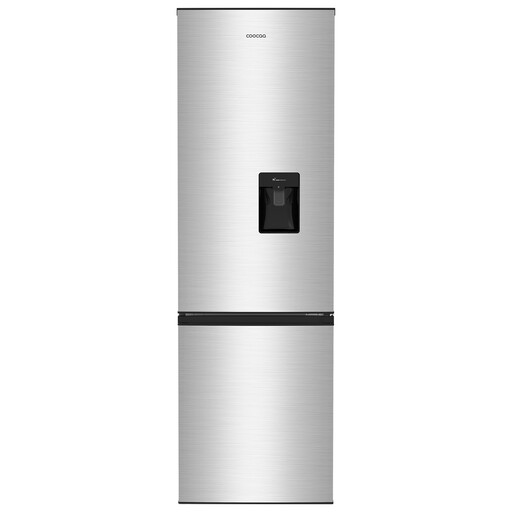 No image available
A fridge-freezer for anyone who needs freezer space in the same appliance as their chilled yoghurt.
268 litres total: 197 litres of fridge space and 71 litres of freezer space. The product information lists energy rating E and a noise level of 40 dB.
 No image available
A fridge-freezer for anyone who wants to combine chilled food storage with a separate freezer compartment.
153 litres of fridge space and 52 litres of freezer space; 54 cm wide; energy rating E; stated consumption 191 kWh per year. The product information lists a reversible door.
 No image available
A compact fridge for anyone looking to make the most of a narrow space and needing mainly fridge capacity.
92 litres of fridge space; 47 cm wide; seven temperature settings; recommended setting of 4 °C; energy rating E; stated consumption 85 kWh per year and noise level 39 dB.
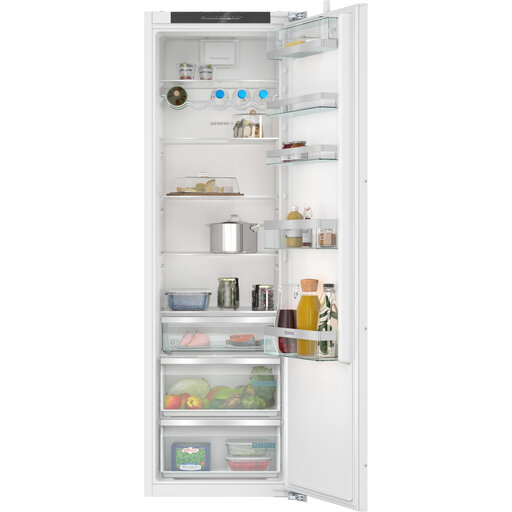 No image available
A built-in fridge for kitchens where the niche and door fitting suit this model.
310 litres of fridge space; energy rating D; stated consumption 91 kWh per year and noise level 34 dB. The product information lists digital temperature control and door-on-door fitting. Check the niche dimensions and fitting requirements before buying.
Voedingscentrum recommends setting your fridge to 4 °C and checking the temperature with a fridge thermometer. Put yoghurt back in the fridge promptly after use. For an unopened pack, also follow the storage advice and date on the label.
For the specific full-fat yoghurt described, Voedingscentrum says it can be kept in the fridge for 5–7 days after opening. After that, check its appearance, smell and taste. Don’t assume this applies to every type of yoghurt, and follow the advice on the packaging too.
Voedingscentrum recommends placing a thermometer in the middle of the bottom shelf and leaving it there for half a day or overnight. Adjust the fridge if the reading is above 4 °C. Also check the model’s installation and ventilation instructions.
EU energy labelling and additional product information requirements apply to domestic refrigeration appliances within the scope of the rules. These include mains-powered appliances with a capacity of more than 10 and up to 1.500 litres. There are also exceptions, including mobile refrigeration appliances.
No. The Dutch government (Rijksoverheid) states that the Netherlands does not have a fixed statutory warranty period. You’re entitled to a product that works properly, with factors such as the type of product and its expected use taken into account. A manufacturer’s warranty is in addition to this right.