
Vandaag of morgen in huis

Kwaliteit gegarandeerd

Welkomstaanbiedingen ontgrendelen: GRATIS bezorging | Tot 80% korting | Gratis 30 dagen JoyPlus-proefperiode
Download de app
A mini fridge seems like a simple purchase. Whether you're looking for a compact solution for your dorm room, an extra cooler for drinks in the man cave, or a portable model for camping, the choice is vast. But this abundance of options also brings pitfalls. Many models look good on paper but turn out to be impractical, noisy, or expensive to run in practice.
As a Joybuy Product Recommendation Officer, I'll help you cut through the marketing jargon. We'll look at what really matters, so you can choose a model that fits your situation without any hidden downsides. Let's examine the three most common mistakes when buying a small fridge.
A manufacturer advertises a 45-litre capacity, but once you get it home, your favourite 1.5-litre bottles don't fit upright. The stated capacity says little about the usable space. An awkward layout, an oversized freezer compartment, or fixed shelves can make a seemingly spacious mini fridge feel cramped and frustrating in practice.
Many cheaper mini fridges use a thermoelectric system. This is often marketed as quiet, but the fan runs continuously. In a quiet environment like a bedroom or study, this constant humming can be very distracting. A model with a compressor is often only audible when it kicks in and is completely silent in between.
An energy-efficient fridge is important, but the energy label (e.g., F) can be misleading for small models. A fridge with an F label can still consume very little power in absolute terms. It's wiser to look at the annual energy consumption in kilowatt-hours (kWh). This figure gives a much more honest picture of the final cost on your energy bill.
To make the right choice, we'll focus on a few technical specifications that make the difference between a good and a bad purchase.
This is the most important technical decision.
Noise level is crucial if the fridge will be in your living or sleeping area.
Look beyond the exterior. A fridge with a freezer compartment is handy but comes at the expense of cooling space. Check if the shelves are adjustable and if the door is reversible. The latter gives you much more flexibility when placing the freestanding fridge.
Below are a few models that score well on the points above, matched to a specific user profile.
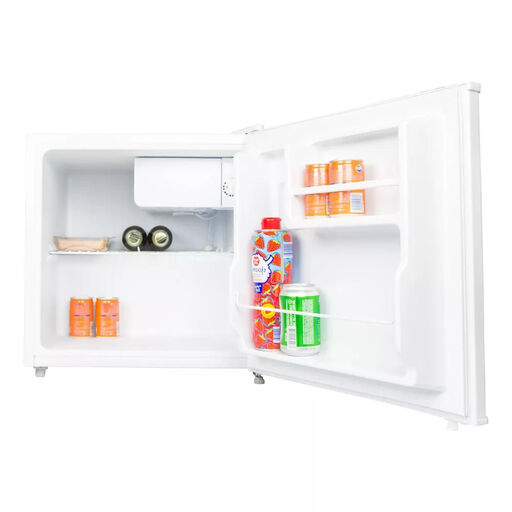
Why it's a match: This model is compact, affordable, and designed for small spaces. The layout is practical for cans and snacks, and there's even a small freezer compartment for ice cubes. Ideal for a dorm room.
Despite its F energy label, the annual consumption is low at 107 kWh, which translates to about €25 per year. The noise level of 41 dB is acceptable for this price range and quieter than many thermoelectric models with their non-stop humming.
A very low purchase price and low running costs, combined with a compact footprint that fits anywhere.
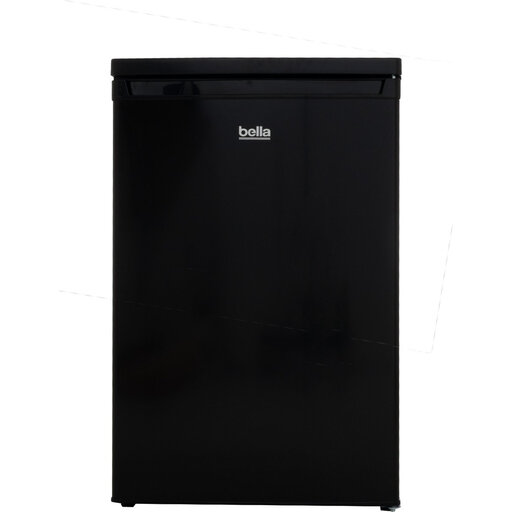
Why it's a match: Looking for a spacious, quiet fridge for your office or as extra cooling at home? This model offers 127 litres of usable space and fits under a standard countertop.
This model tackles the noise and space pitfalls. At 39 dB, it's very quiet. The generous capacity and smart layout with 3 shelves and a vegetable drawer ensure you can actually use all the space.
Very quiet and energy-efficient (90 kWh/year) for its size. The reversible door and flexible layout make it practical for any room.
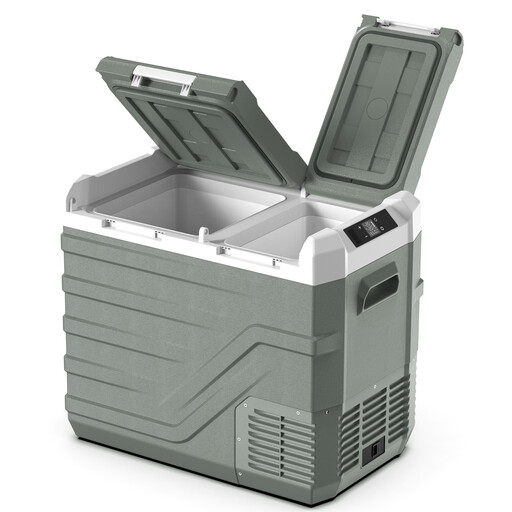
Why it's a match: For those who need serious cooling power in a camper van, boat, or truck. This isn't a simple cooler, but a full-fledged portable fridge and freezer in one.
The powerful compressor cools down to -20°C, regardless of the outside temperature. This avoids the disappointment of a thermoelectric cooler that fails on a hot day. The built-in battery protection prevents it from draining your vehicle's battery.
Runs on 12V, 24V, and 220V. The two independently controlled zones allow you to cool and freeze simultaneously.
Didn't find what you were looking for? There are more specialised models, such as a compact beverage cooler with a glass door or a quiet wine fridge. Explore our full range to find the model that perfectly matches your needs.
This depends heavily on the model, size, and usage. A small, energy-efficient fridge like the Bella BKK550-040EB consumes about 90 kWh per year. At an electricity price of €0.30 per kWh, that amounts to around €27 per year. A less efficient or larger model can cost up to €50-€60 per year. Always check the annual kWh consumption on the energy label for the most accurate estimate.
A quiet fridge has a noise level of less than 40 decibels (dB). This is comparable to a whisper or the ambient noise in a library. Models with a compressor only make noise when the motor kicks in to cool. Thermoelectric models have a fan that runs constantly, which can be perceived as a monotonous hum. For a bedroom or office, a compressor model under 40 dB is the most comfortable choice.
Not every fridge is suitable for this. You need to pay attention to the climate class of the appliance. This class indicates the ambient temperature range within which the fridge functions correctly.
For an unheated shed in a temperate climate, where winter temperatures can drop below 10°C, you need a model suitable for lower temperatures, often indicated by SN. A standard (N) fridge may have problems if the environment becomes too cold. Always check this specification before placing a fridge in a cold space.
