
Vandaag of morgen in huis

Kwaliteit gegarandeerd

Welkomstaanbiedingen ontgrendelen: GRATIS bezorging | Tot 80% korting | Gratis 30 dagen JoyPlus-proefperiode
Download de app
Buying a fridge seems straightforward, until you discover that a model will not fit through the doorway, makes too much noise or has less freezer space than expected. Marketing terms such as No Frost, energy-efficient and American-style fridge do not tell the whole story either. The practical details determine whether a fridge suits your kitchen and everyday needs.
A high litre capacity sounds appealing, but it says nothing about the layout. In practice, a fridge with lots of door shelves may be less useful for large pans, tall bottles or wide packaging. Always check how the capacity is divided between fridge space and freezer space.
For example, a fridge freezer with a total capacity of 282 litres may have 197 litres of fridge space and 85 litres of freezer space. That is a different choice from a model with a similar total capacity but a much smaller freezer compartment.
The external dimensions are not the only measurements that matter. A fridge needs space to release heat. Check the installation instructions and allow for skirting boards, cupboard doors, walls and the door’s opening arc.
Some models recommend clear space at the back, above or at the sides. A large American-style fridge may also be difficult to move through a narrow hallway or doorway. Measure the entire route from the front door to the kitchen.
A water dispenser, app control or InstaView door can be useful, but does not automatically offer practical value for every household. If a dispenser has a reservoir, you will need to refill and clean it regularly. According to LG’s own information, the InstaView feature is designed to reduce how often the door is opened; the actual effect depends on usage and the surrounding environment.
No Frost does not mean you never have to clean the appliance either. The technology reduces ice formation and limits the need for manual defrosting, but the interior, door seals and ventilation openings still require maintenance.
If you use the fridge for a one- or two-person household, a compact model or under-counter fridge may be sufficient. Models of around 80 to 126 litres are practical for students, offices and holiday homes. With a mini fridge, make sure you check whether it has a freezer compartment and how large it is.
For families, a fridge freezer from around 250 litres is often more flexible. If you store a lot of food, you could consider an American-style fridge or a four-door model. Check that the additional width and depth will fit in your kitchen.
European energy labels range from A to G. As well as the energy rating, check the stated annual consumption in kWh. This makes models easier to compare. An energy-efficient fridge is not simply one with a favourable letter rating; total consumption, capacity and usage all play a part.
Do not leave the door open unnecessarily, do not place hot food directly inside the appliance and do not position the fridge next to an oven or radiator. This will help to limit energy consumption, regardless of the model you choose.
A quiet fridge is particularly important in an open-plan kitchen, studio flat, office or bedroom. A difference between 35 and 40 dB may seem small on paper, but it matters when the appliance is constantly audible. Look at the stated noise level in dB(A), rather than relying only on marketing descriptions.
No Frost uses air circulation and automatic defrosting to limit ice formation. Low Frost reduces ice formation, but may still require occasional manual defrosting. A model with a 4-star freezer compartment is designed to store frozen food at around -18 °C; also check the freezing capacity in kilograms per 24 hours.
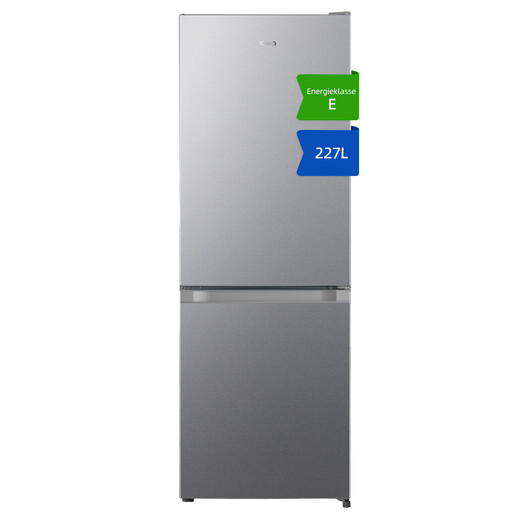
Why it suits this profile: The 54 cm width and reversible door make it suitable for compact Dutch kitchens. The split of 153 litres of fridge space and 74 litres of freezer space is well suited to a smaller household.
The product specification lists both the total capacity and the separate fridge and freezer capacities. Low Frost is clearly distinguished from No Frost.
227 litres of capacity, 39 dB, a 4-star freezer compartment and a reversible door.
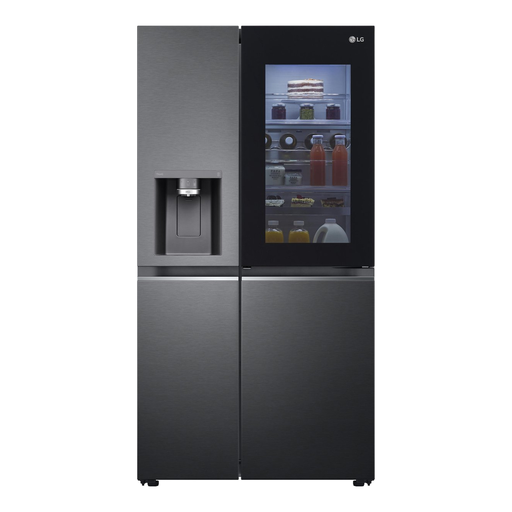
Why it suits this profile: This wide model offers a total capacity of 635 litres, a water and ice dispenser, and ThinQ control according to LG’s product description. It is designed for spacious kitchens and households that store a large amount of food.
The fridge and freezer capacities are listed separately: 416 and 219 litres. However, check the width of 91.3 cm and depth of 73.5 cm beforehand.
635 litres, No Frost, 36 dB and a water and ice dispenser.
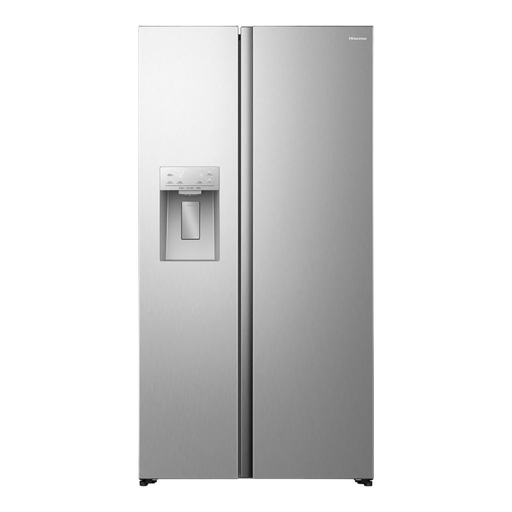
Why it suits this profile: The layout, with 347 litres of fridge space and 181 litres of freezer space, is suitable for large grocery shops and extra supplies. The built-in dispenser uses its own water tank.
The specifications list 528 litres, 40 dB and automatic defrosting. Allow for 50–70 mm of space behind the appliance and at least 100 mm of ventilation space above and at the sides.
528 litres, No Frost, a water and ice dispenser, and a freezing capacity of 10 kg per 24 hours.
We have put together a complete, up-to-date list of products that fully meet these strict selection criteria and the applicable European safety regulations.
This varies depending on the model and method of transport. The product specifications for the models mentioned generally recommend leaving them upright for two to four hours before plugging them in. Always follow the manufacturer’s instructions.
This depends on the stated annual consumption in kWh and your electricity tariff. Multiply the annual consumption shown on the energy label by your current price per kWh. A larger fridge may use more electricity despite having a similar energy rating because of its greater capacity.
No Frost can be useful if you want to reduce the need for manual defrosting. However, the system does not automatically make a model suitable for every kitchen. Before deciding, also compare the dimensions, noise level, energy consumption and practical layout.
