
Vandaag of morgen in huis

Kwaliteit gegarandeerd

Welkomstaanbiedingen ontgrendelen: GRATIS bezorging | Tot 80% korting | Gratis 30 dagen JoyPlus-proefperiode
Download de app
Buying a new vacuum cleaner seems straightforward—until you have to choose between a robot vacuum, stick vacuum, cordless vacuum, wet/dry vacuum or carpet cleaner. A model may offer impressive suction power on paper, yet be less practical because of a small dustbin, short runtime or demanding maintenance.
For households in the Netherlands, three purchasing pitfalls are particularly important:
Looking only at the wattage or pascal rating
A high wattage does not automatically indicate how well a vacuum cleaner will perform on your floors. The brush, airflow, filter and floor setting also make a difference.
Confusing a mopping function with wet cleaning
A vacuum cleaner with a mopping function wipes the floor with a damp pad. That is different from a carpet cleaner or stain cleaner, which can extract water and dirt from textiles.
Underestimating maintenance
Filters, brushes, dustbins and dirty-water tanks need to be cleaned regularly. If they are neglected, airflow may decrease and unpleasant odours can develop.
Pascal ratings, such as 17 kPa or 55 kPa, are technical figures taken from the product description. They are useful for comparisons, but they do not provide a complete prediction of cleaning performance. Also check whether the vacuum cleaner is suitable for:
A vacuum cleaner for carpets and hard floors should ideally have a motorised brush and an adjustable floor setting. An anti-tangle brush can be useful for long hair or pets, but check whether the brush can still be removed easily.
With a cordless vacuum cleaner, the maximum runtime usually depends on the selected mode. The stated runtime often applies to the lowest setting. In turbo mode, the battery can run down considerably faster.
Pay attention to:
A corded model provides a consistent power supply but limits your freedom of movement. For a large home, a removable battery or a robot vacuum with automatic charging may be more practical.
A HEPA vacuum cleaner may be appealing for households that want to filter fine particles. Always check exactly what the manufacturer claims and whether the filter is washable or replaceable. For example, the Monsga ME03 product description mentions a five-stage filtration system and a washable HEPA filter. This is a product specification, not a medical guarantee.
For wet cleaning, separate tanks are important. A clean-water tank and dirty-water tank prevent used water from being spread back across the floor or upholstery. Empty the dirty-water tank after use and allow all components to dry completely.
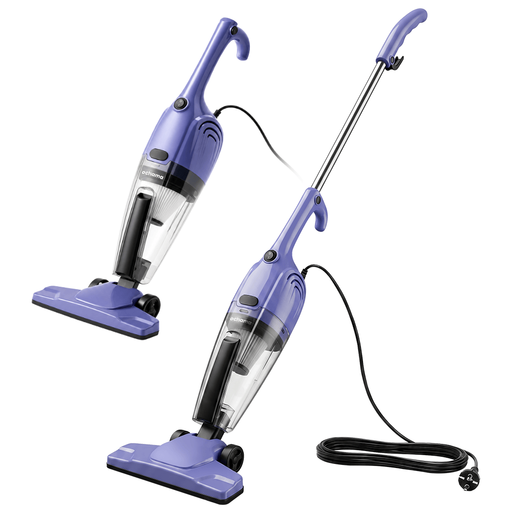
Why This Fits Their Persona: A compact choice for apartments, student rooms and smaller homes where you would rather not recharge a battery.
The cord prevents cleaning from being interrupted by a depleted battery. The product specifications state a 4.5-metre cord and a washable filter.
550 W motor, visible 0.5-litre dust reservoir and use as either a stick or handheld vacuum.
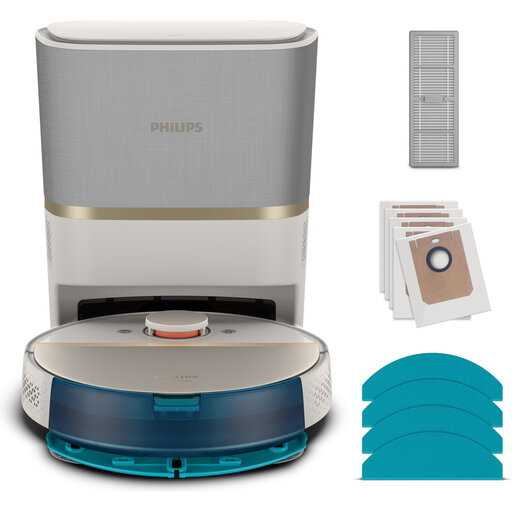
Why This Fits Their Persona: Suitable for households that want to automate daily upkeep, particularly those with mostly hard floors.
Laser navigation and scheduling reduce the need for advance checks and manual steering. The app is still required for full control.
Up to 180 minutes of stated runtime, mopping function, automatic emptying and stated suction power of up to 5000 Pa.
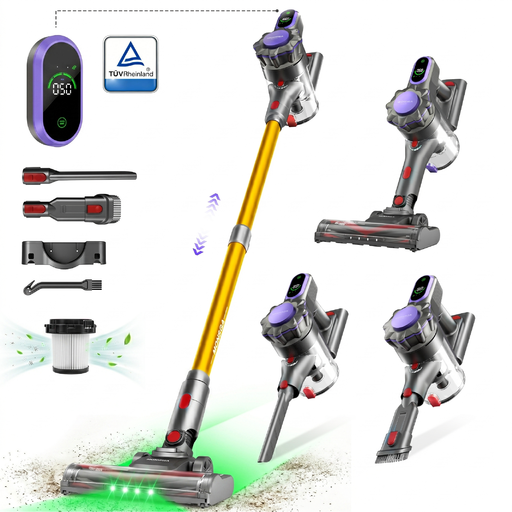
Why This Fits Their Persona: A cordless stick vacuum for quick daily clean-ups around sofas, floors, stairs and pet areas.
The anti-tangle brush is designed to reduce hair wrap. Still clean the brush and filters according to the instructions.
550 W, stated suction power of up to 55 kPa, up to 55 minutes in floor mode and a 0.7-litre dustbin.
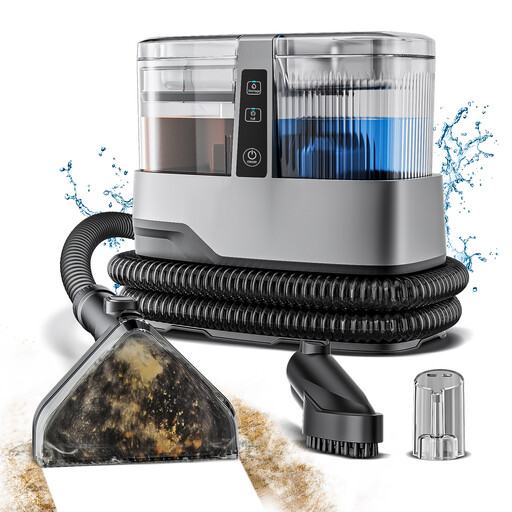
Why This Fits Their Persona: For families with children, pets and upholstered sofas where spills or localised stains are a regular occurrence.
This is a stain cleaner for wet textiles, not simply a dry vacuum cleaner. The dual-tank design separates clean and dirty water.
600 W, stated suction power of 17 kPa, five-metre cord and suitable for sofas, car interiors and carpets.
Choose a robot vacuum if you want dust and crumbs to be dealt with automatically every day. Pay attention to navigation, threshold clearance, app requirements and the space around the charging station. A mopping robot is not designed to vacuum up puddles or large amounts of liquid.
A stick vacuum or handheld vacuum is well suited to quick clean-ups and multi-storey homes. For mattresses and upholstery, a separate handheld vacuum with a textile brush may be more practical.
A wet/dry vacuum is primarily intended for workshops, garages, renovation work or larger quantities of dry and wet debris. The Vacmaster VQ1530SFDC, for example, lists a 30-litre tank, a blower function and an EU power socket for electrical tools. Its size makes it less convenient for everyday use in a small apartment.
Lifespan depends on usage, maintenance and the availability of filters, brushes and batteries. Empty the dustbin regularly, check the hose and brush, and only reinstall washable filters once they are completely dry.
No. Suction power is only one parameter. The right combination of airflow, brush, filter and floor setting determines how suitable the appliance is for your home. A high turbo setting can also produce more noise and drain the battery faster.
Energy consumption depends on the model, cleaning frequency and charging status. A robot vacuum generally operates at a relatively low battery voltage, but a station with automatic emptying, heating or drying functions may use additional energy. Check the manual and product specifications before buying.
Explore a current selection of floor-care appliances and compare vacuum cleaners, robot models, carpet cleaners and wet/dry vacuums by features and product specifications.
