
Same-day & Next-day Delivery

Quality Guaranteed

Unlock Your Welcome Offers: FREE Delivery | Up to 80% OFF | Free 30-day JoyPlus trial
Download the APP
A thermos lunch pot is useful when you want to take soup, pasta, porridge or a cold meal with you without relying on a microwave. However, many purchases fall short. A pot may be larger than expected, difficult to clean or less reliably leak-proof than the product title suggests.
So don’t just look for terms such as “extra insulation” or “thermal”. Consider the capacity, opening, closure, material, cleaning requirements and the usage time actually stated in the product information.
An insulated food container with a capacity of 1.5 litres sounds appealing for several people, but it also takes up more space and adds weight. For lunch at the office or school, 470 to 710 ml is often easier to handle. A 500 ml capacity is generally suitable for one meal or a generous portion of soup.
As well as the capacity, check the height and diameter. A tall food thermos may be difficult to fit into a rucksack, while a wide pot takes up more room in a lunch bag.
A leak-proof lunch pot relies on the thread, sealing ring and correct closure. A valve or pressure-release feature can be useful with hot soup. Don’t fill a food thermos to the brim and always check that the lid is fully closed.
Hot contents can create pressure. Open a pot carefully and keep the product upright during transport, even if the manufacturer states that it has a leak-proof design.
Heat retention is affected by the starting temperature, the amount of food, the outdoor temperature and how often you open the lid. The stated hours are product specifications or brand claims, not a guarantee for every usage situation. According to Stanley’s own information, for example, the Artisan Thermal Food Jar can keep food hot for up to 13 hours and cold for up to 15 hours. Thermos states different figures for certain food jars.
For a fair comparison, use the stated times as a guide and check whether the brand distinguishes between hot and cold contents.
Choose a size based on your meal:
A 500 ml thermos flask is usually intended for drinks. A thermos lunch pot often has a wider opening, so you can fill, eat from and clean it without a narrow bottle brush.
Stainless steel, such as 18/8, 18/10, 304 or 316, is widely used for a durable inner and outer wall. However, check which components are made from plastic, silicone or cork. “BPA-free” only says something about the presence of bisphenol A and does not automatically cover all the product’s properties.
A double-walled vacuum construction limits heat transfer. Before filling the pot, you can preheat it for a few minutes with hot water or pre-cool it with cold water. Pour the water away afterwards and add your meal. This can help keep the temperature stable for longer, but it does not replace a manufacturer’s guarantee.
A wide opening makes a food thermos easier to use for thick soup, chilli or pasta. Also check:
For some models, hand washing can help keep the finish and seal in good condition for longer. Allow the pot and lid to dry completely before storing them closed. Odours often develop when food residue remains behind in a ring or thread.
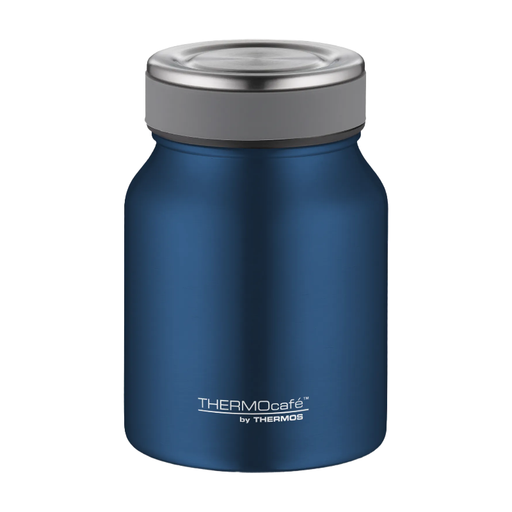
Why it suits this profile: The 500 ml capacity is suitable for a single lunch, while the size is designed for everyday use at work, school or on the go.
The 6.5 cm wide opening makes filling and cleaning easier than with a narrow drinks bottle. The product information states that it has a silicone sealing ring and screw-top lid.
500 ml capacity, stainless-steel construction and, according to the product information, dishwasher suitability.
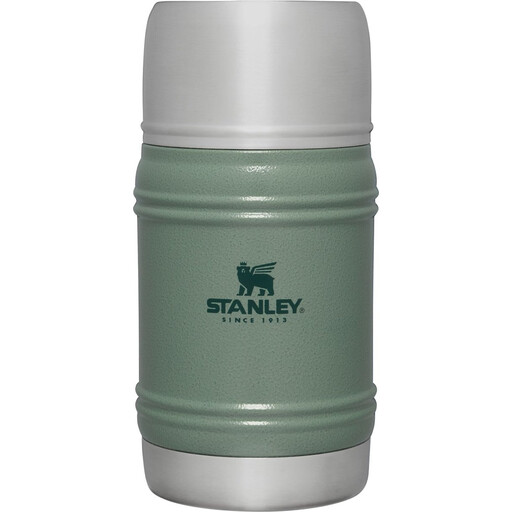
Why it suits this profile: This thermos lunch pot combines a 500 ml capacity with a distinctive cork closure and a design for hot and cold dishes.
The product description states that it has a leak-proof closure and is dishwasher-safe. Hand washing is recommended for a longer service life.
Recycled stainless steel, cork components and, according to the product information, keeps food hot for 13 hours and cold for 15 hours.
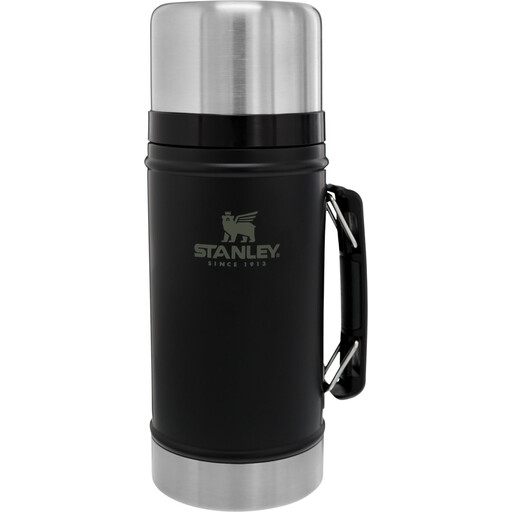
Why it suits this profile: The 0.94-litre capacity is suitable for long working days, camping, travelling or a meal that needs to last through several occasions.
The wide opening helps with filling and cleaning. According to the product information, the lid can be used as a cup and there is a folding handle.
18/8 stainless steel, double-walled vacuum insulation and, according to the product information, keeps food hot for up to 20 hours and cold for up to 24 hours.
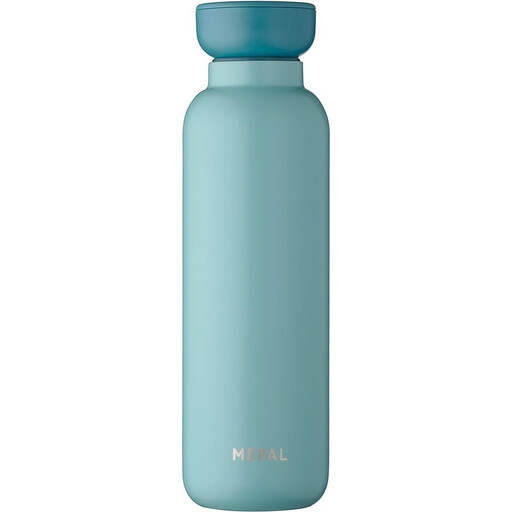
Why it suits this profile: This is a thermos flask for hot and cold drinks, rather than primarily a pot for solid meals. Its slim shape is suitable for trains, cars, offices and bags.
The wide opening makes adding ice cubes and cleaning easier. The product information states that it has an airtight closure; close the lid carefully to prevent spills.
500 ml capacity, suitable for fizzy water according to the product information, and keeps drinks hot for up to 12 hours and cold for up to 24 hours according to the manufacturer.
Choose a food thermos when you want to eat directly from the pot. In that case, a wide opening is more important than a slim shape. For tea, coffee or water, choose a thermos flask. The Mepal Insulated Bottle Ellipse is, for example, a 500 ml drinks bottle. A Stanley or Thermos food jar is more suited to soup and solid meals.
Also consider the accessories. An integrated spoon, handle or cup can be useful when travelling or enjoying outdoor activities, but it can also make the product heavier or more difficult to clean.
We’ve put together a complete, up-to-date list of products that fully meet these strict selection criteria and the applicable European safety regulations.
It varies by model and usage. Product information may state, for example, 6 to 9 hours, while other models quote longer periods. Preheat the pot, fill it properly and don’t open the lid until you’re ready to eat. The stated insulation time remains a guideline.
Some models are fully dishwasher-safe, while others are only partially dishwasher-safe. The Stanley Artisan is stated to be dishwasher-safe, but hand washing is recommended for a longer service life. Always check the specific instructions for the sealing ring, lid and coating.
For one person, 500 ml is a practical starting point. If you’re taking a large meal, several portions or extra food for a long day, consider 710, 940 ml or more. Also compare the weight and dimensions to make sure the pot fits in your bag or lunch bag.
