
Same-day & Next-day Delivery

Quality Guaranteed

Unlock Your Welcome Offers: FREE Delivery | Up to 80% OFF | Free 30-day JoyPlus trial
Download the APP
A thermos food jar seems simple: fill it with soup, pasta or porridge and take it with you. But problems often only emerge after a few weeks of use. A lid that does not close properly, an opening that is barely wide enough for a spoon or a capacity that does not suit your lunch can all lead to a disappointing purchase.
For commuting, school, travel and camping, there are three main pitfalls to watch out for:
A thermos lunch box with a capacity of around 470 to 500 ml is generally suitable for one regular meal, such as soup, pasta or a salad. A 710 ml model offers a little more room for a larger lunch or a meal during a long working day.
If you want to take food for several people, look for a food thermos with a capacity of 1.4 or 1.5 litres. Consider the dimensions as well as the volume. A large insulated food container will not always fit upright in a rucksack or pannier.
A wide opening makes filling, serving and cleaning easier. This is particularly useful for thick soups, stews and pasta. A narrow opening can make a container more compact, but often makes it trickier to clean.
Double-wall stainless steel with vacuum insulation is a popular design for a soup thermos and other insulated food containers. Product descriptions in this range state various heat-retention times, such as 4 to 6 hours, 9 hours, 13 hours or longer.
Treat these times as product specifications based on the manufacturer’s testing conditions. According to Stanley’s own information, meals in certain Artisan models stay warm for up to 13 hours. The description of the Stanley Classic Legendary Food Jar states up to 20 hours for hot meals. Thermos lists up to 6 to 8 hours, 9 hours or 14 hours for some models. Your experience may vary depending on whether you preheat the jar, how much food it contains and the ambient temperature.
A practical approach:
For cold dishes, you can briefly pre-chill the jar with cold water in the same way.
18/8, 18/10 and 304 stainless steel are widely used for food containers. Some models are made from 316 stainless steel. However, the material alone does not tell you everything about how a container performs: the seal, wall construction and finish are just as important.
Look out for the following:
The BPA-free label does not automatically mean a product has all the features you want. Always check the full material and care information.
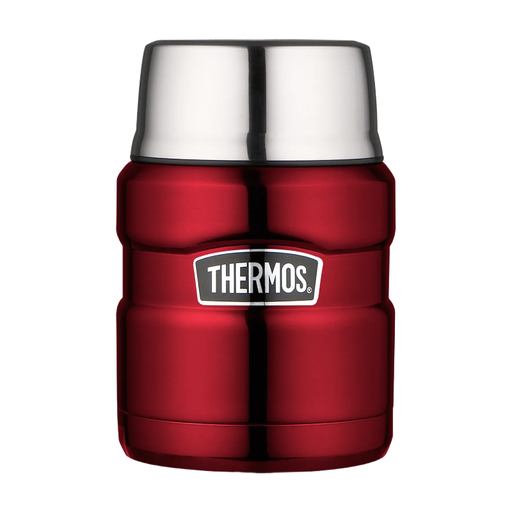
Why it suits this profile: The 470 ml capacity is compact and ideal for a single lunch, while the product information states that this model has a built-in spoon and a screw-top lid.
The wide opening and simple screw-top closure mean there are fewer loose parts. Still, check the seal before putting the jar in a bag.
470 ml capacity, 18/8 stainless steel, built-in spoon and a stated weight of 376 grams.
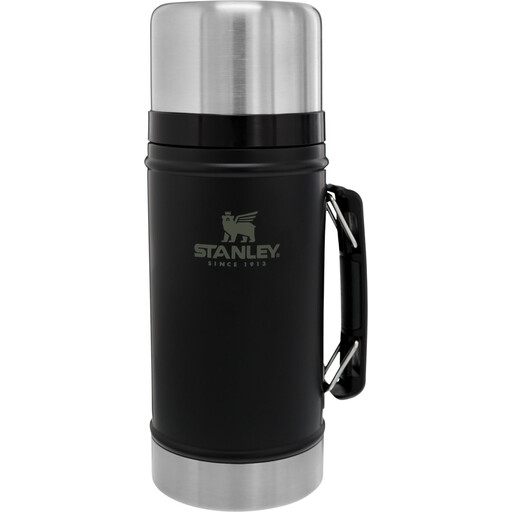
Why it suits this profile: The 0.94-litre capacity has room for a generous meal during a long working day, a journey or an outdoor activity.
The wide opening makes filling and cleaning easier. The stated dimensions and weight of 730 grams make it clear that this is a sturdy, less compact option.
18/8 stainless steel, double-wall vacuum insulation, leakproof seal, folding carry handle and a lid that doubles as a cup.

Why it suits this profile: With a 1.5-litre capacity, this insulated lunch pot is designed for multiple portions, long days and sharing between several people.
The wide opening makes filling and cleaning easier. With such a large capacity, it is especially important to check that it will fit in your bag and be comfortable to carry.
316 stainless steel, vacuum insulation, wide opening, stated capacity of 1.5 litres and a leakproof seal.
We’ve put together a complete, up-to-date list of products that meet these strict selection criteria and the applicable European safety regulations.
It depends on the model and how you use it. Product descriptions may state 4 to 6 hours, 9 hours, 13 hours or longer. Preheating the jar, filling it well and keeping the lid closed can help it retain heat for longer. Manufacturer claims do not guarantee the same duration in every situation.
Follow the manufacturer’s instructions. Some models are dishwasher-safe, while others must be washed by hand only. Pay particular attention to cleaning the sealing ring and screw thread, let all the parts dry and avoid using an abrasive sponge. A wide opening makes everyday cleaning easier.
For one meal, 470 to 500 ml is often enough. Choose around 710 ml for a larger portion or a long day. A food container with a capacity of 0.94 to 1.5 litres is better suited to taking multiple portions on the go, but it will be heavier and less compact. So first work out how much food you’ll really be taking and how you’ll carry the container.
