What should you consider when choosing?
Choose based on how the beans will be used at home: sealed portions call for a different approach from a supply that several housemates scoop from every day. For any solution, check that the specific bag or canister is suitable for its intended food contact. The Netherlands Food and Consumer Product Safety Authority outlines the applicable Dutch rules, while Regulation (EC) 1935/2004 sets out European requirements for materials that come into contact with food.
Vacuum sealer with bags
Choose this if: you want to divide a larger quantity into portions in advance and keep them sealed.
Keep in mind: you’ll need to open a bag for each new portion; resealing requires a suitable bag and a new seal.
Pump with resealable storage container
Choose this if: housemates regularly take beans and can vacuum-seal the container again after use.
Keep in mind: the pump and container may be separate items, and you’ll need to reseal the container after every time it’s opened.
Manually operated vacuum canister
Choose this if: you want to store your everyday supply in a canister without an electric bag sealer.
Keep in mind: Fellow advises against putting ground coffee in the Atmos, as fine particles can clog the valve.
Canister with a push-down inner lid
Choose this if: you want to reduce the space above frequently used beans with an inner lid.
Keep in mind: pushing an inner lid down is a different method from pumping air out of a bag or canister.
| What to consider |
What should you check? |
Who should consider this? |
| Frequent opening |
Check how to reseal the canister after use and whether the pump and container are compatible. |
If housemates often scoop from the same supply, I want to be able to close the canister easily after each use. Around 33% of consumers put ease of use first. |
| Portioning your supply |
Check which bags are compatible and whether the machine works with your preferred containers as well as bags. |
If you want to keep portions unopened, you can divide your supply in advance rather than opening the same canister again and again. Around 27% of consumers prioritise portioning. |
| Storage space |
Measure the available space and allow room for the machine and its accessories. |
In a small shared kitchen, I want to know where the pump or sealer and storage containers will fit. Around 20% of consumers say the space required is their main purchasing concern. |
| Freshly roasted beans |
Check the roast date and follow the packaging instructions; don’t assume that a bag with a pressure-release valve works in the same way as a fully sealed bag. |
When beans have been roasted recently, I want to take gas release during storage into account. Around 20% of consumers say this is their main consideration when choosing. |
Product on Joybuy
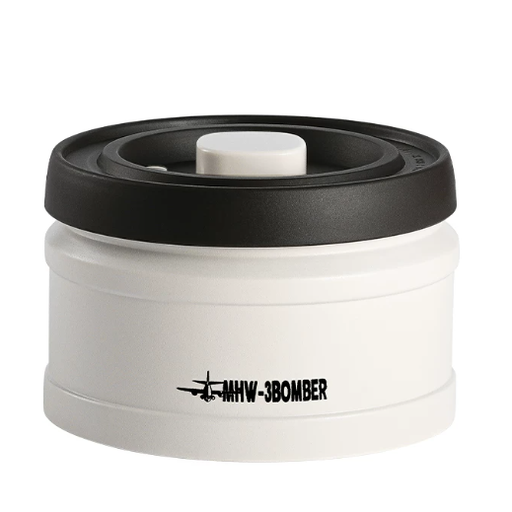
This Joybuy selection features a manually operated vacuum canister for storing coffee beans. Before use, check that the specific canister is suitable for contact with coffee and for the intended conditions.
 No image available
MHW-3BOMBER Coffee Manual Vacuum Storage Canister
A good fit if you want to store coffee beans in a manually operated canister rather than sealing them in portion-sized bags in advance. Check that it is suitable for food contact and follow the use and cleaning instructions.
Joybuy
Frequently asked questions
Do I need to seal a new bag each time I use beans daily?
No. If housemates often scoop from the same supply, a resealable canister may suit the way you use it better: you simply close it again after use. A sealer is more suited to those who divide their supply into sealed portions in advance. This is a practical difference, not a proven universal flavour benefit.
Can I put ground coffee in any vacuum canister?
No, it depends on the system. Fellow advises against putting ground coffee in the Atmos because fine particles can clog the inlet valve. For other systems, follow the specific instructions; FoodSaver provides separate guidance for powdery products to protect the pump.
What should I check when cleaning the product or buying separate parts?
Follow the instructions for your chosen model. Fellow says not to clean the Atmos lid under running water. If you’re buying a sealer, also check which bags are compatible and whether you need to buy an adapter or storage container separately.
What warranty and cooling-off period apply to online purchases in the Netherlands?
According to ACM ConsuWijzer, you’re entitled by law to a product that works as you could reasonably expect; there is no fixed two-year period. For an online product purchase, the cooling-off period usually ends 14 days after delivery, subject to legal exceptions. Also check the returns policy and any additional manufacturer’s warranty.
Is every plastic bag suitable for storing coffee beans?
No. Materials intended to come into contact with food must meet the applicable Dutch and European requirements. Check the stated suitability and conditions of use for the specific bag or canister; the label ‘vacuum bag’ alone does not confirm that it is suitable for your needs.


