
Vandaag of morgen in huis

Kwaliteit gegarandeerd

Welkomstaanbiedingen ontgrendelen: GRATIS bezorging | Tot 80% korting | Gratis 30 dagen JoyPlus-proefperiode
Download de app
A silicone baking mat can make rolling out pizza dough, biscuit dough, pastry bases and fondant more manageable. However, not every mat is suitable for intensive use. A smooth surface can slide, measurements may be unclear and some models are too small for a standard worktop.
So don’t just look at the colour or a claim such as “professional”. Check the dimensions, underside, material and how you intend to clean the mat.
An anti-slip baking mat is only comfortable to use when the underside provides sufficient grip and the worktop is clean and dry. A thin mat without a sturdy base can develop creases while kneading or rolling. This makes precise work more difficult and can affect the shape of your dough.
Check whether the product description explicitly mentions an anti-slip base. Also consider the size: a mat that is too small will be less stable when you apply a lot of pressure.
A dough mat with measurements is useful for round pizza bases, pastry and biscuits. However, check that it includes both straight rulers and circular guides. A few decorative lines alone are of little help when rolling dough out evenly.
A 50 x 70 cm baking mat provides more workspace than a compact model. Measure your kitchen worktop in advance. The mat should be able to lie flat without hanging over the edge.
Not every silicone mat is automatically suitable for use in the oven. A dough rolling mat is primarily intended as a work surface. An oven mat or oven liner, on the other hand, should include clear information about heat resistance and operating temperatures.
Never use a mat on a hob or over an open flame when this is expressly advised against. Also always check the instructions and product packaging before using the mat in the oven.
For a mat used with dough and fondant, a smooth, non-porous surface is practical. The Maxcook mat’s product information states that it is made from 100% food-grade silicone and has a BPA-free composition. These are verifiable product specifications, but before buying, also read the latest information about food contact, the manufacturer and any EU responsible party.
A smooth surface is less likely to absorb flour residue and stains. That does not mean the mat will remain completely stain-free: strongly coloured ingredients such as beetroot, cocoa or food colouring can cause discolouration after prolonged contact.
For home bakers who regularly make pizza, cakes or biscuits, a larger work surface is often more convenient. A 50 x 70 cm mat gives you room to roll out dough without having to continue directly on the worktop.
Look out for the following markings:
A silicone dough mat with clear scales helps with portioning, but it does not replace kitchen scales when equal portions are important.
Silicone is generally easy to wipe clean, but care instructions vary from product to product. The Maxcook product information recommends a mild cleaning product, soft cleaning tools and avoiding scouring pads or hard objects. Allow the mat to dry completely after washing before rolling it up or storing it.
According to the product description, the Maxcook mat can withstand high temperatures, including boiling water for sterilisation. Only use it this way within the stated instructions. The same description warns against direct contact with open flames and hobs.
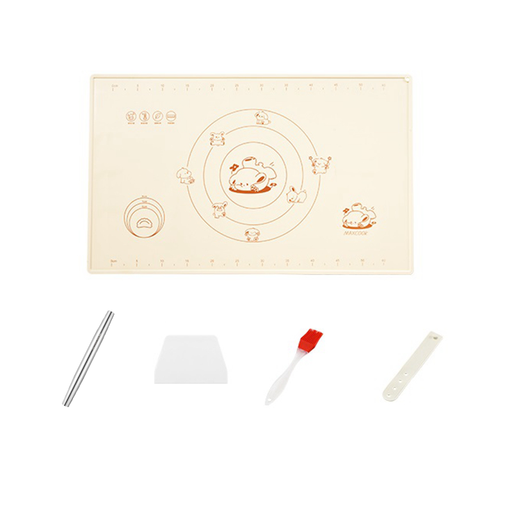
Why it suits this profile: This set provides one large work surface and also includes a stainless steel rolling pin, dough scraper and brush. That means you do not need to buy several baking accessories separately straight away.
The product description mentions a reinforced anti-slip base as well as straight and circular measurements. This makes the specifications easier to verify than those of a mat containing only general marketing claims.
50 x 70 cm dimensions; food-grade silicone according to the product information; includes three practical tools.
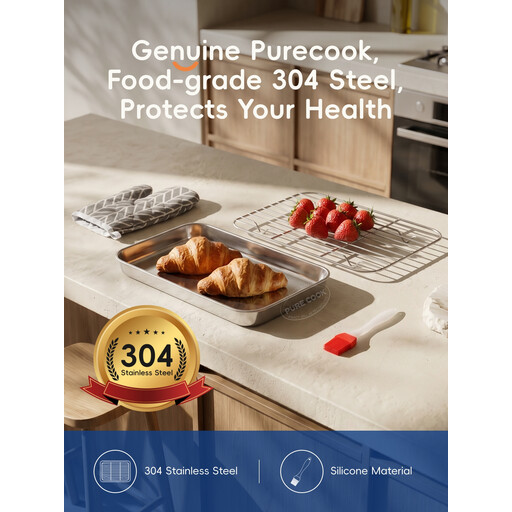
Why it suits this profile: For anyone who wants to use a separate baking tray, rack and brush alongside a dough rolling mat. This is not a replacement for a silicone dough mat, but an addition for the oven stage.
The set makes its intended use clear: a baking tray and rack for oven use, not an anti-slip rolling surface. This helps prevent you from buying an oven accessory instead of a dough mat.
304 stainless steel according to the product description; baking tray, rack, silicone brush and oven gloves included.

Why it suits this profile: This mixer is intended for users who regularly make bread, pizza or pastry dough and want to combine their silicone baking mat with a dedicated dough preparation setup.
The product information states that it has a 6-litre bowl, six speeds, a pulse function and a dough hook. However, check the maximum operating time in the instructions; the description warns against continuous use for longer than six minutes.
6-litre stainless steel bowl; dough hook, whisk and beater included; 450 W motor according to the product specification.
We have put together a complete, up-to-date list of products that fully meet these strict selection criteria and the applicable European safety regulations.
For fondant, a fondant mat with circular guides can be useful. For pizza dough, the diameter markings and available work surface are particularly important. Anyone who regularly makes bread dough will benefit more from a sturdy anti-slip base than from extra decorative markings.
This varies by model. Check the stated temperature resistance and permitted uses. The Maxcook description mentions heat resistance, but also warns against open flames and hobs. Only use the mat as instructed by the manufacturer.
Wash the mat with mild washing-up liquid and a soft sponge or cloth. Avoid scouring pads, hard objects and harsh cleaning products. Dry both sides completely before storing the mat.
Its lifespan depends on use, care and storage. Cutting on the mat, prolonged contact with strongly coloured ingredients and heat outside the stated application can damage the surface. A mat that remains flat, shows no cracks and is easy to clean will remain more practical to use than a damaged one.
