
Vandaag of morgen in huis

Kwaliteit gegarandeerd

Welkomstaanbiedingen ontgrendelen: GRATIS bezorging | Tot 80% korting | Gratis 30 dagen JoyPlus-proefperiode
Download de app
A pill organiser may seem simple, but small design choices can make a big difference in daily use. A lid that’s difficult to open, compartments that are too small, or unclear day markers can make it harder to keep your medication, vitamins or supplements organised when you’re on the go.
If you focus only on a low price or a flashy product claim, you’re likely to run into three common pitfalls:
A good choice starts with your own routine: do you need a medication organiser for one day, a pill organiser for 7 days, or a compact travel pill organiser for just a few doses?
A pill organiser with compartments should match the number of times you take medication and the size of your tablets. For daily use, a model with seven compartments may be sufficient. If you take several supplements at once, pay particular attention to the capacity of each compartment.
A 7-day pill organiser is practical if you want to fill it once a week. For a short trip, a portable pill organiser with three or six compartments may take up less space. Also check whether the compartments are suitable for large vitamins and fish oil capsules. A compact size isn’t automatically convenient if you have to force the lids open every time.
The labels need to stay clearly visible, and the lids must remain securely closed during transport. Permanently engraved day markers can be more durable than stickers or printed labels. This is especially important if you clean your pill organiser often or carry it in a bag.
For seniors, a pill organiser for seniors with larger markings and easy-to-open lids can be more comfortable. According to the product description of some models, ergonomic lids are designed for users with limited hand strength or arthritis. This is a product feature, not a medical function; if in doubt, try the closure first.
Look for information such as BPA-free plastic, material thickness and care instructions. BPA-free means the manufacturer does not list bisphenol A in the specified material; it doesn’t mean every product is suitable for all conditions.
A vitamin storage box or pill organiser for supplements must be clean and completely dry before you refill it. A moisture-resistant design can be handy in a handbag or suitcase, but always store medicines according to the advice on the packaging. Some medications are sensitive to heat, moisture or light. Therefore, don’t use an organiser as a replacement for the original packaging if that packaging contains important information.
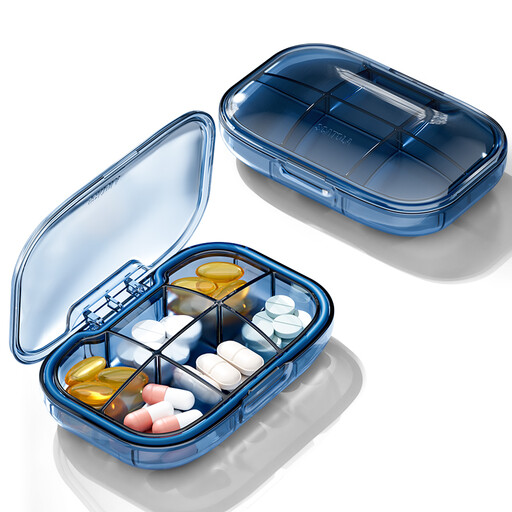
Why this fits the profile: This two-piece set offers a simple way to divide medication, vitamins or supplements by dose. The compact size suits daily use and short trips.
The six separate compartments prevent everything from moving around loosely in one large space. Do check beforehand whether your capsules will fit within the available space.
Two organisers, six compartments per box and a plastic design according to the product information.
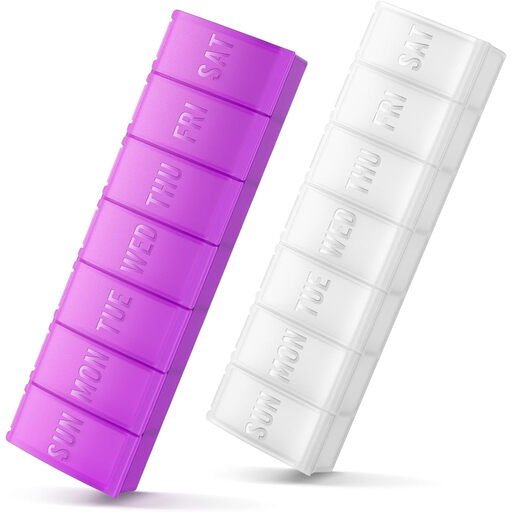
Why this fits the profile: The weekly layout and roomy compartments are suitable for users who want to organise their routine in advance. According to the product description, the day labels are permanently applied.
The larger compartments address the pitfall of insufficient space. The manufacturer also mentions easy-to-open lids; check the mechanism when you receive it.
BPA-free plastic according to the product description, two units and engraved day markers.
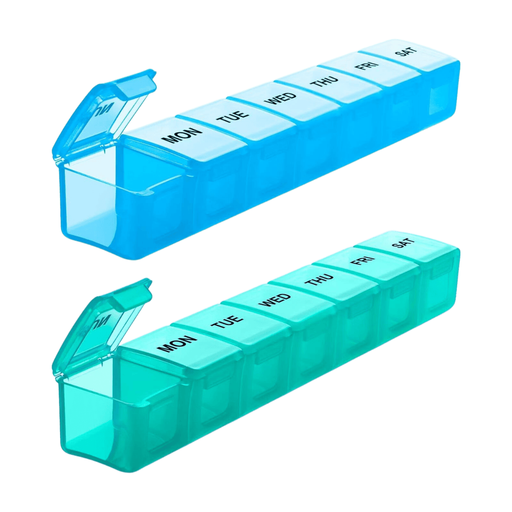
Why this fits the profile: This model is designed for those who take larger quantities of vitamins, fish oil or supplements each week. The two organisers are practical for both home and travel.
The extra-large compartments reduce the risk of capsules being crushed or the lid not closing properly due to overcrowded compartments.
Seven compartments, two units, BPA-free plastic and a moisture-resistant design according to the product description.
We’ve put together a full, up-to-date list of products that fully meet these strict selection criteria and comply with current European safety regulations.
Fill a medication organiser at a set time and check the labels before transferring tablets. Use a clean, dry organiser and don’t mix different medications if it means you’ll lose track of what’s what. If you’re unsure about storage, combining or travelling with your medication, ask your pharmacy for advice.
For travel, these tips are useful:
Not always. Some medicines must stay in their original packaging or require specific protection from moisture, light or temperature. Check the patient information leaflet and ask your pharmacy for advice if you’re unsure.
The lifespan depends on the material, the hinges, how often you use it and how you clean it. Replace it when a compartment no longer closes properly, labels become unreadable or the plastic cracks. Manufacturer claims about a certain number of flexes come from the manufacturer and don’t constitute a guarantee for every user.
A small travel pill organiser with three to six compartments suits short trips or small quantities. For a longer journey, a weekly model with roomy compartments is more practical. As well as size, also look for a reliable closure, clear labels and the storage instructions for your medication.
