
Vandaag of morgen in huis

Kwaliteit gegarandeerd

Welkomstaanbiedingen ontgrendelen: GRATIS bezorging | Tot 80% korting | Gratis 30 dagen JoyPlus-proefperiode
Download de app
A pill box may seem like a simple product, but choosing the wrong model can quickly become inconvenient. A lid that does not close properly, compartments that are too small or unclear day markings can make it harder to store medicines and supplements neatly. This applies both to everyday use and travel.
This buying guide helps you focus on verifiable features rather than generic marketing terms. Whether you are looking for a medication organiser, pill holder, weekly pill box or compact travel pill box, the layout, closure and dimensions will usually determine whether the product suits your routine.
A pill box with one compartment per day is not practical if you need to take something at different times. You then have to remember which pills are intended for the morning, afternoon or evening. So do not just look at the number of days, but also at the number of compartments per day.
For example, a pill box with compartments for seven days may have 7, 21 or 28 compartments. These represent one, three or four doses per day respectively.
Large compartments are useful for fish oil, capsules and bulky vitamins, but they can take up unnecessary space in a bag. Small compartments are more portable, but are not suitable for several large tablets.
So check the size of the individual compartments whenever this information is available. A product described as having “large capacity” is not automatically suitable for every user.
A sturdy click closure is important for a travel pill box. Loose lids can open in a handbag or suitcase, causing pills to become mixed up. A moisture-resistant or sealed case can be practical, but always check exactly what the product description states. “Waterproof” or “airtight” is not a reason to use the box in wet conditions if the manufacturer does not provide clear usage instructions.
First, determine how you intend to use it:
A weekly pill box with removable daily modules can make filling and carrying it easier. However, check that the markings are clear and that the lids open easily enough for the user.
Many pill holders in this category are made from PP, ABS or TPE. Pay attention to the following points:
Always store medicines according to the advice on the packaging or from the pharmacy. A pill box is intended to help organise use, but it does not automatically replace the original packaging or patient information leaflet.
A portable pill box should suit where you plan to keep it. For a coat pocket or small bag, a mini pill holder makes more sense than a large weekly organiser. For use at home, a larger model may be easier to organise.
When travelling, consider:
Only use a pill cutter when the tablet in question is suitable for splitting. Capsules, liquid-filled pills and some tablets must not be divided. If in doubt, ask your doctor or pharmacist for advice.
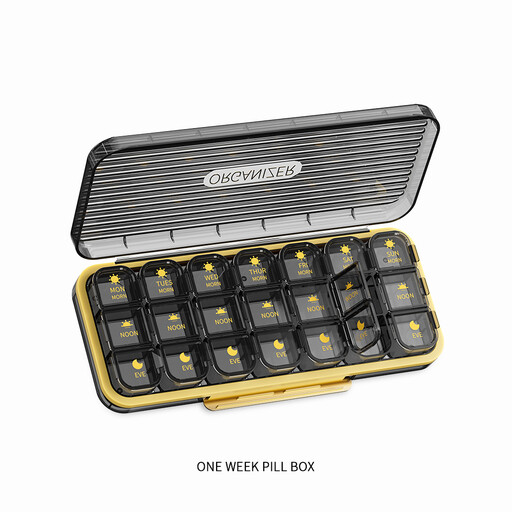
Why it suits this profile: The layout with 21 compartments provides three separate doses per day for seven days. This is a well-organised starting point for anyone taking several types of medicines, vitamins or supplements.
The three time slots per day prevent all doses from ending up in one large daily compartment. According to the product name and description, the separate design allows you to take the box with you one day at a time.
21 compartments, a portable design and suitable for medicines, vitamins, fish oil and supplements.
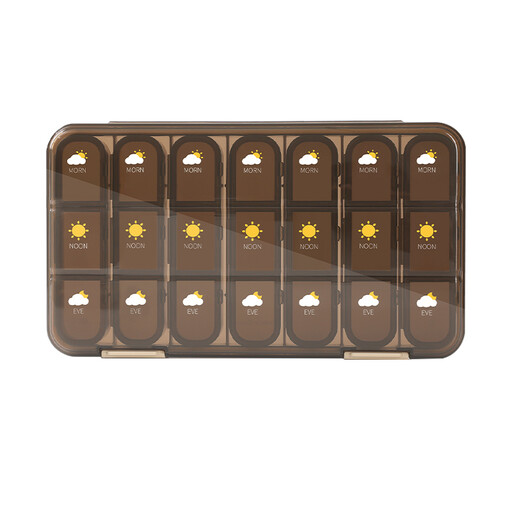
Why it suits this profile: This model combines 21 compartments with ABS, PP and TPE materials, as well as a sealed design with click closures. It is suited to users who value organisation, capacity and a secure closure.
The individual snap-lock lids are designed to keep pills in place and limit mixing. Before travelling, always check that every lid is fully closed.
21 compartments, three doses per day, a portable size and hand washing with mild soapy water according to the product information.
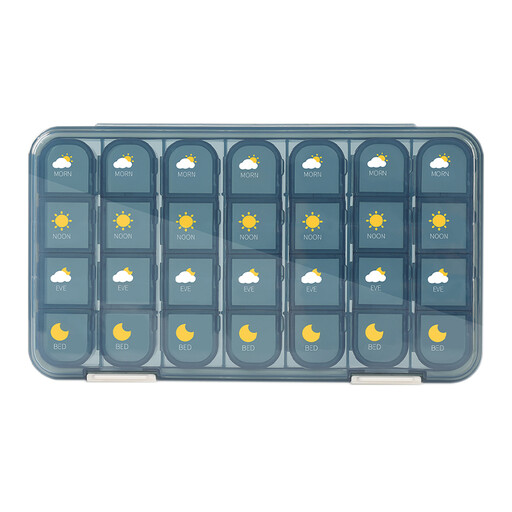
Why it suits this profile: Four compartments per day provide space for morning, afternoon, evening and night. This medication organiser is therefore suitable for a more detailed daily schedule or larger supplements.
The four time slots prevent different doses from being combined. According to the product information, the case has a portable, sealed design with click closures.
28 compartments, space for several capsules or tablets and a size that, according to the specifications, fits in a bag or suitcase.
We have compiled a complete, up-to-date list of products that fully meet these strict selection criteria and the applicable European safety regulations.
Fill the pill box when you have plenty of time, then check the day, date and time. Keep the original packaging and patient information leaflets to hand. Also bear the following points in mind:
Its lifespan depends on the materials, hinges, closures and daily use. Check regularly that the lids still close properly and that the markings remain legible. Replace the pill box if it develops cracks, loose closures or persistent contamination.
Choose a model with clear day markings, sufficiently large compartments and lids that open without much force. A 21-compartment or 28-compartment model may be suitable when there are several doses per day. Let the user try the closure themselves before purchasing a pill box for older people.
Yes, a travel pill box or portable pill holder is useful for short trips. If you take prescribed medicines, also bring the original packaging and relevant documentation. Check in advance that the closures are secure and that the contents will remain dry during transport.
