
Vandaag of morgen in huis

Kwaliteit gegarandeerd

Welkomstaanbiedingen ontgrendelen: GRATIS bezorging | Tot 80% korting | Gratis 30 dagen JoyPlus-proefperiode
Download de app
A pill organiser may seem simple, but an awkward design can soon become frustrating. A lid that comes loose, compartments that are too small or unclear day labels can increase the risk of mixing things up. Many people also pay for features they never use, when a simpler medication organiser might suit their routine better.
Look out for these three common pitfalls:
A pill organiser can help you arrange medicines and supplements, but it does not replace the patient information leaflet, your medication schedule or advice from a pharmacist or doctor.
Choose a layout to suit your regular medication times. A pill organiser with compartments for each day is enough if you take something once a day. If you take several medicines or supplements at different times, a weekly pill organiser with morning, afternoon, evening and night compartments can make things easier to keep track of.
Check the dimensions of the individual compartments too. A box with seven compartments tells you nothing about the capacity of each one. If you take larger tablets or capsules, a model with fewer but roomier compartments may be more practical.
For a pill organiser for on the go, secure lids are important. A click or snap-lock closure can help stop compartments opening in transit. Some models are described as airtight or moisture-resistant. Treat this as a product feature stated in the listing, not as a guarantee that medicines will stay dry in all conditions.
Store medicines according to the instructions on the packaging. A pill organiser is not automatically suitable for long-term storage, damp bathrooms or high temperatures. If in doubt, contact your pharmacy.
Check the stated material, cleaning instructions and any information about BPA-free plastic. “BPA-free” only refers to the stated properties of the plastic; it is not a general guarantee of quality. A BPA-free pill organiser may be a sensible choice if this specification matters to you, but also check that the compartments close securely and are easy to clean.
Only wash a pill organiser according to the manufacturer’s instructions. For example, the JORDAN&JUDY model with 28 compartments must be hand-washed and, according to the product information, is not dishwasher-safe. Allow the organiser to dry completely before refilling it.
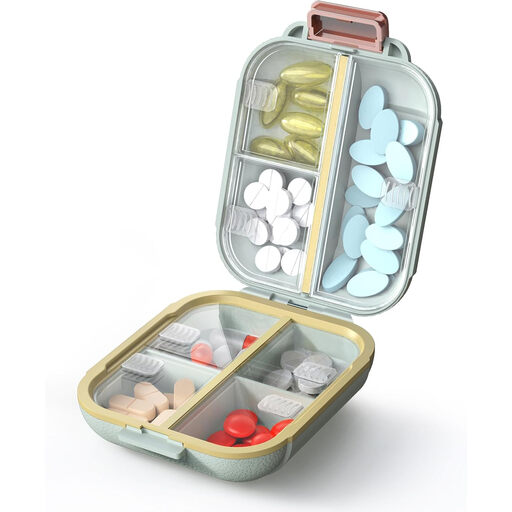
Why it suits this type of user: This compact pill organiser has seven compartments and is designed for everyday use or short trips. The product name specifies an airtight lid and BPA-free material.
The seven separate compartments stop all your tablets from being loose in one space. Before buying, check that each compartment is large enough for your capsules.
Seven compartments, a compact design and a material stated in the product listing to be BPA-free.
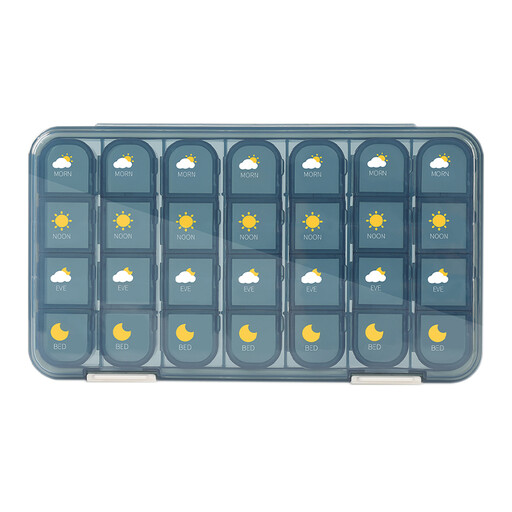
Why it suits this type of user: This model is designed for people with several regular medication times. It has 28 compartments: four per day for seven days.
The day and time layout helps prevent mix-ups between doses. The manufacturer describes it as portable, with secure lids; always check them by hand before travelling.
28 compartments, four doses a day and dimensions of 9,1 × 5,1 × 1,2 inches according to the product information.
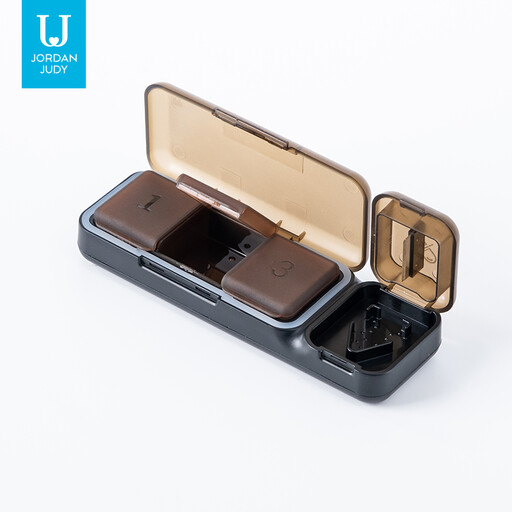
Why it suits this type of user: The mini version is a good choice if you only need to carry a few tablets in a coat pocket, handbag or small travel bag. According to the product description, it also has a built-in tablet cutter.
Its compact size means you don’t have to take a large pill organiser on a short outing. Only use the tablet cutter if the patient information leaflet or your pharmacist says the tablet can be split.
Mini size, PP material according to the product information, and storage combined with a tablet cutter.
We’ve put together a complete, up-to-date list of products that meet these strict selection criteria and the applicable European safety requirements.
Always follow the care instructions for the specific model. Many plastic models can be cleaned by hand with mild soap and lukewarm water. Don’t put it in the dishwasher or leave it to soak for a long time unless this is expressly permitted. Allow the organiser to dry completely before putting medicines or supplements back in.
Its lifespan depends on the material, how often you use it and the closure. Check it regularly for loose lids, hairline cracks, warping and markings that are difficult to read. Replace the organiser if a compartment no longer closes properly or if it can no longer keep the contents reliably separate.
A travel pill organiser is handy for short trips, but for medicines, take the original packaging and patient information leaflet too when needed. For travelling, choose a compact pill organiser with a secure closure and enough room in each compartment. Don’t store medicines for long periods in direct sunlight, a hot car or a damp bathroom.
