
Vandaag of morgen in huis

Kwaliteit gegarandeerd

Welkomstaanbiedingen ontgrendelen: GRATIS bezorging | Tot 80% korting | Gratis 30 dagen JoyPlus-proefperiode
Download de app
Peach iced tea is popular in the Netherlands at home, on the go, in the office or on warm days. Yet many packages look more alike than their contents would suggest. A peach iced tea can be low in calories but still taste sweet because of sweeteners. A large bottle may seem better value, while cans or pouches can be more convenient for individual drinking occasions.
By comparing products carefully, you can avoid these three common pitfalls:
The nutrition table is a reliable starting point. Look at kcal and sugars per 100 ml, then calculate the figures for the amount you actually drink.
Here are a few examples from the range:
A low-sugar variety may contain sweeteners such as steviol glycosides, sucralose, acesulfame-K or aspartame. This is not automatically good or bad; it is mainly a matter of taste preference and checking the label. Products containing aspartame must carry the legally required wording on the packaging.
In peach-flavoured iced tea, water, sugar or sweeteners, tea extract, acids and flavourings are often listed first. The percentage of peach juice can vary considerably. For example, Arizona Iced Tea Peach lists 0.1% peach juice from concentrate and 0.14% black tea extract. This means that “peach flavour” does not necessarily indicate a high fruit content.
Some varieties have a different flavour profile. Fuze Tea combines black tea with peach and hibiscus. Other products use oolong tea, such as certain Asian peach iced tea varieties. If you are looking for a pronounced tea flavour, do not just look for the word “peach”; check the type of tea as well.
A 1.5-litre iced tea bottle is well suited to households, the fridge or lunch occasions at home. An iced tea multipack of cans or small bottles is ideal when several people each want their own serving. An iced tea can chills quickly and is easy to take with you, but usually cannot be resealed once opened.
An iced tea pouch containing 190 to 230 ml is compact for travelling, picnics or an office cupboard. Check whether the packaging can be securely resealed after opening, and always follow the storage advice on the label.
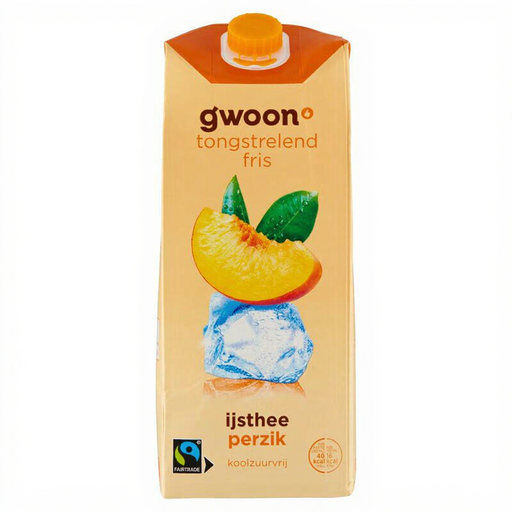
Why it suits this profile: The large bottle is practical for home, and the nutritional information lists 16 kcal and 3.8 grams of sugar per 100 ml.
The values are provided per 100 ml, allowing you to compare the contents with other varieties instead of judging by the packaging alone.
1.5 litres; peach flavour; 16 kcal per 100 ml according to the product information.
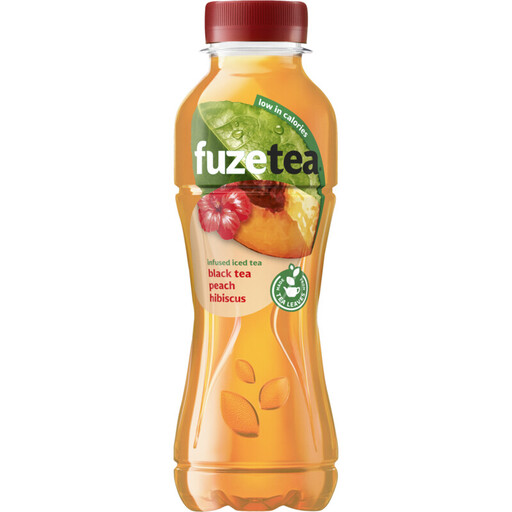
Why it suits this profile: This ready-to-drink iced tea combines black tea, peach and hibiscus for anyone looking for more than just a sweet fruit flavour.
The product information clearly states the combination of ingredients, as well as the values of 19 kcal and 4.4 grams of sugar per 100 ml.
400 ml bottle; non-carbonated; black tea with peach and hibiscus.
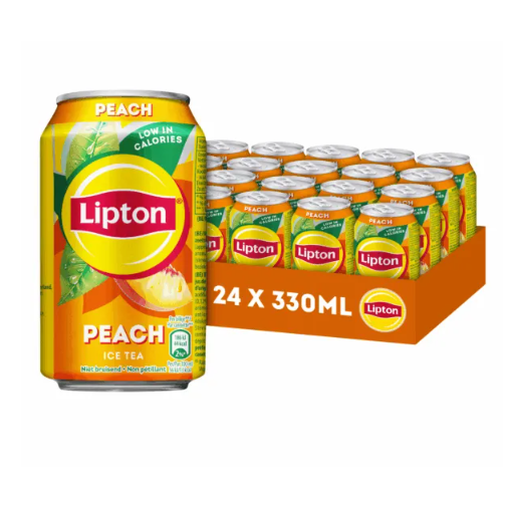
Why it suits this profile: A supply of 24 cans is ideal for offices, home events or households with several individual drinking occasions.
The servings are pre-portioned, so you do not need to store a large bottle after opening when you want to drink one can at a time.
24 x 330 ml; individually packaged; 13 kcal and 3 grams of sugar per 100 ml according to the stated nutritional values.
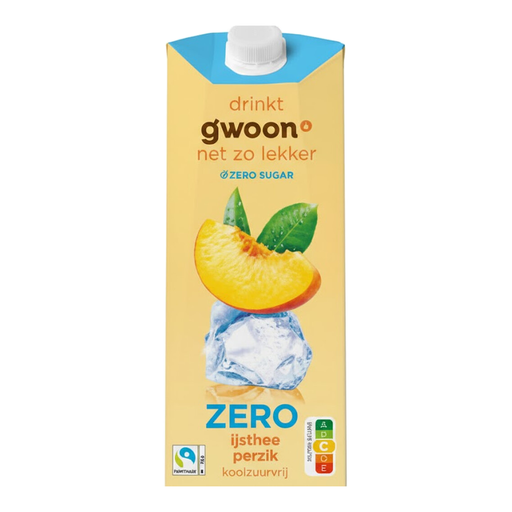
Why it suits this profile: This sugar-free peach iced tea is intended for anyone who pays particular attention to energy and sugar on the label.
The nutritional information lists 0 kcal and 0.1 grams of sugar per 100 ml. Always check the current packaging before buying.
1.5 litres; sugar-free according to the product description; contains sweeteners.
We have put together a complete, up-to-date list of products that fully meet these strict selection criteria and the applicable European safety regulations.
Small bottles, cans and pouches are practical for travelling. A 190 or 230 ml pouch takes up very little space, while a 400 to 500 ml iced tea bottle is suitable for a longer occasion. Choose packaging with a closure if you do not want to drink it all at once.
Not every claim means the same thing. Check the nutrition table. g'woon Ice Tea Peach Zero lists 0 kcal per 100 ml, while regular varieties generally contain more energy and sugar. A low-calorie iced tea may contain sweeteners, so check the ingredients list as well.
Keep opened iced tea refrigerated and consume it within the period stated on the packaging. Do not leave the bottle or pouch in direct sunlight or intense heat for long periods. Cans usually cannot be resealed, so drinking them straight away is the most practical option. For imported products, always check the full label for storage advice, allergens and the best-before date.
