
Vandaag of morgen in huis

Kwaliteit gegarandeerd

Welkomstaanbiedingen ontgrendelen: GRATIS bezorging | Tot 80% korting | Gratis 30 dagen JoyPlus-proefperiode
Download de app
A cold peach tea seems like a simple purchase. Yet ready-to-drink iced teas, multipacks, syrups and tea bags differ greatly in how they're used, their ingredients and the price per serving. What's more, an attractive packet tells you very little about the sugar content or the amount of peach and tea extract.
If you're looking to buy peach iced tea for home, the office or on the go, it's worth checking three things first:
That way, you can avoid buying a large bottle for individual use, or ordering lots of small packs when you really want a stock for home.
Many varieties contain fewer calories than fizzy drinks, but still have sugar. So always check the nutritional information per 100 ml and per pack. A can or pouch can contain several times more than the reference value per 100 ml might suggest.
Examples from the product information:
A sugar-free peach iced tea often uses sweeteners. If you want to avoid those, don't just look at the front of the pack – check the ingredients list too.
The label “peach iced tea” doesn't tell you how much fruit is actually in it. In many products, the flavour comes mainly from aromas, with a small amount of peach juice from concentrate. In other varieties, the fruit content is higher. Senpure Meco Peach Pomelo Juice Tea, for example, states 15.5% peach juice concentrate, alongside apple and grapefruit juice.
So look out for:
According to the brands' own product information, taste and quality claims can vary between variants. Use the ingredients list and nutrition table as a reliable basis for comparison.
A peach iced tea multipack is handy for a household, office or store cupboard. But you still need to compare the price per litre or per serving. What's more, a box of 24 cans takes up more space than a single 1.5 litre bottle.
Also think about waste and how you'll use it:
For a family or workplace, 1.5 litres can be practical. The g'woon Peach Iced Tea is available in a 1.5 litre bottle. For on the go, single-serving packs like Fuze Tea at 250 ml, Caffe Bene at 190 ml or CAFE REAL at 230 ml are easier.
Always check the storage advice on the pack after opening. Most ready-to-drink drinks need to be kept chilled and consumed within the stated period.
Always compare products on the same basis: per 100 ml. Then also look at the full serving. A drink with 4 g of sugar per 100 ml in a 1.5 litre bottle theoretically contains much more sugar than a single can, even if the figure per 100 ml is the same.
If you're looking for less sugar, you could choose:
Pickwick Rooibos Harmony Mango Peach Tea is an alternative for cold peach tea: you brew the tea with hot water first and then let it cool down. The product information states that this rooibos variant is caffeine-free. That's different from a ready-to-drink iced tea straight from the fridge.
Always read the label on imported products. The current packaging may contain additional information about allergens, storage time and use. According to the product information, some products are free from the 14 main EU allergens, but check this yourself if you need to consider an allergy or intolerance.
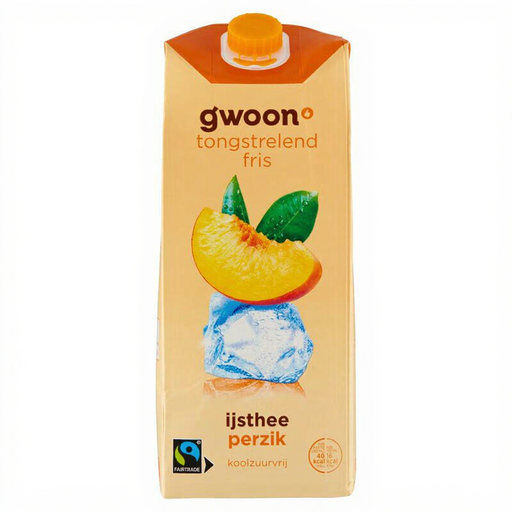
Why this fits the profile: The 1.5 litre bottle is suitable for home, a shared fridge or several glasses during a working day.
The product information clearly states the volume, ingredients and nutritional values, so you don't have to rely solely on the peach flavour on the front.
1.5 litre volume; 16 kcal and 3.8 g sugar per 100 ml according to the product information.
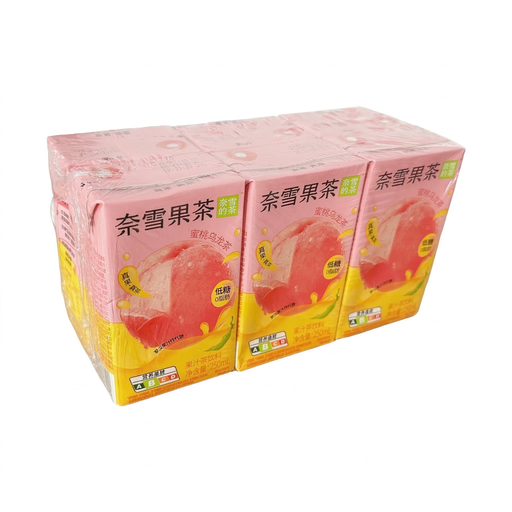
Why this fits the profile: The set combines six 250 ml servings with oolong tea and fruit concentrates, ideal for the fridge, office or when you have guests.
The total volume is 1.5 litres, but divided across six bottles. That means you don't have to open a large bottle every time.
250 ml per bottle; 20 kcal and 4.8 g sugar per 100 ml according to the product information.
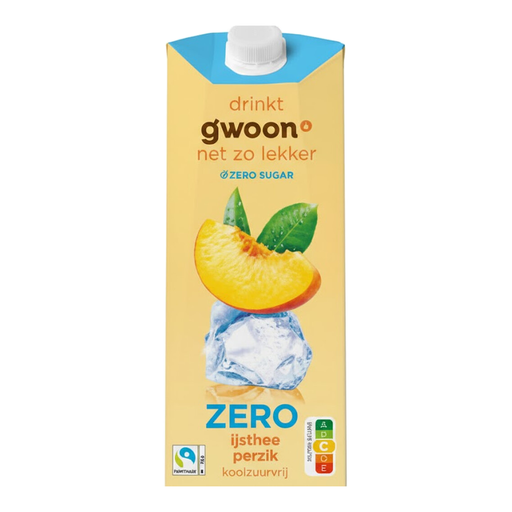
Why this fits the profile: This variant is aimed at shoppers who want a large bottle with few calories for regular use.
The product information states 0 kcal and 0.1 g sugar per 100 ml. The ingredients list includes sucralose and acesulfame-K as sweeteners.
Sugar-free positioning in the product information; 1.5 litre volume for everyday use.
We've put together a full, up-to-date list of products that fully meet these strict selection criteria and comply with current European safety regulations.
No. Ready-to-drink varieties with black or green tea may contain tea extract and therefore caffeine. Rooibos tea naturally contains no caffeine. Check the ingredients and product information for a specific drink; the amount of caffeine isn't always listed.
That varies by product. The g'woon Ice Tea Peach states 0.1 g sugar per 100 ml, while regular variants like Arizona and Fuze Tea state around 4.4 to 4.8 g per 100 ml. Always compare the nutritional information per 100 ml and look at the sweeteners used.
Syrup can work out cheaper per litre when you use the recommended mixing ratio. Karvan Cevitam states a ratio of 1 part syrup to 9 parts water and up to 6 litres of prepared drink per bottle. The final cost depends on the purchase price, how much you use and whether you add sparkling or chilled water.
