
Same-day & Next-day Delivery

Quality Guaranteed

Unlock Your Welcome Offers: FREE Delivery | Up to 80% OFF | Free 30-day JoyPlus trial
Download the APP
Looking to buy onigiri for when you’re out and about, at the office or as a quick meal? You’ll soon come across terms such as chicken teriyaki onigiri, crispy chicken onigiri and Japanese snack. However, not all rice balls are the same. The biggest differences often lie not in the name, but in the storage method, preparation and allergen information.
Pay particular attention to these three common pitfalls:
Confusing chilled and frozen products
A chilled onigiri may be ready to eat, while a frozen onigiri must first be heated thoroughly. The products therefore differ in shelf life and convenience.
Looking only at the flavour name
“Teriyaki” or “crispy chicken” does not automatically tell you how much chicken it contains or which other ingredients have been added. Always check the ingredients list and allergen information.
Buying a pack that does not suit how you intend to use it
A single 100 g onigiri is handy for lunch or as a snack. A pack of 6 x 100 g is more suitable if you want to keep several portions at home. Bear in mind how much freezer space you have available and the use-by date.
A chilled Japanese rice ball is intended to be eaten straight away. According to the product information, Freshasia Teriyaki Chicken Onigiri 100 g should be stored at 0–4 °C. Once opened, it should be eaten within 24 hours, and the packaging states that it should not be frozen. You can eat this onigiri cold, leave it at room temperature for 5–10 minutes or heat it briefly.
Frozen onigiri follow different rules. Products such as the TCT and Bamboo Cuisine variants should be stored at -18 °C or below. Do not refreeze them after thawing. When your order arrives, check that the products are still properly frozen and place them in the freezer as soon as possible.
Not every onigiri is ready to eat. A frozen rice ball with chicken will generally need to be heated all the way through. Various TCT products give a guideline of 1–2 minutes in the microwave at 700 watts, or 3–5 minutes when steamed. Freshasia New Orleans Crispy Chicken Onigiri states a microwave time of approximately 2–3 minutes, depending on the packaging and appliance.
Use these times as a starting point, but always follow the instructions on the label. Leave a heated onigiri to stand briefly and check that the filling is also piping hot in the centre. This helps prevent a warm exterior with a still-cold centre.
If you’re looking for a chicken onigiri, it’s worth comparing the chicken content. According to the product description, Freshasia Teriyaki Chicken Onigiri contains 15% chicken. TCT Teriyaki Chicken Onigiri lists 6.5% chicken, while TCT New Orleans Chicken Rice Ball contains 10.1% chicken.
Allergens can also vary by flavour:
Do you have a food allergy or intolerance? Don’t rely solely on the summary on a product page. Check the full packaging and the latest ingredient information before eating the product.
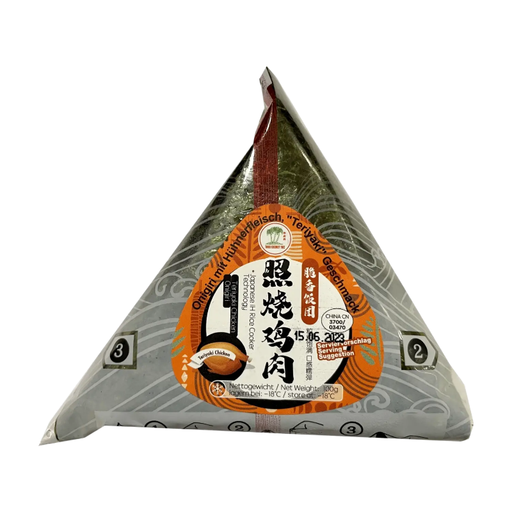
Why it suits this profile: A single 100 g portion is a straightforward choice if you want to try chicken teriyaki onigiri without buying a multipack straight away.
The product information clearly states that this is a frozen product, including storage at -18 °C or below and heating before eating.
100 g per piece; teriyaki sauce; according to the product information, contains wheat and soya.
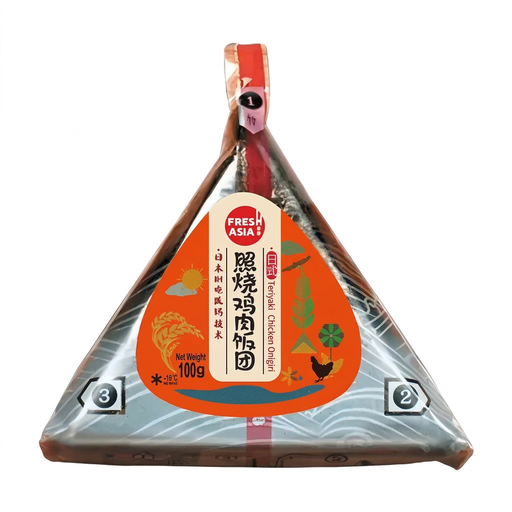
Why it suits this profile: This chilled variant is ideal if you’re looking for a ready-to-eat Japanese snack without needing a microwave or any preparation.
The packaging clearly distinguishes between chilled storage and freezing. This prevents you from storing a ready-to-eat onigiri incorrectly.
15% chicken according to the product description; ready to eat; 163 kcal and 5.5 g protein per 100 g according to the nutritional information provided.
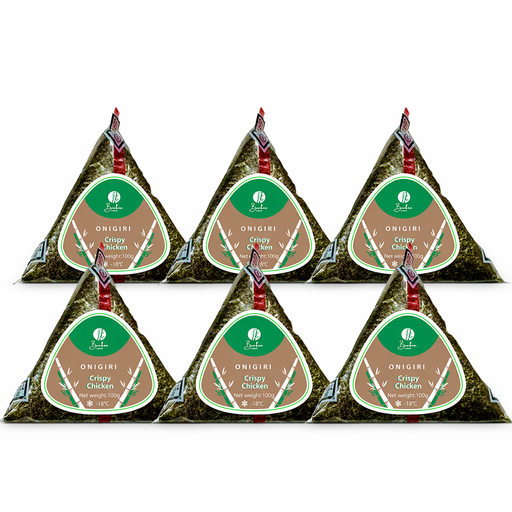
Why it suits this profile: A multipack is practical for students, families and office workers who want to keep several quick portions in the freezer.
The pack contains six individual 100 g portions. This means you don’t have to buy more than you need for a single meal.
6 x 100 g; delivered frozen; product information states 170 kcal per 100 g and freezer storage.
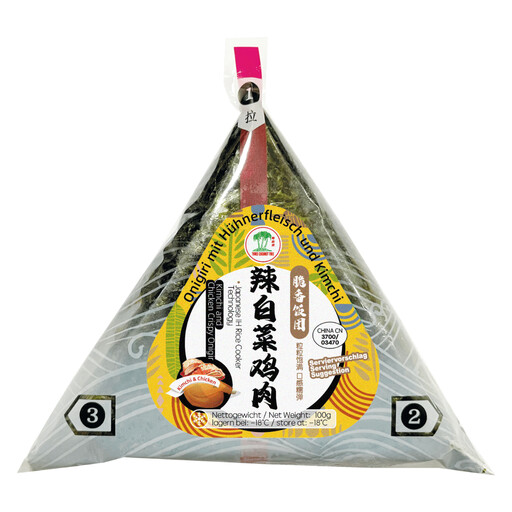
Why it suits this profile: This crispy chicken onigiri combines rice, chicken and kimchi for anyone looking for a spicier alternative to teriyaki.
The product description lists kimchi as a separate component and states that it contains sesame. This allows you to compare the flavour and ingredients more precisely.
100 g per piece; frozen; prepare in the microwave or steamer according to the product instructions.
We’ve put together a complete, up-to-date list of products that fully meet these strict selection criteria and the applicable European safety regulations.
Remove a frozen rice ball from its outer packaging when the instructions require it. Heat the onigiri in the microwave or steamer, turning it halfway through if necessary. The exact time depends on the wattage, the size and the number of portions being heated at once.
A 100 g onigiri is generally intended as one portion. Serve it with edamame, soup or a simple salad if you’d like to make it into a more substantial meal. Do not refreeze an onigiri once it has thawed.
That depends on the product. Chilled Freshasia Teriyaki Chicken Onigiri is ready to eat cold. Frozen variants such as New Orleans crispy chicken onigiri and TCT Teriyaki Chicken Onigiri must be heated first according to the product information.
Store frozen onigiri at -18 °C or below and follow the date on the packaging. After thawing, keep the product chilled according to the instructions and do not refreeze it. The packaging remains the definitive source for the exact shelf life.
The price per portion depends on the brand, flavour and pack size. With a multipack, compare the total price with the number of pieces. A pack of 6 x 100 g can be convenient if you regularly eat a Japanese snack, while a single onigiri is more suitable if you want to try a flavour first.
