
Vandaag of morgen in huis

Kwaliteit gegarandeerd

Welkomstaanbiedingen ontgrendelen: GRATIS bezorging | Tot 80% korting | Gratis 30 dagen JoyPlus-proefperiode
Download de app
A lunchbox may seem simple, but you often only notice you have made the wrong choice when you are already on the go. A lid that does not close properly, compartments that are too small or a material that is difficult to clean can make everyday use inconvenient. Marketing terms such as “leak-proof” or “meal prep” do not mean much on their own if the product information does not specify the fastening mechanism, dimensions or care instructions.
Pay particular attention to these three common pitfalls:
Do not just look at the capacity in millilitres or ounces. Also check the external dimensions to make sure the lunchbox fits in your bag, cycle pannier or school rucksack. A lunchbox with compartments helps keep ingredients separate, but the shape of the compartments determines how much you can realistically fit inside.
For everyday use, you can follow this guide:
If a product uses an American capacity measurement, also check the converted capacity. The stated capacity can be difficult to assess without clear internal dimensions.
A leak-proof lunchbox needs to offer more than a secure clip. Check the product description for:
According to the product information for various models, a lid with a silicone seal can help reduce leakage. This does not mean that every lunchbox will remain leak-proof in all circumstances. Liquid foods, an overfilled container and a lid that is not positioned correctly can affect performance. Test a new lunchbox at home with water before carrying soup in your bag.
The choice between plastic, glass and stainless steel depends on how you intend to use it.
For the fridge and pantry, food storage containers, food containers and glass storage containers are often more practical than one large lunchbox. Stackability and transparent lids save time when preparing meals.
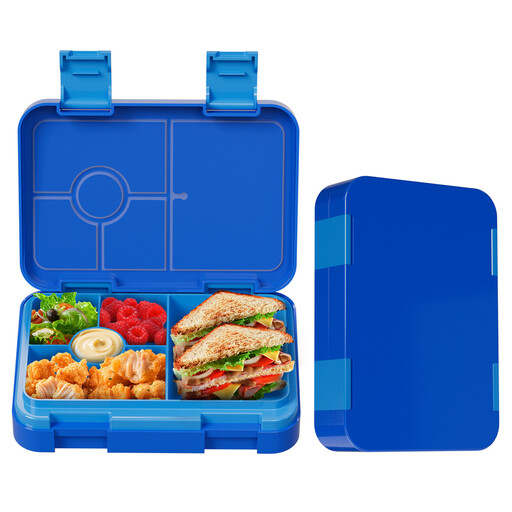
Why it suits this profile: The five compartments are practical for bread, fruit, vegetables and snacks that you want to take to school or work separately. The double fastening is easy to use every day.
The double clips provide a more secure hold than a loose lid. For liquid food, however, check the latest sealing information on the product page.
Five separate compartments and a double fastening; suitable for varied small portions.
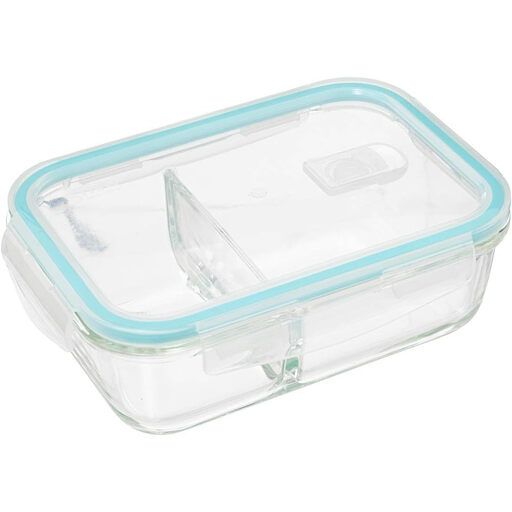
Why it suits this profile: This glass storage container has a borosilicate glass body, a silicone fastening material and dimensions of 21,5 × 15,3 × 7,5 cm. It is a good choice for anyone who wants to store leftovers and lunches where they can be seen.
The product information identifies silicone as the fastening material and states that it is dishwasher-safe. Before buying, check exactly how the lid closes and whether carrying liquids is recommended.
Borosilicate glass; compartmentalised design; dimensions and dishwasher suitability are stated in the product information.
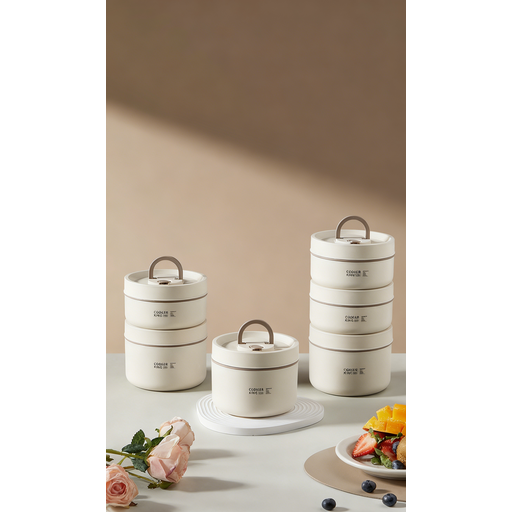
Why it suits this profile: This set of four stainless steel containers is designed for storing, transporting and preparing food in advance. According to the product information, the containers are suitable for use in the oven, steamer and dishwasher.
The manufacturer provides separate care instructions for the containers, lids and silicone seals. According to the product information, the pressure valve should be opened first when carrying hot soup.
304 stainless steel; four containers; dishwasher-safe containers; suitable for oven and steam according to the product information.
Use this checklist before ordering a lunchbox or set:
We have put together a complete, up-to-date list of products that fully meet these strict selection criteria and the applicable European safety regulations.
For school, several small compartments are useful if you want to keep bread, fruit and snacks separate. For work, a larger main compartment is often more practical for salad, pasta or leftovers. Also consider the weight, external dimensions and how the lid closes.
Its lifespan depends on the material, use and care. Regularly check the fastening clips and silicone ring for cracks, distortion or persistent food smells. Wash the components according to the instructions and replace the seal when it no longer fits properly.
This varies by model and component. With some sets, the stainless steel or glass containers are dishwasher-safe, while the lids and silicone seals may only be suitable for the top rack or may need to be washed by hand. Always check the product information before placing all components in the dishwasher.
