
Vandaag of morgen in huis

Kwaliteit gegarandeerd

Welkomstaanbiedingen ontgrendelen: GRATIS bezorging | Tot 80% korting | Gratis 30 dagen JoyPlus-proefperiode
Download de app
A lunchbox seems simple: put your food inside, clip on the lid and take it with you. Yet many problems only appear after a few weeks of use. The lid no longer closes properly, the compartments are too small for a normal portion or the container does not fit in your bag. As a Joybuy Product Recommendation Officer, I therefore focus mainly on verifiable features: material, capacity, closure, layout and care.
A lunchbox with a silicone rim or clip-on lid is not automatically suitable for soup, sauces or dressing. Check whether the product description mentions a seal, locking mechanism or leak-resistant construction. With a lunchbox featuring compartments, it is also important to know whether the compartments are sealed separately. Otherwise, yoghurt could still end up next to your bread or fruit.
Stainless steel is sturdy and generally absorbs fewer odours than some types of plastic. However, a stainless-steel lunchbox is often not suitable for microwave use. Glass is transparent and convenient for leftovers, but heavier and more fragile for cycling or train journeys.
So do not just look for terms such as “food-grade” or “sustainable”. Also check whether the product is suitable for the dishwasher, freezer, microwave or oven. These features vary from model to model and sometimes even between individual parts, such as the container and lid.
A large lunchbox may look appealing, but it takes up space and becomes heavy when filled. A compact bento lunchbox may be sufficient for a single sandwich-based meal. If you take a full meal, snacks or leftovers with you, a model of around 1 litre or several meal prep containers may be more suitable.
Pay attention to the external dimensions, not just the capacity. A 1.5-litre container will not necessarily fit in a standard rucksack or cool bag.
You should treat any safety or performance claim as product information provided by the brand. For example, according to its own product description, Maxcook states that its 316L containers are suitable for the dishwasher and freezer. The same description warns that they must not be used in the microwave or over an open flame.
A lunchbox with compartments helps keep bread, fruit and snacks separate. A five-compartment model is particularly practical when you want to take several small portions with you. For pasta, rice or salad, a single large compartment may be more convenient.
For everyday use, you can use these guidelines:
A leakproof lunchbox should close evenly all the way around. Double clips, a screw-top lid or a silicone seal can help, but always check the manufacturer’s instructions. Do not fill a container for liquid food right to the brim, and test a new model at home first with cold water.
Also pay attention to care and maintenance:
An insulated food container or food thermos works differently from an ordinary lunchbox. According to Maxcook’s own product description, the vacuum insulation helps keep hot or cold food at the desired temperature for longer. The stated period is 4–6 hours, depending on the conditions of use. For optimum performance, the manufacturer recommends preheating or pre-cooling the container. A food thermos should not be carried upside down in a bag if the instructions advise against this.
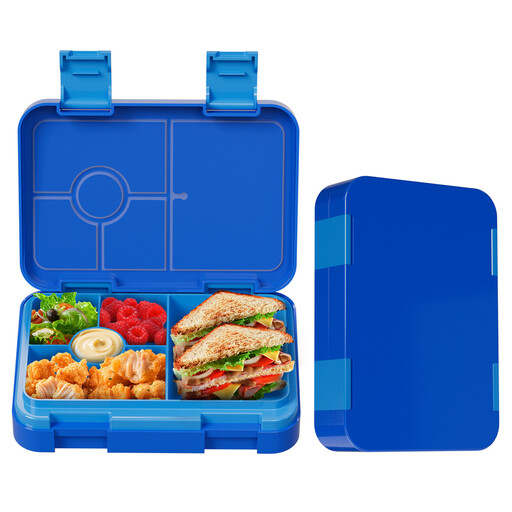
Why it suits this profile: The five compartments provide a clear layout for bread, fruit and snacks. The double closures are practical for everyday use at school or in the office.
The layout means you do not have to fill one large, awkward compartment. For liquid ingredients, however, check the closure information on the product page.
Five compartments and double clips. Suitable for varied portions.

Why it suits this profile: This spacious food jar is designed for hot meals, soup or cold dishes during the commute, camping trips and longer days away from home.
The wide opening makes filling, eating and cleaning easier than with a narrow thermos. Carry the jar upright and follow the warning not to tilt it.
316 stainless steel, vacuum insulation and 1.5-litre capacity. According to the product description, thermal retention lasts 4–6 hours.
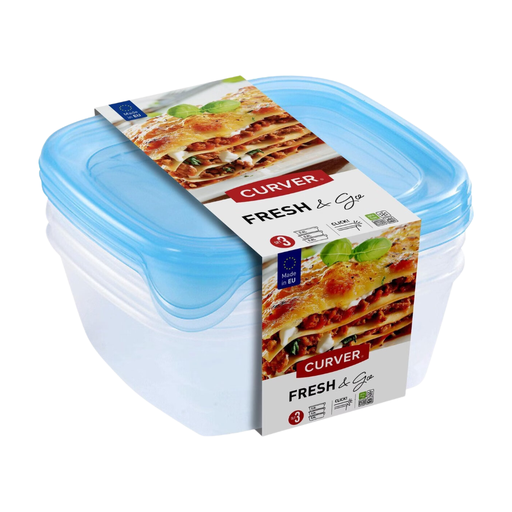
Why it suits this profile: The set of three containers is suitable for meal prep, leftovers and organising the fridge. The square shape makes practical use of the available space.
The transparent containers make the contents visible, while the clip-on lids are suitable for storage and transport according to the product description. Remove the lid before using the container in the microwave.
Three 0.8-litre containers. According to the product description, suitable for freezer, microwave and dishwasher use within the stated temperature range.
We have put together a complete, up-to-date list of products that fully meet these strict selection criteria and the applicable European safety regulations.
Yes, if you want to take several small portions with you. A bento lunchbox stops bread, fruit and snacks from getting mixed together. For soup or sauces, a separately sealed container or food jar is more suitable. For young children, also check whether they can open the closures independently.
Its lifespan depends on the material, closure and care. Stainless steel generally stands up well to everyday use, while glass can crack if dropped. Silicone seals may lose their flexibility over time. Replace a lunchbox if you notice cracks, deformation, rust or a lid that consistently fails to close properly.
Yes, provided the material and usage instructions allow it. Let hot food cool first in accordance with the manufacturer’s instructions, then refrigerate it. Glass lunchboxes and food storage containers are practical for leftovers because you can easily identify the contents. For taking food with you, a well-sealed lid and suitable external dimensions are more important than a large number of additional features.
