
Vandaag of morgen in huis

Kwaliteit gegarandeerd

Welkomstaanbiedingen ontgrendelen: GRATIS bezorging | Tot 80% korting | Gratis 30 dagen JoyPlus-proefperiode
Download de app
A lunchbox may seem simple, but you often only notice you have made the wrong choice in everyday use. A lid that does not close properly, too little space for a full meal or an interior that is difficult to clean can make your daily lunch unnecessarily inconvenient. The same applies to an insulated lunchbox: a product designed to carry hot soup requires different features from a lunchbox with compartments.
The Joybuy Product Recommendation Officer helps you translate marketing claims into verifiable features. This makes it easier to see what to look for in a food container for eating on the go and which models suit your needs.
A leak-proof lunchbox depends on its seal. Check whether the product has a silicone ring, screw-top lid, clip closure or another type of seal. A product description may promise leak-proof performance, but results also depend on closing the container correctly, wear and tear, and overfilling.
Pressure also matters when carrying hot food. According to the product information for the COOKER KING sets, you should first open the silicone valve when carrying hot food to release any built-up steam pressure.
A capacity of 470 or 500 ml is generally intended for one portion of soup, yoghurt, porridge or a modest meal. A 710 ml or 940 ml model provides more room for pasta, stew or a larger lunch, but it also takes up more space and may be heavier.
Do not just look at the number of millilitres. Also check the height, diameter and opening. A tall food container may not fit in your work bag or cycling bag, while a wide lunchbox is easier to fill and clean.
An insulated food container does not keep food at the desired temperature indefinitely. According to Stanley’s product description, the Artisan Thermal Food Jar keeps food hot for up to 13 hours; the Classic Legendary Food Jar is stated to keep food hot for up to 20 hours and cold for up to 24 hours. These are product specifications and brand claims, not a guarantee for every situation. The starting temperature, amount of food, outdoor temperature and how often you open the lid all have an impact.
If you mainly want to carry bread, fruit and snacks, you generally do not need vacuum insulation. For soup or a hot meal, a double-walled insulated food container makes more sense.
Many food containers are made from 18/8 or 18/10 stainless steel. This refers to the composition of the steel and is widely used for reusable food containers. The product information for the Maxcook models mentions 316 stainless steel, while the PURECOOK and COOKER KING products specify 304 stainless steel.
A higher material number does not automatically mean that every component is better suited to your situation. Also check the lid, silicone seal and care instructions. For example, a stainless steel lunchbox cannot automatically be used in a microwave or oven. Always follow the manufacturer’s instructions.
A bento box or lunchbox with compartments keeps different foods separate. This is useful for bread, vegetables, fruit and snacks. The Maxcook 4-Compartment and 5-Compartment Bento Boxes are designed for this purpose. The available compartments make portioning more straightforward, but check whether the dividers are fully sealed. Not every compartment layout prevents liquids from running between sections.
For soup, curry or porridge, a round food container with a wide opening is more practical. Look for:
A dishwasher-safe design can save time, but check whether this applies to the entire lunchbox. With some models, only the container and certain components can go in the dishwasher. According to the product information, the 470 ml Thermos SK Food Jar should be washed by hand; the 710 ml midnight-blue version is listed as suitable for the top dishwasher rack.
Empty your lunchbox after use and dry all components thoroughly. Check silicone rings regularly for cracks, deformation or food residue. A loose or damaged ring can reduce the effectiveness of the seal. Do not use an abrasive sponge on stainless steel unless the manufacturer permits it.
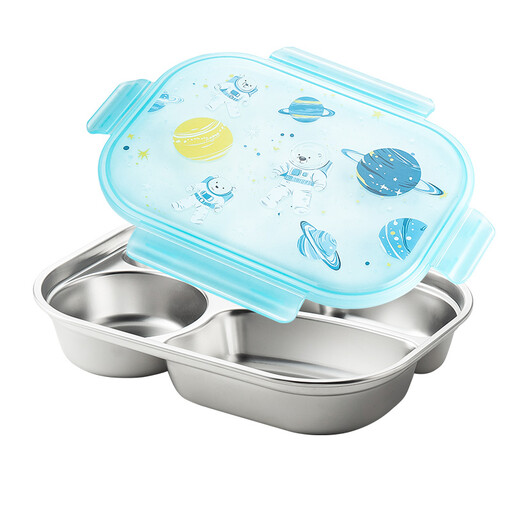
Why it suits this profile: The four compartments are practical for taking bread, fruit and snacks to school, the office or a picnic. The layout eliminates the need for a separate food container for each part of your lunch.
The specifications mention 316 stainless steel and a fixed compartment layout. Before buying, check that the compartments are suitable for the amount of food you need and that the lid seals properly.
Four compartments, a portable design and stainless steel construction according to the product information.
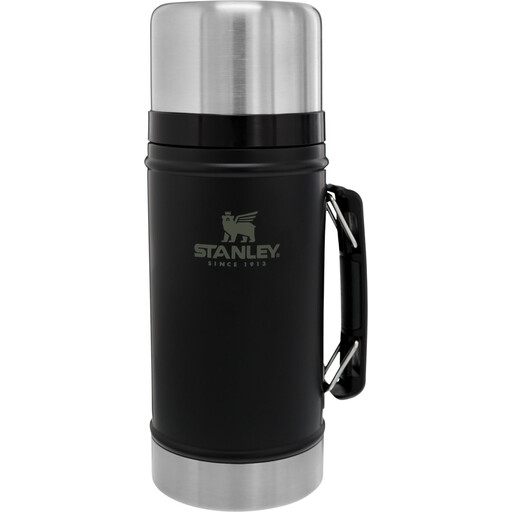
Why it suits this profile: The 0.94-litre capacity is ideal for commuters, campers and outdoor enthusiasts who want to take a generous meal with them.
The wide opening makes filling and cleaning easier than with a narrow, bottle-shaped container. Check beforehand that the 10.1 cm diameter fits in your bag.
Double-walled vacuum insulation, a leak-proof seal, a foldable handle and a lid that can be used as a cup.
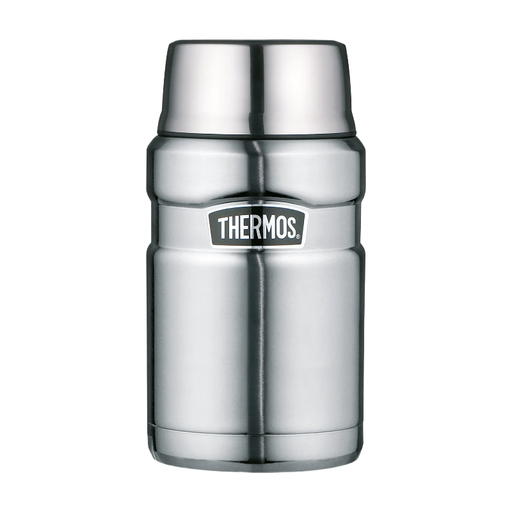
Why it suits this profile: The 710 ml capacity is suitable for work, school, camping and travel when 500 ml is not enough, but a large pot would be impractical.
The wide opening makes filling, eating and cleaning easier. The manufacturer states that it has a leak-proof seal; always close the lid fully and check the ring for signs of wear.
710 ml capacity, double-walled vacuum insulation, a wide opening and a weight of approximately 390 grams according to the product information.
We have compiled a complete, up-to-date list of products that fully meet these strict selection criteria and the applicable European safety regulations.
Yes, an insulated food container is designed for liquid or semi-liquid meals such as soup, curry and stew. Look for a securely closing lid, a wide opening and warnings about hot contents. A standard bento box is mainly suitable for solid foods and snacks.
For one compact meal, 470 to 500 ml is often sufficient. If you are taking a larger portion, pasta or a meal with several components, you may wish to choose 710 ml. A capacity of 940 ml is particularly practical for large portions, long days or sharing. Also consider the shape, as capacity alone does not indicate how much space the container will take up in your bag.
Its lifespan depends on the material, closure and care. Stainless steel is generally suitable for repeated use, but silicone rings and lids may wear out sooner. Replace components when they are damaged, deformed or no longer seal properly. Also check the warranty terms for the specific product; within the EU, you generally have at least the statutory guarantee of conformity under the applicable consumer rules.
