
Vandaag of morgen in huis

Kwaliteit gegarandeerd

Welkomstaanbiedingen ontgrendelen: GRATIS bezorging | Tot 80% korting | Gratis 30 dagen JoyPlus-proefperiode
Download de app
A kitchen bin needs to do more than simply store rubbish. In a British kitchen, space, waste separation, odours, cleaning and everyday use all play an important role. Yet when buying a bin, people often focus mainly on its colour and capacity. As a result, the kitchen bin may not fit under the worktop, the inner bins may be difficult to empty, or the lid may turn out to be less practical than expected.
This buying guide compares the most important features of a pedal bin for the kitchen, a waste separation bin and a sensor bin. You will then find three product choices for different uses.
A 40-litre bin or 60-litre bin may seem spacious, but the external dimensions determine whether it will actually fit. For example, a tall bin may not fit beneath a low worktop. Always check:
A duo bin can sometimes take up more floor space than two separate bins, but it can make waste separation more organised.
Terms such as “odourless”, “completely silent” or “always hygienic” are not universal guarantees. According to the product description, an activated carbon filter may help control odours, but the result also depends on the type of waste, how often you replace the bag and whether the inner bin is kept clean.
The same applies to a bin with a soft-close lid. This mechanism is designed to let the lid close in a controlled way. It does not automatically prevent all noise if the bin is standing at an angle, is overfilled or has dirt in the hinge.
A waste separation bin with three compartments sounds practical, but three 20-litre compartments are not the same as one 60-litre bin. You have more control over general waste, plastic or paper, but each compartment needs to be emptied separately.
For a household that produces little waste, a smaller duo bin may be sufficient. Families or households that want to empty the bin less often may be better off choosing a larger model. Also check that the bin bags you choose fit the shape and capacity of the inner bins.
The capacity should suit your household and your local council’s waste collection system. A 40-litre bin is often a practical mid-sized option for everyday kitchen waste. A model ranging from 50 to 65 litres is more suitable for larger households or a kitchen where waste is disposed of less frequently.
With waste separation, the individual compartments matter more than the total capacity alone. A 3 x 20-litre layout provides three separate categories. A double pedal bin with 2 x 15 litres is more compact, but offers less space for each type of waste.
A pedal bin means you do not need to open it with your hands. Pay attention to the width and sturdiness of the pedal, and check whether the lid opens far enough. With some models, you can also open the lid manually or leave it open temporarily.
A sensor bin opens automatically when your hand or an object enters its detection range. This can be useful when cooking, but sensor models have electronic components and only work properly when the sensor remains unobstructed. Before buying, check the required power supply and maintenance instructions.
A stainless steel bin, or a model with a steel finish, has a sleek appearance and is generally easy to wipe clean. “Rust-resistant” does not mean that you can use every type of cleaning product. Avoid abrasive sponges and harsh products if the product information advises against them.
A removable inner bin with a handle makes replacing bags and cleaning easier. Also check how the bag is secured: a rim, clamp or integrated holder prevents the bag from slipping down into the bin.
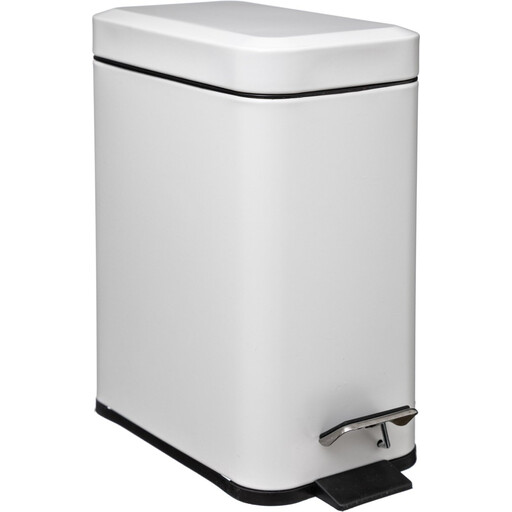
Why it suits this profile: The 5-litre capacity is suitable for a small kitchen, bathroom, toilet or home office where you do not store much waste. The dimensions are 14 x 29 x 30 cm.
The specified capacity and external dimensions make it easier to determine in advance whether the bin will fit in the desired location. The removable inner bin makes emptying and cleaning easier.
5-litre capacity, pedal operation, soft-close lid and a steel casing with a plastic inner bin.
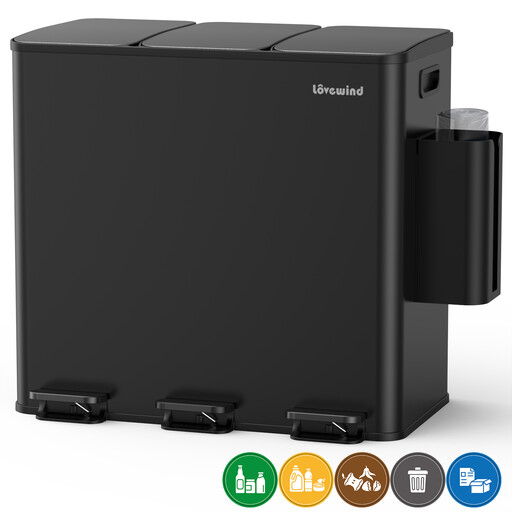
Why it suits this profile: This waste separation bin is designed for households that want to keep three waste categories separate. Each of the three compartments has a capacity of 20 litres.
The layout is clearly specified as 3 x 20 litres. According to the product description, each compartment has its own lid and inner bin, so you do not have to use one large unsorted bag.
Rust-resistant and fingerprint-resistant stainless steel according to the product information, soft-close lids, foot and hand operation, and magnetic classification labels.
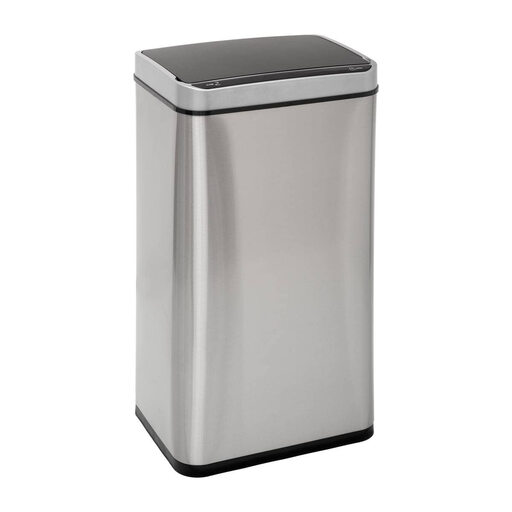
Why it suits this profile: Sensor operation is convenient when you do not have a free hand while cooking. With a 40-litre capacity, this model is suitable for a kitchen or office that produces waste regularly.
The product information lists both the capacity and the height: 33 x 24 x 66 cm, and 85.6 cm when open. This allows you to check the required clearance in advance.
Automatic opening via a motion sensor, soft-close mechanism, removable plastic inner bin with handle and stainless steel casing according to the product description.
A bin will remain usable for longer if you empty the inner bin regularly and clean the rim. With a pedal bin, pay attention to the following:
A small 5-litre kitchen compost bin is suitable for temporarily collecting organic kitchen waste. For longer-term storage, a well-sealed bin and regular emptying are important for reducing spills and unpleasant odours.
We have put together a complete, up-to-date list of products that fully meet these strict selection criteria and the applicable European safety regulations.
For a small household, 20 to 40 litres may be sufficient. Families often choose 40 to 60 litres, depending on how often waste is collected and separated. With a duo bin or waste separation bin, you should look at the capacity of each compartment.
A sensor bin generally uses a battery or another power source. Running costs depend on the type of power supply, how often the sensor is activated and when the batteries need replacing. A kitchen pedal bin does not require an electronic power supply.
Its lifespan depends on the material, hinges, pedal mechanism and everyday use. Place the bin on a stable surface, avoid overloading it and keep the closing mechanism clean. Also check the warranty and statutory guarantee when buying in the European Union.
