
Vandaag of morgen in huis

Kwaliteit gegarandeerd

Welkomstaanbiedingen ontgrendelen: GRATIS bezorging | Tot 80% korting | Gratis 30 dagen JoyPlus-proefperiode
Download de app
A bin may seem like a simple purchase, but you’ll notice the wrong choice every day. A lid that hits the wall, an inner bucket that doesn’t fit properly or a capacity that’s too small can quickly become frustrating. Marketing claims such as ‘hygienic’, ‘odour-free’ and ‘rust-resistant’ don’t always tell the whole story either.
Focus instead on features you can check: capacity in litres, external dimensions, material, opening mechanism and maintenance. That way, you can choose a kitchen bin that suits your household, not just your interior.
A 30-litre bin, 40-litre bin or 50-litre bin doesn’t tell you everything. Two models with the same capacity can differ considerably in width and height. Always check the dimensions, especially if you’re placing the bin under a worktop, next to a kitchen cupboard or against a wall.
A 60-litre bin can be useful for larger households, but a tall model may take up more vertical space. A wide recycling bin gives you more sorting options, but needs more floor space.
A sensor bin opens without you touching it, which can be handy when you’re cooking. However, how well it works depends on the batteries, the sensor’s position and having enough clear space above the lid. Also check whether you can open the lid manually if the sensor doesn’t respond.
A pedal bin is simpler: you open the lid with your foot and don’t need batteries. It’s often a straightforward option for everyday use.
A soft-close bin slows the lid as it shuts. This can reduce noise, but it doesn’t mean every part operates silently. A metal pedal, a loose inner bucket or a poorly fitted bin liner can still make a noise.
So, look at the whole design: a removable inner bucket, a sturdy pedal and a lid that won’t hit the wall are just as important.
Choose a capacity that suits how you’ll use the bin:
Bear in mind that the recommended liner size doesn’t always match the bin’s capacity. For example, a 30-litre model may take 50-litre liners. So check the product information before buying bin liners.
A stainless steel bin is usually easy to wipe clean and suits a modern kitchen. A fingerprint-resistant finish can reduce visible marks, but regular cleaning is still needed. Plastic is often lighter and can be practical if you move the bin regularly.
A removable inner bucket makes emptying and cleaning easier. Also check whether the material is suitable for the cleaning products you use, as stated in the product description. Avoid abrasive cleaners on metal surfaces, and clean the pedal or sensor carefully.
A pedal bin is handy when you want to keep your hands free. A sensor bin can do the same without you using your foot, but it needs batteries. With a lidded bin, you’ll also need to consider how much room the lid needs to open. A lid that opens fully requires extra space.
So measure:
For a recycling bin with two or three compartments, also check that each section is large enough for the type of waste you produce. A model with three 18-litre compartments divides the total capacity differently from one with two large compartments.
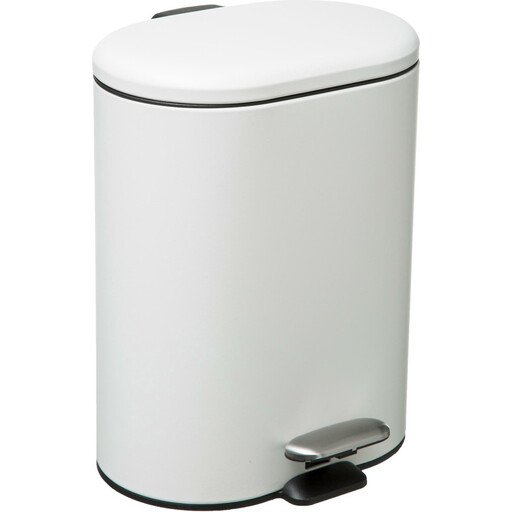
Why it suits this type of user: Its compact 6-litre capacity makes it a good fit for a bathroom, toilet, home office or small space. The pedal means you don’t need batteries or a complicated set-up.
The product description lists a removable inner bucket and a soft-close function. Just check that 6 litres is enough for the amount of waste you produce.
6-litre capacity, pedal operation, soft-close lid and dimensions of 15 × 24 × 30 cm.
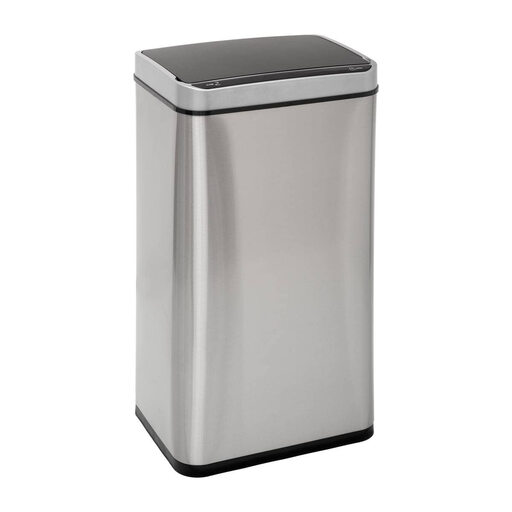
Why it suits this type of user: This model combines a 40-litre capacity with a stainless steel body and automatic opening. It’s a good fit for kitchens or offices where hands-free operation matters.
The dimensions are clearly stated: 33 × 24 × 66 cm. Allow for a height of 85,6 cm when the lid is open, and remember that it runs on batteries.
40 litres of usable capacity, motion sensor, soft-close lid and a removable plastic inner bucket with a handle.
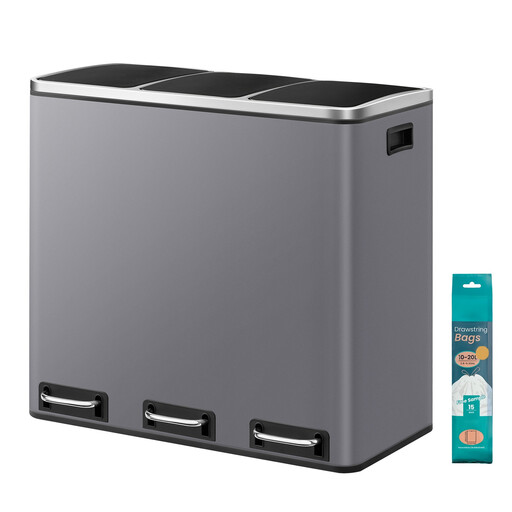
Why it suits this type of user: This recycling bin is designed for households that want to separate general waste, recycling and food waste in one place.
The three separate inner buckets mean you don’t have to divide up one large compartment yourself. Check the overall width of 61 cm before you buy.
3 × 18 litres, separate pedals, soft-close lids and removable inner buckets.
A 5-litre compost caddy is practical for collecting fruit and vegetable scraps while you cook. You can place a small caddy on the worktop or inside a kitchen cupboard. The 5Five Metal Compost Bin has a stainless steel body, a plastic inner bucket and a 5-litre capacity.
A compost caddy won’t replace a large kitchen bin. Check how your local council collects food and garden waste, and empty the caddy regularly. A lid can help keep waste covered, but avoid storing damp organic waste for long periods.
We’ve put together a complete, up-to-date list of products that meet these strict selection criteria and the applicable European safety regulations.
It depends on how many people live in your household and how often you want to empty the bin. A 30- to 40-litre bin is often practical for a smaller household. Families may want to consider 50 or 60 litres. If you’re separating waste, you’ll need to divide the total capacity between several compartments.
You can open a pedal bin without using your hands, which can be handy when you’re cooking. Hygiene also depends on emptying it regularly, cleaning the inner bucket and changing the bin liner. A sensor bin offers similar hands-free operation, but runs on batteries.
Its lifespan depends on the material, hinges, pedal use, how heavily it’s used and how well it’s maintained. Place the bin on a stable surface, don’t force the lid and avoid overfilling it. Clean metal surfaces with a soft, damp cloth and keep waste away from moving parts. Before buying, also check the statutory guarantee and any additional manufacturer’s guarantee in the product information.
