
Same-day & Next-day Delivery

Quality Guaranteed

Unlock Your Welcome Offers: FREE Delivery | Up to 80% OFF | Free 30-day JoyPlus trial
Download the APP
Coconut milk comes in tins, cartons and multipacks. But these products aren’t automatically interchangeable. A thin variety might work well in a smoothie, but it’s less suitable for a creamy curry. Similarly, a large pack can seem like good value, only for you to end up throwing some away after opening.
So watch out for these three common pitfalls:
The right choice depends on the dish, the texture you want, and how quickly you’ll use the pack.
The coconut percentage gives a useful indication of the composition. Aroy-D Original Coconut Milk (1 litre) states 70% coconut extract according to the product information, along with water and emulsifier E435. Green Life Coconut Milk contains 5–7% fat according to the product information and comes in a 400 ml tin. These figures aren’t directly comparable, but they do show why two products with the same name can cook differently.
For a full-bodied Thai curry or a coconut-cream-style sauce, many users choose a variety with a higher coconut or fat content. For soup, smoothies or a lighter dessert, a less rich coconut milk can be perfectly adequate.
Always check the label, especially if you’re buying a vegan coconut milk or avoiding lactose. The Aroy-D and Mae Ploy products mentioned here list none of the 14 major EU allergens according to their product information. That doesn’t mean you can skip the label: recipes and packaging can change.
A stabiliser or emulsifier isn’t necessarily a problem. It can help keep water and coconut solids properly mixed. If you prefer a short ingredients list, compare products side by side rather than choosing by brand name alone.
With multipacks, pay extra attention to the actual content per pack. The product listing for AROY-D Coconut Milk Original mentions 150 ml × 6 in the title, while the description shows different content information. So check the current product page and the packaging before you buy.
For a Thai curry or Tom Kha soup, an unsweetened coconut milk is usually the logical base. Add the coconut milk gradually and check the thickness as you cook. Coconut milk can also be used for desserts, puddings, cakes and fruit dishes, but check whether the product already contains sugar.
Coconut cream is thicker than regular coconut milk and can be used as a topping, a base for a dessert, or to give a sauce more body. The product Bamboo Tree Coconut Cream states 20–22% fat and 88% coconut extract according to the product information. That makes it quite different in composition from a lighter coconut milk.
Don’t confuse coconut milk with coconut water either. DOUBLE PANDA Coconut Water consists of coconut water and cane sugar according to the product information, and is intended as a drink or an ingredient for smoothies and cocktails. It won’t replace coconut milk in a curry.
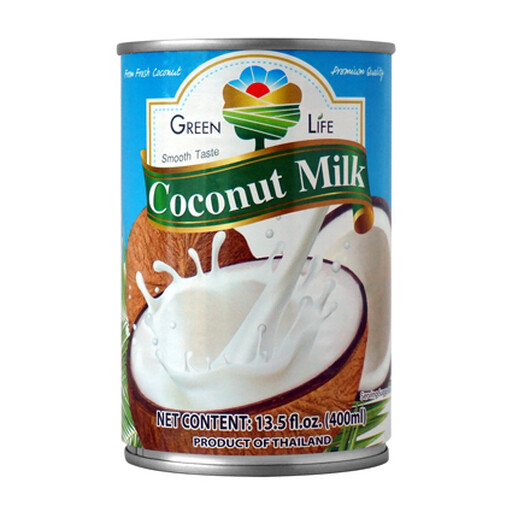
Why this fits the profile: The 400 ml tin is a manageable size for a first curry, soup or dessert without having to open a whole litre.
The product information states the fat content of 5–7%, so you don’t have to rely on the front of the tin alone.
400 ml content; according to the product information, vegan, lactose-free and with no declared allergens.
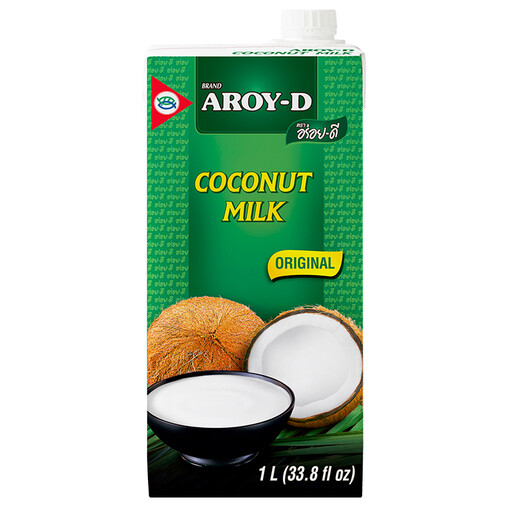
Why this fits the profile: A 1-litre pack suits home cooks who regularly make Thai curries, soups, desserts or baking recipes.
The product information states 70% coconut extract, water and E435. This lets you compare the composition concretely.
1 litre content; according to the product information, vegetarian and vegan.
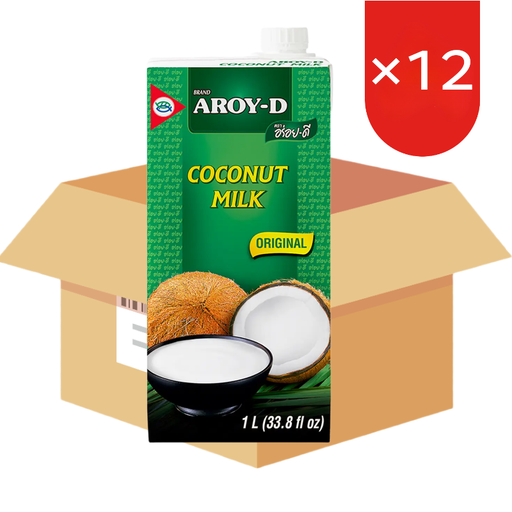
Why this fits the profile: A case of twelve packs is aimed at restaurants, catering and households with a high turnover.
The bulk pack means you don’t have to buy individual small packs for every dish. Do check your storage space and the best-before date.
12 × 1 litre; suitable for repeated use in curries, soups, desserts and smoothies according to the product description.
We’ve put together a full, up-to-date list of products that fully meet these strict selection criteria and comply with current European safety regulations.
Coconut milk naturally contains no dairy ingredients. Even so, it’s wise to check the ingredients list and allergen information. The Aroy-D, Mae Ploy and Green Life products mentioned here list none of the 14 major EU allergens according to their product information. Check the current label with every purchase.
Choose an unsweetened variety and look at the coconut or fat content. A richer coconut milk generally gives a thicker sauce, while a lighter variety can be better suited to soup or a smoothie. Aroy-D Original and Mae Ploy Blue Coconut Milk UHT are packed in litres and are mentioned in the product description for curries, soups, desserts and baking recipes.
Always follow the instructions on the pack. Unopened UHT coconut milk can be stored outside the fridge in a cool, dry place according to the product information. Once opened, the pack should be sealed tightly and usually kept refrigerated. Don’t use any pack that is damaged or whose seal isn’t intact.
