For a breakfast flask, the main things to consider are how much water you can dispense at once and whether the flask will fit beneath the spout. A countertop dispenser avoids the need to install a tap; with a boiling water tap, you’ll also need to consider the space required, installation and standby energy use. Manufacturer specifications describe what a product can do, but don’t tell you how long it will take to fill your flask or what temperature the water will be once it’s in there.
Who is a hot water dispenser suitable for?
Family filling one large flask
You want to fill your breakfast flask in as few dispensing sessions as possible. Reservoir capacity, continuous dispensing and the clearance beneath the spout all play a part. Nedis and Philips describe models with larger capacities or continuous dispensing.
Family with young children at the table
You want to keep hot liquids out of children’s reach while filling and serving. A child lock is no substitute for safe positioning and supervision. VeiligheidNL recommends using a thermos flask rather than a teapot when there are young children around.
Household that also fills individual cups
You want to choose smaller quantities or different temperatures as well as filling your breakfast flask. Philips and Tomado describe dispensers with portion settings; check how to fill a larger flask on each model.
What should you look for when buying?
Countertop dispenser with continuous dispensing
Choose this if: you regularly fill a larger flask and don’t want to install a tap. First, check that your flask fits beneath the spout.
Things to consider: a large reservoir doesn’t guarantee that your flask will fit or that the measured filling time will meet your expectations.
Countertop dispenser with preset portions
Choose this if: you mainly fill cups and only occasionally fill a flask.
Things to consider: you may need to dispense several times to fill a larger flask. Check the spout height too.
Boiling water tap with reservoir
Choose this if: you also want instant boiling water outside breakfast time and your kitchen is suitable for installation. Quooker states that PRO3 provides 3 litres of boiling water, while COMBI and COMBI+ provide 7 litres.
Things to consider: you’ll need suitable space and connections. Quooker states that these reservoirs use 10 W in standby.
| Consideration |
What should you check? |
Who is this important for? |
| Capacity and dispensing |
Compare your flask’s capacity with the usable reservoir capacity and check whether continuous dispensing is available. |
I want to fill my breakfast flask without topping up the dispenser part-way through; around 31% of consumers prioritise sufficient capacity and dispensing. |
| Safe dispensing |
Consider where you’ll place the dispenser, the cord and the flask; check the safety features on the exact model. |
If young children are at the table, I want to fill hot liquids safely and place them out of reach; around 25% of consumers prioritise safe dispensing. |
| Clearance beneath the spout |
Measure the height of your flask, and allow room to position it under the spout and remove it again. |
I want to dispense straight into my flask without having to handle hot water again; around 19% of consumers prioritise a good fit. |
| Temperature and portions |
Check the temperature settings, portion sizes and whether the exact model has a continuous dispensing setting. |
For breakfast, when I’m filling both a flask and individual cups, I want to adjust the amount dispensed; around 13% of consumers prioritise a choice of temperature and portion size. |
| Use and maintenance |
Consider how you’ll use it, any filter and descaling instructions and, for a boiling water tap, the installation requirements. |
I want to know what the appliance requires during and outside breakfast time, including maintenance; around 12% of consumers prioritise the overall effort involved in using it. |
Common buying mistakes
-
Looking only at the reservoir capacity
A large capacity doesn’t automatically mean your flask will fit beneath the spout or that you can dispense the amount you want in one go.
Measure your flask and compare its height with the clearance listed for the exact model. Nedis states that the KAWD310FBK has a maximum clearance of 16 cm beneath the filling spout.
-
Assuming a child lock offers complete protection
A child lock won’t stop a filled flask or a cup of hot drink being left within reach.
Choose a safe place for filling and serving, and keep hot liquids out of children’s reach. VeiligheidNL recommends using a thermos flask rather than a teapot when there are young children around.
-
Assuming a boiling water tap uses no energy when you’re not dispensing
A reservoir that keeps water hot also uses electricity in standby. Quooker states that the reservoirs mentioned use 10 W; Kenniscentrum Duurzaam Leven points out that standby energy use contributes to overall consumption.
Weigh the convenience against how you’ll use it during and outside breakfast time. Also consider the installation requirements and connections needed.
Brands to compare
Nedis
According to Nedis, the KAWD310FBK is a countertop dispenser with a 2.7-litre reservoir, adjustable dispensing and a child lock.
- The product information states that it can dispense up to 2.7 litres.
- The same product information states that items up to 16 cm tall fit beneath the spout; measure your flask.
Philips
Philips describes the ADD5910M/10 as having portion settings and continuous dispensing, making it suitable if you want to fill both cups and larger amounts.
- The Dutch product information lists six temperature settings and a continuous dispensing setting.
- The listed settings don’t tell you whether your flask will fit beneath the spout.
Tomado
According to Tomado, the TWD2503B has a 2.5-litre reservoir and four preset portion sizes.
- The product information lists portions of 150, 200, 300 and 500 ml.
- You may need to dispense repeatedly to fill a larger flask. The manual warns that the outside and water outlet can get hot.
CASO Design
According to the manufacturer, the CASO Design HW 660 is a dispenser with a 2.7-litre reservoir, temperature settings and continuous dispensing.
- The manufacturer lists seven temperature settings.
- These specifications don’t indicate how long filling takes; check that your flask fits beneath the spout.
Quooker
Quooker offers built-in systems with reservoirs for those who want boiling water straight from the tap more often than just at breakfast.
- Quooker states that PRO3 provides 3 litres of boiling water, while COMBI and COMBI+ provide 7 litres.
- The systems require suitable space and connections. Quooker states that the reservoirs mentioned use 10 W in standby.
Products on Joybuy
These countertop dispensers are options to compare if you’re filling a flask for a family breakfast. For any specific electrical appliance, also check for the CE mark: according to the Netherlands Food and Consumer Product Safety Authority, it is compulsory for electrical products.
 No image available
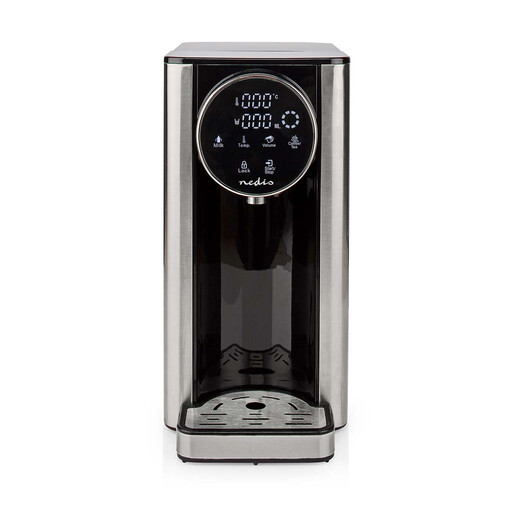
Nedis hot water dispenser, 2600 W, 2.7 l, aluminium and black
The stated reservoir capacity may be useful if you’re filling a larger flask; measure your flask and check the clearance beneath the spout for this model.
The product name lists 2600 W and a 2.7 l reservoir.
View on Joybuy
 No image available
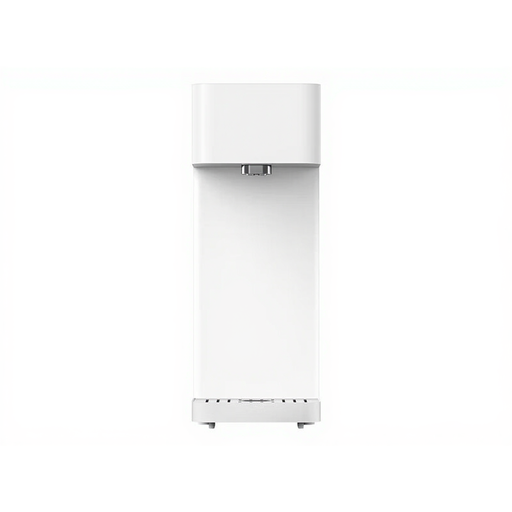
Xiaomi Smart Hot & Cold Water Dispenser, 3 l, dual mode and 5 temperature settings
This model may suit a household looking for different temperature options as well as water for a flask; check that your flask fits and that the dispensing options meet your needs.
The product name lists a 3 l capacity and five temperature settings.
View on Joybuy
 No image available
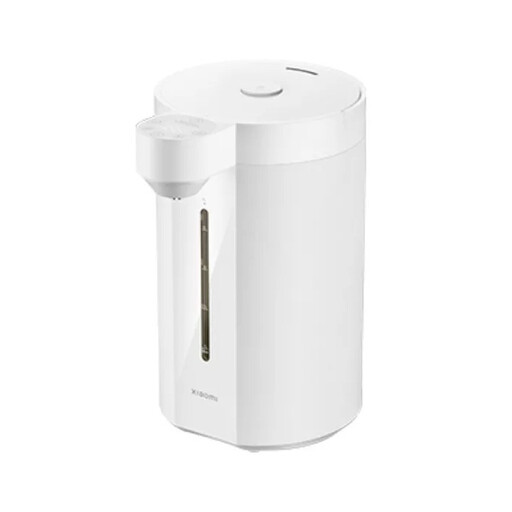
Xiaomi Smart Electric Hot Water Dispenser, 5 l
The stated capacity is worth considering if you want to fill a larger flask; also check that your flask fits beneath the spout.
The product name lists a 5 l capacity.
View on Joybuy
 No image available
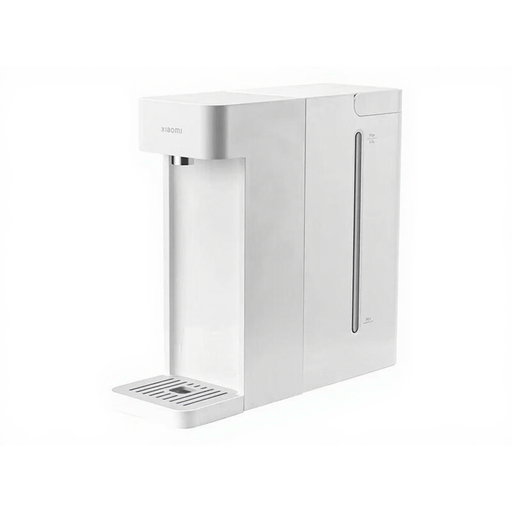
Xiaomi Instant Hot Water Dispenser S1, 3 l, 4 temperature settings, compact countertop model
The stated capacity may be important if you want to dispense a larger amount; check how much water your flask holds and whether it fits beneath the spout.
The product name lists a 3 l capacity and four temperature settings.
View on Joybuy
 No image available
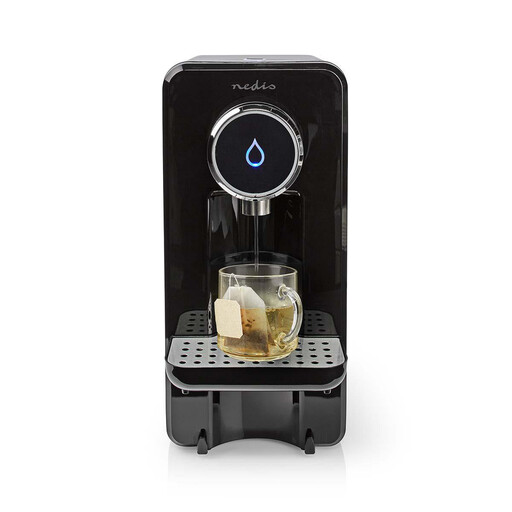
Nedis hot water dispenser, 2600 W, 2.5 l, black
This option may be worth considering if you also dispense smaller amounts; bear in mind that you may need to dispense several times to fill a larger flask.
The product name lists 2600 W and a 2.5 l reservoir. Continuous dispensing is limited to 500 ml per use, so you may need to dispense several times to fill a larger flask.
View on Joybuy
Frequently asked questions
Can I fill my flask directly beneath a dispenser?
Only if the flask fits beneath the spout and the dispenser can deliver the amount you need. Nedis states that the KAWD310FBK has a maximum clearance of 16 cm beneath the spout; measure your flask before choosing a model.
How can I fill it safely when there are young children at the table?
Keep hot drinks and the filled flask out of children’s reach. VeiligheidNL recommends using a thermos flask rather than a teapot when there are young children around; a child lock is no substitute for this precaution.
Is a 40 °C temperature setting automatically suitable for baby food?
No. An appliance setting isn’t a complete preparation guide. Follow the Voedingscentrum’s instructions for preparing formula, and treat that process separately from filling a breakfast flask.
Does a boiling water tap need to be connected by an installer?
Follow the installation instructions for your chosen system and check that you have suitable space and connections. Quooker describes installation by, for example, a plumber or contractor, as well as self-installation using the specified method; this information does not establish a general legal requirement to use an installer.
What CE rules apply to a hot water dispenser in the Netherlands?
According to the Netherlands Food and Consumer Product Safety Authority, electrical products must carry a CE mark. Check the mark and product information for the specific appliance; a stated specification is not the same as a real-world test.


