
Vandaag of morgen in huis

Kwaliteit gegarandeerd

Welkomstaanbiedingen ontgrendelen: GRATIS bezorging | Tot 80% korting | Gratis 30 dagen JoyPlus-proefperiode
Download de app
A hot water dispenser can be useful for tea, coffee, instant meals or filling a bottle with water at a selected temperature. Instead of heating a full kettle, you can often dispense the exact amount you need straight away. That saves time, especially in busy households, while working from home or in a small office.
However, not every instant hot water dispenser suits every situation. A large reservoir takes up space, a high temperature setting is not automatically precise and an appliance with numerous features can be difficult to keep clean. So do not focus solely on heating speed or a modern display.
Manufacturers sometimes claim that water is available within a few seconds. According to the product descriptions of various brands, this usually applies to a limited volume of water and a specific temperature setting. Therefore, check:
A fast kettle may be more practical when you need a full jug. A hot water dispenser is particularly useful when you regularly need a single cup or a precisely measured amount.
An appliance with several programmes sounds flexible, but look at the actual settings. Some models offer only a few fixed temperatures, while others allow you to adjust the temperature degree by degree. Also check whether the selected temperature refers to the water in the reservoir or the water coming from the outlet.
Different temperatures can be useful for tea and coffee. Some product descriptions mention a setting of 40 or 45°C for preparing baby formula. This does not guarantee that preparation will be suitable or safe: always follow the instructions provided by the formula manufacturer and check the temperature before use.
A 3-litre or 5-litre hot water dispenser needs refilling less often, but stagnant water and limescale require attention. In areas with hard water, limescale can build up more quickly inside the appliance. A removable tank, detachable drip tray and descaling reminder can make a practical difference.
Only use clean, cold water when specified in the manual. Do not put milk, coffee or tea in the water reservoir. Unplug the appliance before cleaning or descaling it.
Choose the capacity based on your daily usage:
In addition to tank capacity, consider the dimensions. The dispenser should fit beneath kitchen cabinets, and the outlet should be high enough for your favourite mug or jug. According to the product specifications, the Nedis KAWD310FBK accommodates containers up to 16 cm high.
A hot water dispenser with temperature control should offer not only different temperatures but also useful dispensing volumes. Common options include 100, 200, 250, 500 or 750 ml. Automatic volume selection helps reduce waste and prevent overflowing.
A model with one fixed boiling-water setting works well if you mainly want boiling water. For green tea, instant coffee or hot drinks that require a lower temperature, several settings are more convenient.
Look for clearly verifiable features such as:
A child lock does not prevent hot water from causing burns. Keep the appliance and its cord out of children’s reach, and never allow children to use an electric water dispenser unsupervised.
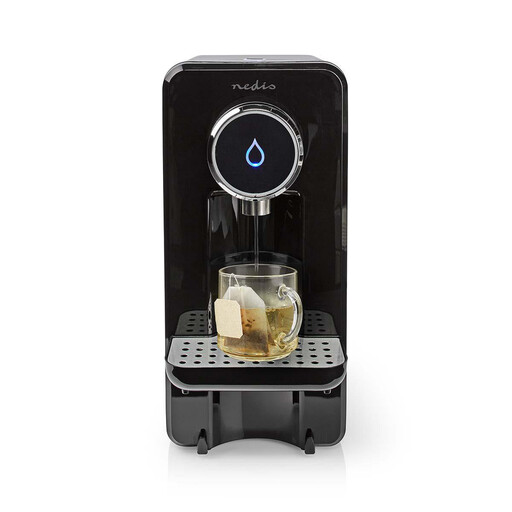
Why It Suits This Profile: A practical choice for anyone who wants to prepare a single cup quickly without investing in a large or complicated appliance.
The product description states that water can be dispensed in approximately 5–10 seconds, and mentions a water-level indicator and descaling alert. Continuous dispensing is limited to a maximum of 500 ml per use.
2.5-litre capacity, adjustable outlet and boil-dry and overheating protection according to the product specifications.
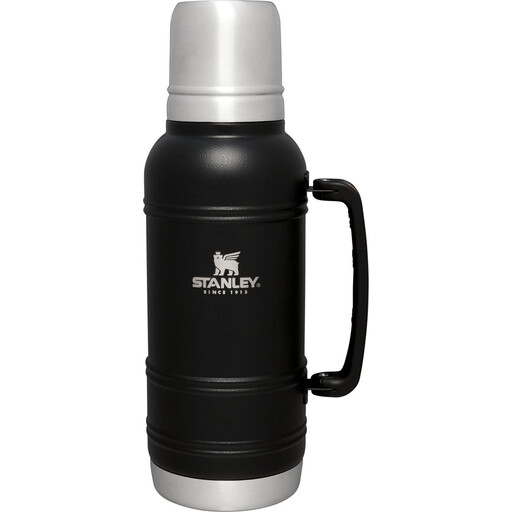
Why It Suits This Profile: Ideal for anyone who wants to prepare water or coffee in advance and take it to the office, on the road or outdoors for hours at a time.
This is not an appliance that heats water on demand. That makes it the right choice if you want to keep a hot drink warm rather than dispense freshly heated water.
1.4-litre capacity, double-wall stainless steel construction, handle and dishwasher-safe design according to the product information. The stated heat-retention period is a brand claim.
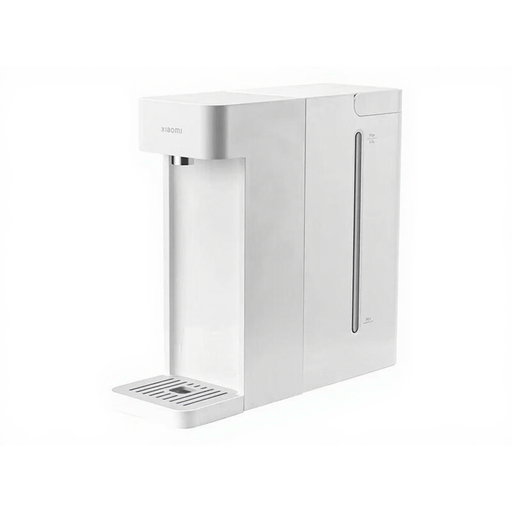
Why It Suits This Profile: A suitable option for households that use different quantities and temperatures several times a day.
The tank is transparent and holds 3 litres. You can see the water level and need to refill less often than with a compact model.
Four preset temperatures, volumes of 250, 500 and 750 ml, and control via the Xiaomi Home app according to the product description.
Browse a current selection of hot water dispensers and compare capacity, temperature functions, safety features and maintenance requirements.
A dispenser heats water when you need it. A thermal jug or thermos flask keeps water that has already been heated warm. For one tea break a day, a 1- or 2-litre Thermos THV jug may be sufficient. According to the product description, these models feature double-wall construction and vacuum insulation. The stated heat- and cold-retention times are provided by the brand and may vary in practice depending on fill level, starting temperature and ambient conditions.
A boiling-water tap is another solution. It usually requires permanent installation and is less flexible to relocate. With any electrical appliance, check that the plug, voltage and intended use are suitable for your home.
That depends on how you use it. If you heat exactly one cup at a time, a dispenser may need to heat less water than a full kettle. Actual energy consumption depends on wattage, temperature, volume and the number of uses. An appliance that continuously keeps water warm may consume more electricity instead.
Follow the manual and watch for any descaling alert. More frequent maintenance may be necessary in areas with hard water. Clean the drip tray and reservoir regularly, and use only a descaling product suitable for the appliance. Allow all parts to dry completely before using the dispenser again.
According to some product descriptions, certain models offer a 40 or 45°C setting. This can be convenient for measuring water, but always check the formula preparation instructions and the final temperature. Use the child lock, and do not allow children to operate the appliance unsupervised.
