
Vandaag of morgen in huis

Kwaliteit gegarandeerd

Welkomstaanbiedingen ontgrendelen: GRATIS bezorging | Tot 80% korting | Gratis 30 dagen JoyPlus-proefperiode
Download de app
A hot water dispenser can be handy if you regularly make tea, coffee or other hot drinks. Unlike a standard electric kettle, you don’t always have to heat a full kettle of water. Many models offer preset temperatures and fixed water volumes.
However, it’s not wise to focus only on terms such as “instant”, “rapid boiling” or “energy-saving”. The main differences between models are how they heat water, the capacity of the tank, the controls and the maintenance they require.
A 5-litre hot water dispenser may seem practical for a family or office, but it takes up more space and needs regular cleaning. A 3-litre hot water dispenser may be enough for a small kitchen or home office.
So first think about how many people will use it and how much space you have. A large tank is most useful when several people need hot water multiple times a day.
An appliance that heats water quickly doesn’t automatically make it a good water dispenser with temperature control. Check how many temperature settings it offers and whether you can choose an exact volume.
Some models offer just a few preset options, while others let you select the temperature in small increments. This can be useful for different types of tea, instant coffee and other hot drinks. When preparing baby food, always follow the instructions on the packaging; a temperature setting doesn’t guarantee that your preparation meets specific food safety guidance.
Limescale can affect the water flow and heating performance. Look for a removable water tank, a removable drip tray or a descaling reminder. Also check whether the appliance has protection against boiling dry, overheating and accidental operation by children.
A hot water dispenser dispenses water at a high temperature. Place it on a stable surface, keep the spout clear and don’t let children use it unsupervised.
A 3-litre hot water dispenser is a practical mid-sized option for households that make several cups a day. A 5-litre model is better suited to a larger family, a shared kitchen or an office. Consider both the appliance’s dimensions and the space above the tank, so it’s easy to refill.
If you only make one or two cups at a time, a compact model with portion control may be more efficient than a large tank that stays full for a long time.
Check whether the appliance:
An instant hot water dispenser usually heats water as you dispense it or just beforehand. This differs from a storage model that keeps water hot for a long time. The product description should clearly explain how the heating works. Claims about lower energy use, such as “up to 50% savings”, are brand claims. Treat them as comparisons based on specific conditions, not as a guaranteed result for every user.
The wattage tells you something about the heating system, but it isn’t the only factor that affects actual speed. Also check the recommended minimum and maximum volumes, the descaling instructions and whether the appliance has a water filter.
Use only cold, clean water unless the manual says otherwise. Clean the tank according to the manufacturer’s instructions and descale it regularly. You may need to do this more often in hard water areas.
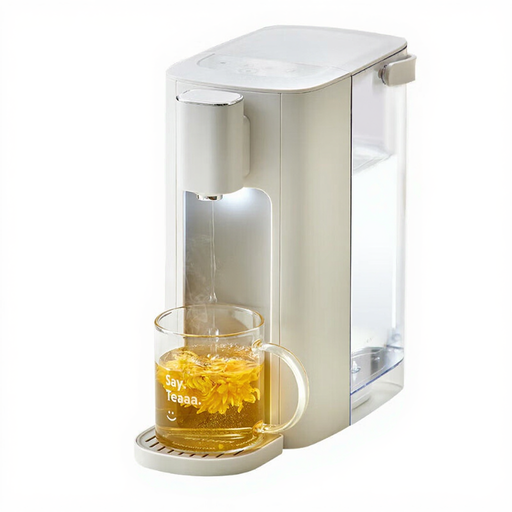
Why it suits this user: With a 3-litre capacity and six temperature settings, it’s a straightforward choice for everyday use in a household.
The specifications list settings of 45, 55, 75, 85 and 95 °C, plus boiling. This makes it clearer what you’re selecting than with a model that doesn’t display the temperature.
3-litre capacity, digital controls, adjustable volumes and 2200 W of power, according to the product information.
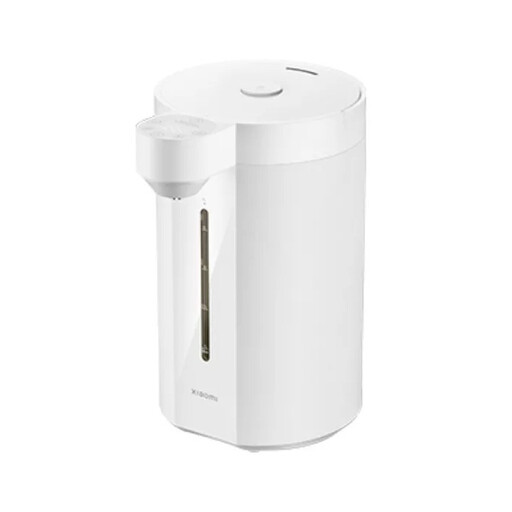
Why it suits this user: The large tank is designed for heavier use in a family home, home office or shared kitchen.
The product information lists temperature settings, a touchscreen, a digital display, automatic shut-off and a child lock. Check exactly which settings are available before you buy.
5-litre capacity, adjustable temperature and touchscreen controls, according to the product description.
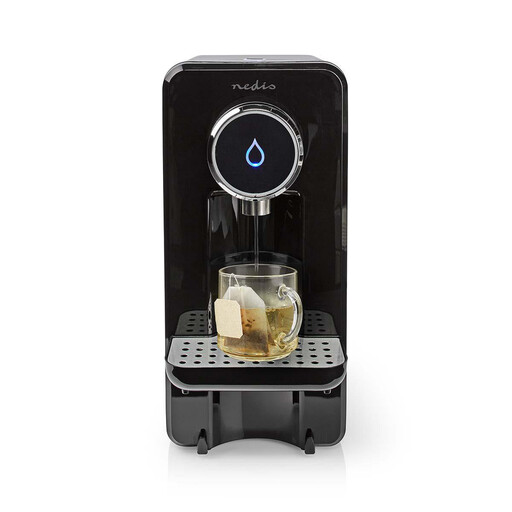
Why it suits this user: Portion control and an adjustable spout are handy when making cup after cup, for example during a working day.
According to the product information, the dispenser stops automatically after dispensing a portion of around 200 ml and supports continuous dispensing of up to 500 ml per use.
2.5-litre capacity, 2600 W of power, adjustable spout, boil-dry protection and a descaling reminder, according to the product description.
We’ve put together a complete, up-to-date list of products that meet these strict selection criteria and current European safety regulations.
An electric kettle is often simpler and a good choice if you need a full kettle of water at a time. A model such as the Morphy Richards Signature Opulent Jug Kettle has a 1.5-litre capacity, 3000 W of power, automatic shut-off and boil-dry protection.
A hot water dispenser is a better fit if you often need small amounts of water or want a kettle with temperature control. On the other hand, a dispenser usually has more parts to clean and takes up more space. So compare more than just the purchase price: think about how you’ll use the appliance every day.
It depends on the model and how you use it. A dispenser may heat only the amount you need, while with a kettle you might sometimes boil more water than necessary. Savings figures based on a brand’s own research or claims may apply under certain test conditions. Don’t treat them as a guaranteed result for every kitchen.
Its lifespan depends on water quality, how often you use it, descaling and correct operation. A removable tank and clear maintenance instructions make regular cleaning easier. Stop using the appliance if it leaks, has damaged cables or develops a fault.
A capacity of around 2.5 to 3 litres may be practical for one or two users. A 5-litre model may be a better fit for a family or office, provided you have enough space and clean the tank regularly. Always check the actual dimensions and minimum fill level before you order.
