
Host serving several coffee drinkers
You want to fill cup after cup and know in advance when the appliance needs refilling. So check the portion settings, tank capacity and how much water it dispenses each time.


If you’re making several cups of instant coffee in a row, a standalone hot water dispenser can be handy, provided its portion settings, tank capacity and clearance beneath the spout suit your cups. If guests only visit occasionally, consider a kettle too; a boiling water tap requires installation and uses energy on standby. For any specific appliance, check its product safety information and which features the model actually has.
You want to fill cup after cup and know in advance when the appliance needs refilling. So check the portion settings, tank capacity and how much water it dispenses each time.
You want to make instant coffee without taking up unnecessary worktop space or keeping water hot when you rarely use it. So compare a kettle too, and only heat as much water as you need.
You’ll want to pay extra attention to the hot-water spout, accessibility and controls. A child lock and boil-dry protection serve different purposes, so check which safety features the model you choose has.
A good fit if: you want to fill several cups in a row when guests visit, and choose the amount or temperature for each cup.
Keep in mind: worktop space, refilling and maintenance; settings and dispensing capacity vary by model.
A good fit if: guests only visit occasionally and you want to boil and pour the required amount of water in one go.
Keep in mind: you’ll need to wait for the water to heat up and pour it yourself. Milieu Centraal advises against heating more water than you need.
A good fit if: you often want boiling water straight away, even when you don’t have guests, and a built-in tap suits your kitchen.
Keep in mind: installation and space beneath the worktop. Milieu Centraal highlights standby energy use and the importance of good insulation.
| What to consider | What to look for when buying | Who should prioritise this? |
|---|---|---|
| Filling cups one after another | Compare the tank capacity with the maximum amount dispensed per use and the portion settings. Also check the clearance beneath the spout. | When I’m making coffee for several guests, I don’t want to keep stopping to refill; around 31% of consumers prioritise filling cups one after another. |
| Safe operation | Check whether the model has a child lock and what other safety features are listed. Place the appliance on a stable surface, out of reach. | When children can get into the kitchen, I want to know what controls and safety features the appliance has; around 25% of consumers prioritise safe dispensing. |
| Choosing the portion and temperature | Compare the available quantities and temperature settings with the cups you use and the instructions on the coffee packaging. | If I want to prepare drinks in different-sized cups or make hot drinks, I want to adjust the amount dispensed; around 25% of consumers prioritise adjustable portions and temperature. |
| Maintenance and running costs | Check whether a filter is replaceable or optional, how to descale the model and whether the appliance keeps water hot. | If I’ll mainly use it occasionally, I want to know what maintenance it needs and whether there are consumables; around 19% of consumers prioritise maintenance and running costs. |
A large tank doesn’t automatically mean you can dispense that whole amount in one go. Nedis lists a 2,5-litre tank for model KAWD100FBK, with a maximum of 500 ml dispensed per use.
Compare the tank capacity, portion settings and maximum dispensing amount separately with the cups you use.
Energy use also depends on how much water you heat and how you use the appliance. A dispenser or boiling water tap won’t necessarily cost less than boiling the amount of water you need.
Compare your usage habits and maintenance needs with those of a kettle. Don’t heat more water than necessary, and don’t base your choice on an unverified saving claim.
Boil-dry protection and automatic shut-off serve a different purpose from a child lock. Princess states that model 237001 does not have a double-walled ‘cool touch’ casing; Inventum warns that the outside of the HWD725B can get hot.
Check the safety features of the specific model and place it on a stable surface, out of reach of children and passers-by who might pull the cord.
Freestanding dispensers such as the HWD725B are worth considering if you want set temperature options and portion settings without a built-in tap.
Models KAWD100FBK and KAWD310FBK offer different options for portions, controls and tank capacity.
Model 237001 is a freestanding dispenser with digital controls and a visible water-level indicator.
The ADD5910M/10 is a freestanding water station with a choice of temperatures and portions.
A built-in boiling water tap is an alternative if you also want boiling water straight away in the kitchen when you don’t have guests.
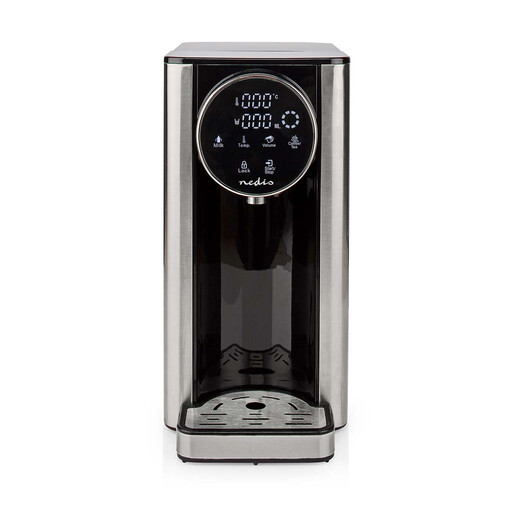
The Joybuy products below are hot water dispensers for making instant coffee when guests visit. In particular, compare the tank capacity, portion settings and controls with the cups you use and how you plan to use the appliance.
 No image available
The stated tank capacity and volume options could come in handy when you’re making several cups in a row.
The product description lists a removable 2,7 l tank, five volume options, seven temperature settings, a digital display and a child lock. It also states that it can dispense up to 2,7 l; check the product information for the amount dispensed per use you need.
 No image available
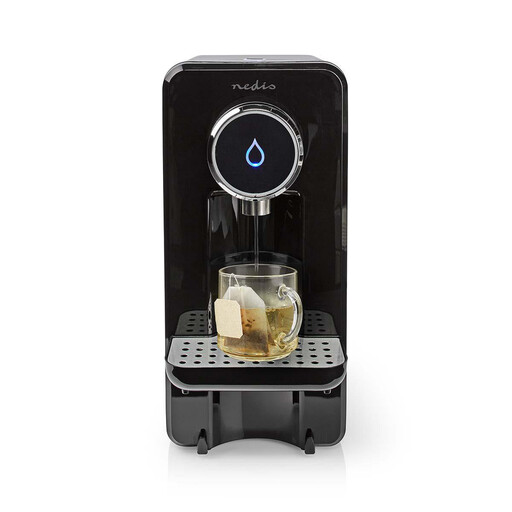
The 200ml portion is useful if you want to measure out a cup of instant coffee without dispensing a larger amount in one go.
The product description lists a 2,5 l tank, a 200 ml portion and a water-level indicator. It states that the maximum continuous dispensing amount is 500 ml per use. The spout is adjustable; boil-dry and overheat protection, as well as a descaling alert, are also listed.
 No image available
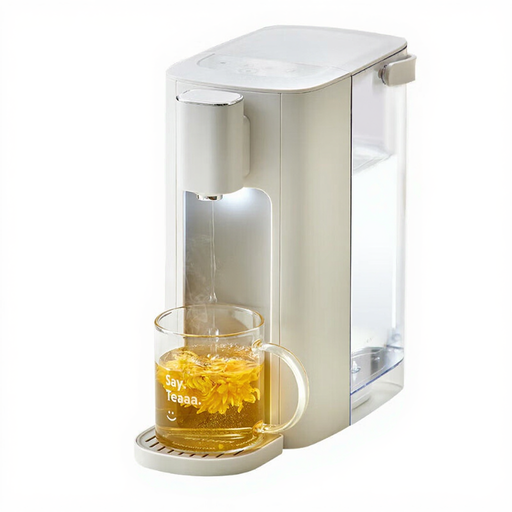
A 3 l tank and adjustable volumes are useful if you’re making cups for several guests.
The product description lists six temperature settings, including a boiling setting, and adjustable volumes such as 150, 250 and 500 ml. It also states that the tank is removable.
 No image available
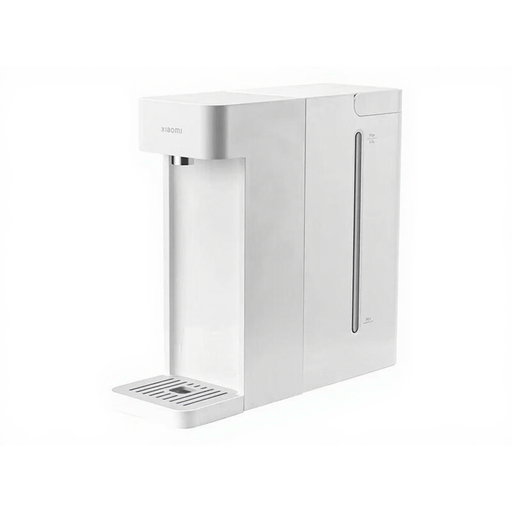
The listed 250, 500 and 750 ml portions give you options for different cup sizes.
The product description lists a 3 l tank and four temperature options, as well as a temperature setting adjustable in 1 °C increments.
 No image available
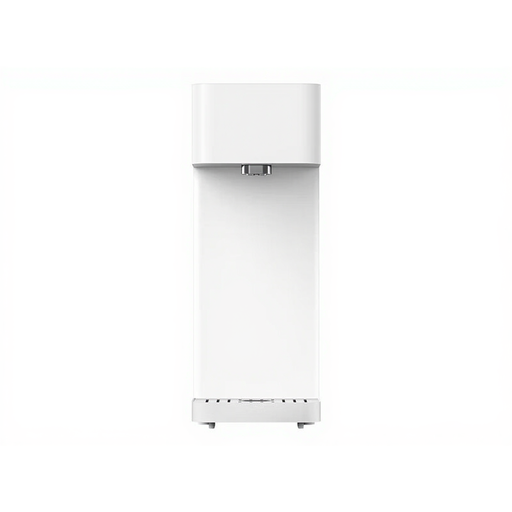
This model is worth considering if you want chilled water as well as hot water.
The product description lists hot and chilled water settings, a 3 l tank, preset volumes and control via the Xiaomi Home app.
Count the cups and compare the amount you want for each one with both the portion settings and the maximum amount dispensed per use. Nedis lists a 200 ml button setting and a maximum of 500 ml per use for the KAWD100FBK; a 2,5 l tank doesn’t mean you can dispense that amount in one go.
No. The Inventum HWD725B manual says to fill the appliance with water only. Put instant coffee in the cup, and follow the instructions on the coffee packaging too.
Follow the instructions for your model. For the HWD725B, Inventum specifies a firm, flat, heat-resistant surface, an earthed wall socket with the voltage stated on the rating plate, and a fully unwound power cord.
The Netherlands Food and Consumer Product Safety Authority (NVWA) states that CE marking is required for electrical products. The Low Voltage Directive described by the NVWA applies to electrical equipment with a rated AC voltage of 50 to 1.000 V; CE marking is not the same as a mandatory independent product assessment. Check the marking and product information for the model on offer.
Check which safety features the specific model has, and don’t treat a child lock as a substitute for supervision. Boil-dry protection won’t prevent someone from scalding themselves with dispensed hot water; place the appliance on a stable surface, out of reach.