
Vandaag of morgen in huis

Kwaliteit gegarandeerd

Welkomstaanbiedingen ontgrendelen: GRATIS bezorging | Tot 80% korting | Gratis 30 dagen JoyPlus-proefperiode
Download de app
A frying pan is useful for eggs, vegetables, meat, pancakes and quick stir-fries. However, not every pan is suitable for every hob or cooking method. You often only notice you have made the wrong choice while cooking: the pan does not heat evenly, the handle gets in the way or the non-stick coating is quickly damaged.
As a Joybuy Product Recommendation Officer, I focus mainly on verifiable features. Marketing terms mean little without practical specifications. Below, you can find what to look out for before buying a frying pan.
A pan may be described as suitable for gas, electric, ceramic and induction hobs. Always check whether it actually has an induction base or induction disc. An aluminium frying pan, for example, will not automatically work on induction. The 5five pans in this selection have a stainless-steel induction disc, which is a specific feature worth looking for.
For an oven-safe pan, also check the maximum temperature. A pan may be suitable for oven use while the handle or lid has a lower temperature limit.
A non-stick frying pan is useful for eggs, fish and dishes that require little oil. However, the coating still needs careful handling. Metal spatulas, wire wool, high temperatures and leaving an empty pan on full power can damage the coating.
A ceramic frying pan is a version with a ceramic coating. Check whether the product information explicitly states that it is PFAS-free. This is clearly stated for the Brabantia Onyx. By contrast, the 5five Forged Aluminum pan with lid is specifically described as not being PFAS-free. This distinction is more important than a general term such as “healthy” or “safe”.
The stated diameter is usually the outside measurement. The usable cooking surface is smaller because of the sloping or rounded sides. A 20 cm frying pan is well suited to one portion or an omelette. A 24 cm frying pan is practical for one or two people. For a family or several ingredients, a 28 cm frying pan offers more room.
A large pan on a small cooking zone may also heat less evenly. Therefore, check that the base of the pan matches the size of the cooking zone.
A stainless-steel frying pan is generally suitable for high temperatures and intensive searing. Without a non-stick coating, this material does require the right preheating technique and enough cooking fat. A multi-layer construction can distribute heat more evenly across the base.
According to the product description, the PURECOOK Tri-Ply 304 Stainless Steel Large Frying Pan has a construction made from stainless steel, aluminium and stainless steel. The aluminium core is designed to conduct heat, while the outer layers provide strength and compatibility with different hobs. The pan has a diameter of 28 cm, a glass lid and, according to the description, is dishwasher-safe.
An aluminium frying pan often heats up quickly and is relatively lightweight. With aluminium, pay particular attention to the base: induction requires a suitable metal disc. Forged aluminium may provide a sturdier body than very thin sheet material, but also consider the weight and base construction.
When checking a coated pan, look at:
“Dishwasher-safe frying pan” does not automatically mean that the coating will remain in the same condition for years. The product information for several pans states that hand washing can help extend their lifespan. A soft sponge and mild washing-up liquid are usually a safe choice.
A frying pan with a lid is useful for simmering, reducing sauces and cooking dishes where moisture needs to be retained. A deep shape helps prevent vegetables or sauce from spilling over the edge when stirring. For traditional frying, such as making pancakes, a low rim is more convenient.
A deep-fat fryer is different from a frying pan. A deep-fat fryer is designed for frying in a larger quantity of oil and often has a deeper basin. Do not use an ordinary frying pan as a substitute when you want to deep-fry safely for extended periods.
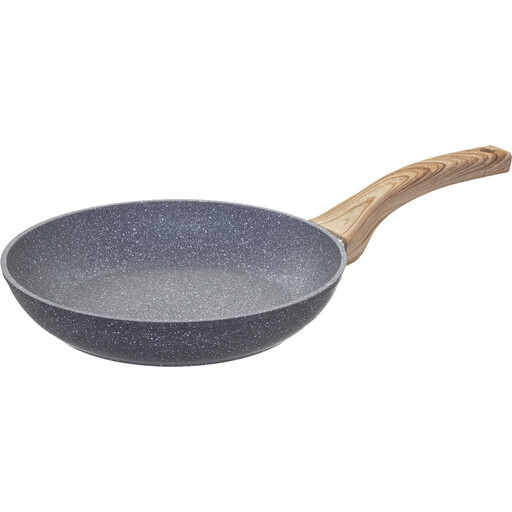
Why it suits this profile: The compact 20 cm size and 520-gram weight are ideal for a small kitchen, student accommodation or cooking for one.
The product information specifies an aluminium body, two non-stick layers and a stainless-steel induction disc. This means you do not have to rely solely on a general hob-compatibility claim.
20 cm diameter, suitable for gas, induction, ceramic and electric hobs; dishwasher-safe, although hand washing is recommended.
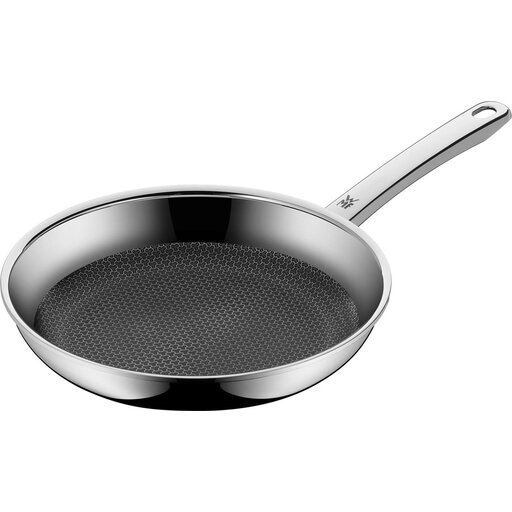
Why it suits this profile: This 24 cm pan combines stainless steel, an aluminium core and a honeycomb structure around the non-stick coating for everyday frying and searing.
The specifications explicitly state induction compatibility, a TransTherm base and maximum heat resistance of 260 °C. The pan is not dishwasher-safe.
24 cm diameter, suitable for all heat sources including induction; according to the product information, a five-year warranty is provided.

Why it suits this profile: The 28 cm cooking surface and glass lid are practical for families, larger portions, simmering and dishes with sauce.
The product description specifies a three-layer construction, compatibility with gas, induction, ceramic, electric and halogen hobs, plus an oven limit of 220 °C.
28 cm size with bracket lid; according to the product details, dishwasher-safe and suitable for use on multiple heat sources.
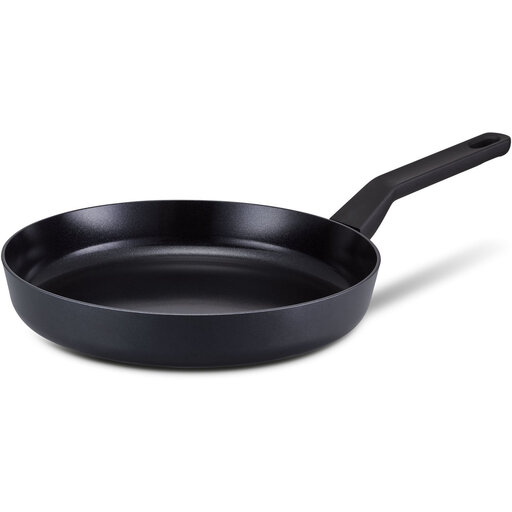
Why it suits this profile: This medium-sized pan is designed for everyday use and combines aluminium with a ceramic coating and a heat-resistant Bakelite handle.
According to the product information, the ceramic coating is PFAS-free and the pan is suitable for gas, induction, electric, ceramic and halogen hobs.
24 cm diameter, double-applied ceramic non-stick coating and dishwasher-safe design; hand washing is recommended for a longer service life.
We have put together a complete, up-to-date list of products that fully meet these strict selection criteria and the applicable European safety regulations.
Choose 20 cm for one person or small portions, 24 cm for everyday cooking for one or two people and 28 cm for families or larger quantities. Also check the diameter of the cooking zone and the internal dimensions of the pan.
Only if the pan has a suitable magnetic base or induction disc. Look for “induction suitable” in the product specifications. Aluminium alone is not enough.
Its lifespan depends on the material, use and care. A stainless-steel frying pan without a coating can remain usable for a long time with proper care. A non-stick coating is more susceptible to scratches and overheating. Use suitable utensils, allow a hot pan to cool before washing it and replace the pan when the coating visibly starts to come away or becomes damaged.
