
Vandaag of morgen in huis

Kwaliteit gegarandeerd

Welkomstaanbiedingen ontgrendelen: GRATIS bezorging | Tot 80% korting | Gratis 30 dagen JoyPlus-proefperiode
Download de app
Looking for a new frying pan? You're bombarded with claims: "Healthy," "durable," "professional." But what do these really mean for your everyday cooking? Many people invest in a new pan, only to find their eggs sticking again after just a few months, or that the pan wobbles on the cooktop.
Before you make a choice, it's wise to understand the most common pitfalls that lead to a poor purchase:
To avoid these pitfalls, focus on a few concrete features. These specifications provide a clearer picture of a pan's quality and performance.
The main reason to choose a PFAS-free non-stick pan is its coating. Most modern PFAS-free pans use ceramic frying pan technology. This is a hard layer based on natural materials that prevents food from sticking.
Look for the following terms:
If you cook on an induction cooktop, the base of the pan is essential. A frying pan for induction must have a flat, magnetic base to work efficiently. A thicker, multi-layered base typically ensures better and more even heat distribution. This prevents 'hot spots' (areas that get much hotter than the rest), allowing your food to cook uniformly.
Beyond the basics, extra features can enhance usability. An oven-safe frying pan offers more flexibility for recipes that start on the stove and finish in the oven. Pay attention to the handle material: stainless steel handles are often oven-safe, while Bakelite handles usually are not but have the advantage of staying cool on the cooktop.
Based on these objective criteria, we have selected a number of pans that suit different user profiles.
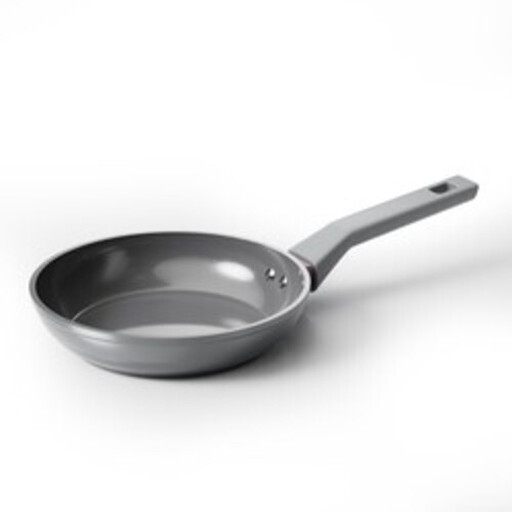
Why This Fits Their Persona: Perfect for quick, small meals like a fried egg or a single-person omelette. Its compact size and dishwasher-safe design make it a practical choice for those seeking convenience in a smaller kitchen or a one- or two-person household.
This pan features a clearly specified ceramic coating that is free of PFAS and PFOA. Unlike vague 'healthy' claims, here you know exactly what you're getting. The Bakelite handle stays cool, making daily use safe and simple.
Compact size (20 cm) ideal for small portions; dishwasher-safe for maximum convenience.
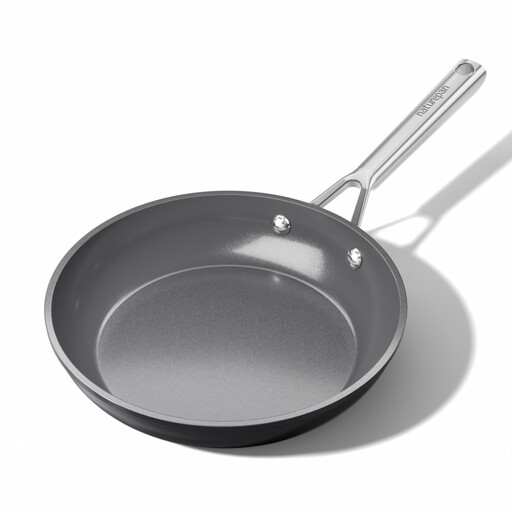
Why This Fits Their Persona: The 24 cm diameter is an all-rounder for preparing meals for 2-3 people. From a piece of fish to stir-fried vegetables, this pan is designed for daily, versatile use in any kitchen.
According to the manufacturer, the base is optimised for fast and even heat distribution on all heat sources, including induction. This prevents the frustration of pans that get hot in the centre while the edges remain cool.
Oven-safe up to 260°C for versatile recipes; the diamond and titanium-reinforced coating is designed by the manufacturer for a longer lifespan.
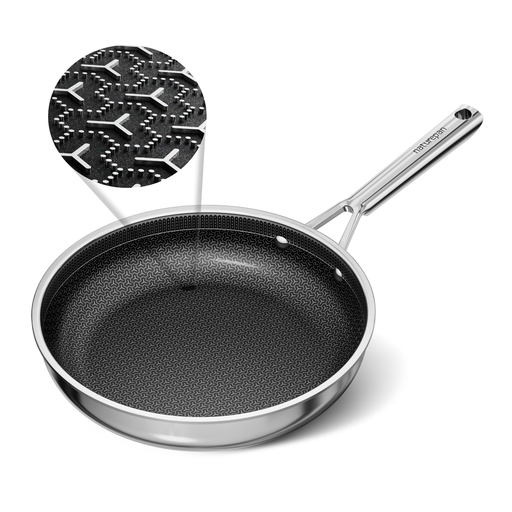
Why This Fits Their Persona: For those who love to experiment and want perfect searing results. The large 28 cm diameter and hybrid structure are ideal for searing meat, preparing larger family meals, or one-pan dishes that are finished in the oven.
This pan tackles the durability pitfall head-on. Its unique hexagon structure combines stainless steel ridges for searing with a ceramic non-stick coating. According to the manufacturer, this is designed to be more scratch-resistant than standard smooth coatings.
Hybrid surface for both searing and non-stick convenience; oven-safe to a high temperature of 260°C.
We have compiled a complete, up-to-date list of products that meet these selection criteria and current regulations.
To keep the non-stick coating in good condition for as long as possible, follow a few simple guidelines. It is recommended to hand-wash the pan with a soft sponge and a little washing-up liquid. Although many pans are dishwasher-safe, hand-washing can extend the life of the coating. Additionally, always use wooden, silicone, or plastic utensils and avoid using metal spatulas or forks in the pan. Do not heat the pan while empty on a high setting.
PFAS is a collective name for a large group of chemical substances that have raised health and environmental concerns. A pan guaranteed to be free of PFAS (and the well-known subgroup PFOA) prevents these substances from leaching into your food, especially during overheating or if the non-stick coating is damaged. In this context, choosing a healthy frying pan primarily means selecting a pan without these specific chemicals.
No, not automatically. Suitability for induction depends on the base of the pan, not the coating. A frying pan for induction must have a base that is magnetic. Always check the product specifications for the phrase "suitable for all heat sources, including induction." A thick, stable base generally provides the best and most energy-efficient performance on an induction cooktop.
