
Vandaag of morgen in huis

Kwaliteit gegarandeerd

Welkomstaanbiedingen ontgrendelen: GRATIS bezorging | Tot 80% korting | Gratis 30 dagen JoyPlus-proefperiode
Download de app
More and more people are becoming conscious of what goes into their kitchens and onto their plates. The conversation around PFAS in everyday products, like pans with traditional non-stick coatings, is raising questions. Perhaps your old pan is due for a replacement, or you're actively seeking a better alternative. This guide is designed to help you choose a PFAS-free frying pan that suits your cooking style, without all the marketing jargon.
Choosing a new pan can be overwhelming. By focusing on a few key features, you can make the decision much easier.
Most concerns about pans revolve around the non-stick coating. Traditional coatings often contain PFAS, a group of chemical substances. A popular alternative is the ceramic non-stick coating. This layer is made from a sand-based material and contains no PFAS, PFOA, or PTFE. This makes a ceramic frying pan a popular toxin-free pan for the health-conscious cook. These coatings perform well at medium-high temperatures and prevent food from sticking, often requiring less oil or butter.
Not every pan works on every cooktop. If you have an induction cooktop, it's crucial that the base of the pan is magnetic. Always check the specifications to ensure you're buying an induction-compatible frying pan. Most modern PFAS-free pans are designed for all heat sources, but it's always wise to double-check. Furthermore, a pan with a thick, flat base ensures even heat distribution, which improves cooking results.
A non-stick pan without PFAS requires proper care to extend its lifespan. Although some pans are labelled as dishwasher-safe, hand washing is almost always recommended. Use soft sponges and avoid abrasive pads or metal utensils that can damage the coating. By using and cleaning the pan correctly, you'll ensure its non-stick performance remains optimal.
Below is a selection of pans that stand out for their specifications and functionality.
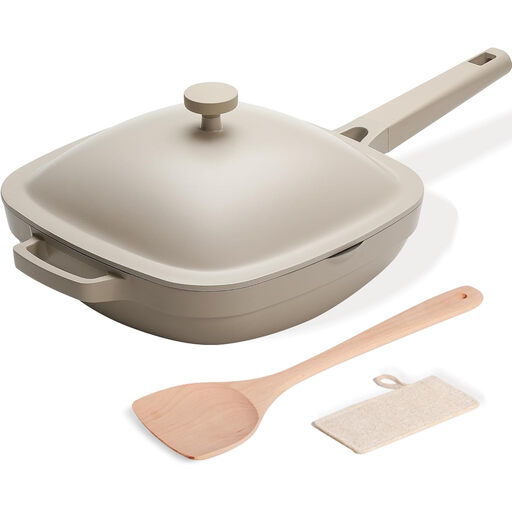
Why It Stands Out: According to the manufacturer, this pan's unique, deep design offers 45% more cooking surface than a standard round pan. This makes it ideal for one-pan meals, sautéing, and stewing.
Advantages
Who Is It For?: For home cooks who enjoy making one-pan meals and are looking for a versatile, deep pan that does more than just fry. Ideal for families or for meal prepping.
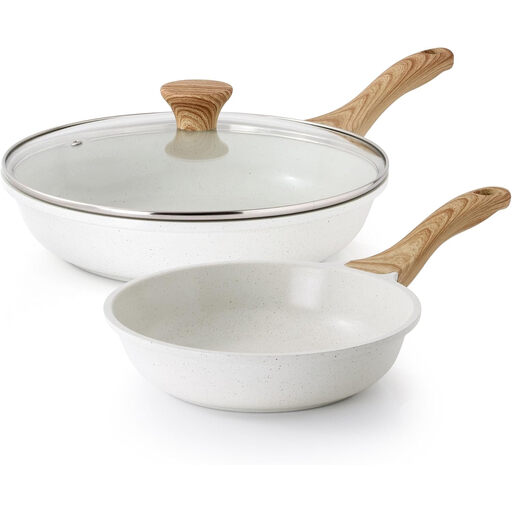
Why It Stands Out: This set provides a complete foundation for any kitchen. With a small pan for an egg and a large pan with a lid for more elaborate meals, you're all set straight away.
Advantages
Who Is It For?: Perfect for those setting up a new kitchen or looking to replace their old pan set with a PFAS-free alternative all at once. The two sizes offer flexibility for various dishes.
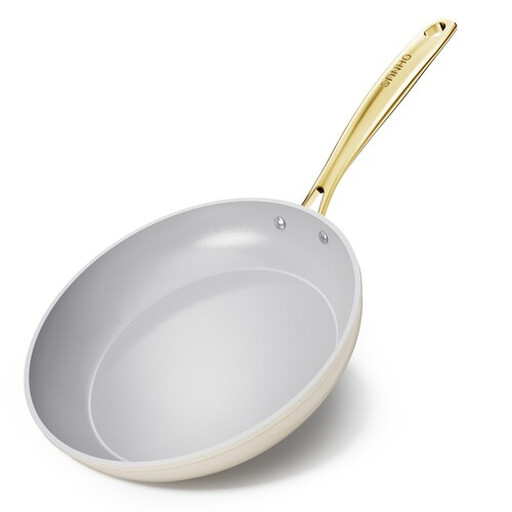
Why It Stands Out: The manufacturer, Sanho, claims a patented diamond-titanium coating that is more scratch-resistant and durable than conventional ceramic pans. Additionally, the pan is oven-safe up to a high temperature of 260°C.
Advantages
Who Is It For?: For the cooking enthusiast seeking a robust and versatile pan that can go directly from the cooktop to the oven. Its focus on durability makes it suitable for daily, intensive use.
The world of cookware is vast, and the right choice is a personal one. Are you looking for a specific colour or style? Then be sure to check out our selection of popular blue ceramic frying pan: https://www.joybuy.nl/explore/keramische-koekenpan/7DMCLsBE.
Teflon is a brand name for a non-stick coating based on PTFE, which is a type of PFAS. A ceramic frying pan uses a different technology. Its coating is made from a sol-gel layer derived from sand and contains no PFAS. This makes it a Teflon-free frying pan.
For many people, a healthy frying pan is one that doesn't release unwanted substances. The advantage of a PFAS-free pan is that you avoid the risks associated with overheating traditional non-stick coatings. It's a conscious choice to cook without this specific group of chemicals.
To maximise the lifespan of your ceramic non-stick coating, follow a few simple steps. Hand-wash the pan with a soft sponge and warm water. Avoid metal utensils; opt for wood, silicone, or plastic instead. Preferably, use the pan on low to medium-high heat and avoid sudden temperature changes, such as placing a hot pan under cold running water.
