
Vandaag of morgen in huis

Kwaliteit gegarandeerd

Welkomstaanbiedingen ontgrendelen: GRATIS bezorging | Tot 80% korting | Gratis 30 dagen JoyPlus-proefperiode
Download de app
A good set of food storage containers prevents spills in your bag, unnecessary food waste and a fridge full of loose dishes. Yet many food containers look much the same at first glance. Marketing terms such as “airtight”, “leakproof” or “suitable for every situation” do not always tell you how a container performs in everyday use.
Pay particular attention to the material, closure, size and permitted uses. That way, you can choose a storage container that suits your household, working day or meal-prep routine.
A closure may seal well around cold pasta or salad, but cause problems when you seal hot soup immediately. Steam creates pressure inside the container. With some models, you therefore need to open a valve before removing the lid.
Heating stainless steel food containers is not always possible either. Metal generally should not be placed in the microwave. Check whether the container is suitable only for storage or also for oven use. If oven use is listed, the lid will usually need to be removed.
A food storage container may be dishwasher safe, while the lid, silicone ring or insulated bag needs to be washed by hand. Heat and harsh cleaning products can damage seals over time.
Check the care instructions for each component. For example, a stainless steel container may be dishwasher safe, while the lid is better cleaned on the top rack or by hand.
A 1.5 or 2.2-litre container is useful for large portions, but less suitable for a small lunch or a full bicycle bag. Pay attention to the external dimensions, not just the capacity. A rectangular shape may stack more efficiently in the fridge, while a wide opening is more convenient for soup, rice dishes and cleaning.
Stainless steel food containers are sturdy, do not retain much odour and are suitable for everyday use. 304 stainless steel is a commonly used material for food containers. Some models use 316 or 316L stainless steel, which the product description states offers extra corrosion resistance. This is particularly relevant if you often store acidic or salty dishes.
Glass storage containers allow you to see the contents immediately and are useful for leftovers you want to reheat later. Borosilicate glass is designed to cope with temperature changes better than standard glass. This does not mean it is shatterproof: avoid sudden changes in temperature and handle the container with care.
Plastic containers are often lightweight and affordable. With this option, check that the material is suitable for food contact, freezer use and, if applicable, microwave use. Never use a container in the oven unless this is clearly stated in the product information.
For leakproof food containers, clips are not the only important feature. Check whether there is a silicone sealing ring, how securely the lid closes and whether the manufacturer describes the container as leak-resistant. An airtight closure helps when storing dry goods and leftovers, but always transport liquid contents upright if this is recommended in the product information.
A lid with four locking clips, as found on some glass storage containers, provides clear mechanical fastening. With a thermal food container, the key considerations are the screw thread and the seal around the opening.
For lunch and snacks, meal prep containers of around 600 ml to 1 litre are often practical. Larger sizes are better suited to family portions or storing several meals. A set with different sizes means you do not have to use an oversized container for every portion.
Also consider:
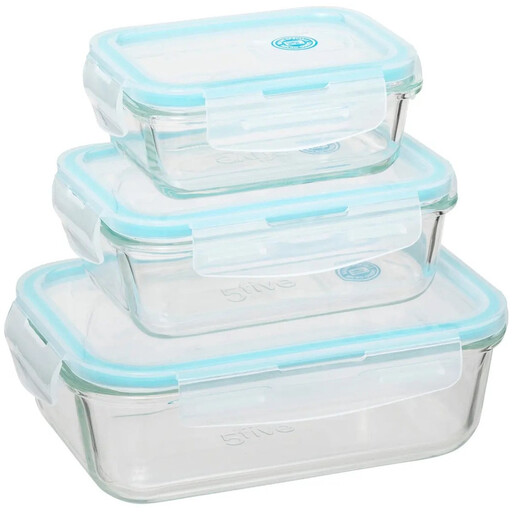
Why it suits this profile: A set of three glass containers is practical for anyone who wants to organise leftovers, lunch and meal prep without immediately investing in a large collection.
The transparent design makes the contents visible, so containers are less likely to be forgotten at the back of the fridge. Do check the exact closure and care instructions before buying.
Set of 3 rectangular glass food containers; suitable for lunch, leftovers and preparing portions.

Why it suits this profile: This four-piece set is designed for households that store several portions at once and want a sturdy stainless steel solution.
The product information states that the containers are suitable for freezer and dishwasher use. They are not intended for microwave use and must be kept away from naked flames.
Four 1,600 ml containers; 316L stainless steel; according to the product information, suitable for dishwasher and freezer use.

Why it suits this profile: A thermal food container with a wide opening is ideal for commuters, outdoor enthusiasts and employees who take soup or a hot meal with them.
The wide opening makes filling and cleaning easier. According to the product information, hand washing is recommended and the jar should not be turned upside down during transport.
1.5-litre capacity; 316 stainless steel; vacuum insulation; according to the product information, a stated temperature retention time of 4 to 6 hours.
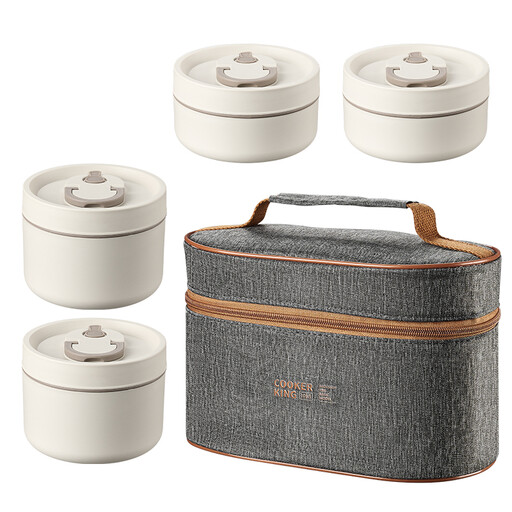
Why it suits this profile: The five-piece set is useful when you want to organise several portions, lunches and leftovers at once.
According to the product information, the stainless steel containers are dishwasher safe. When carrying hot soup, open the silicone valve first to release built-up steam pressure.
Five-piece set; 304 stainless steel containers; lid with silicone seal; insulated lunch bag included.
Use this quick checklist:
If you mainly take soup with you, a separate soup container may be more practical than a shallow food storage container. A wide opening, insulated wall and sturdy screw closure are better suited to this type of use.
We have compiled a complete, up-to-date list of products that fully meet these strict selection criteria and the applicable European safety regulations.
Choose a set with several sizes, straight sides and stackable shapes. For individual meals, containers of around 600 ml to 1 litre are often a practical choice. Also check that they are freezer-safe and that the lids close securely.
No, stainless steel food containers are generally not suitable for microwave use. Always check the specific product information and, if in doubt, use a microwave-safe glass storage container. For oven use, the lid will usually need to be removed as well.
Their lifespan depends on the material, use and care. Stainless steel can last for a long time if you avoid scratches and harsh scouring pads. With glass containers, it is particularly important to handle them carefully and avoid drops and sudden temperature changes. Silicone sealing rings and plastic lids may wear out sooner than the container itself.
