
Vandaag of morgen in huis

Kwaliteit gegarandeerd

Welkomstaanbiedingen ontgrendelen: GRATIS bezorging | Tot 80% korting | Gratis 30 dagen JoyPlus-proefperiode
Download de app
By a Joybuy Product Recommendation Officer, July 17, 2026
Does this sound familiar? You've cooked a delicious meal, but the leftovers end up in a clumsy container that leaks in your bag. Or you open the pantry to find an opened bag of pasta that's no longer fresh. A good set of food storage containers isn't a luxury, but a necessity for an organised kitchen and less food waste.
However, the market is flooded with options. Glass, stainless steel, plastic, with all sorts of lids and in every possible size. How do you choose the containers that truly fit your lifestyle? This guide is designed to help you. We'll skip the marketing jargon and focus on specifications and practical features, so you can make an informed choice.
Before we look at specific products, here are a few key considerations to guide your choice.
The material largely determines the user experience and durability.
Look beyond just the material. The following features are what make a food storage container truly practical:
Think about what you'll be using the containers for. Do you need small containers for snacks and sauces, or large ones for meal-sized salads and leftovers? It's often more cost-effective and practical to purchase a set with various sizes. This way, you'll have the right container for every situation, and your cabinets will instantly look more organised.
Based on the criteria above, we have selected products with clear and functional specifications.
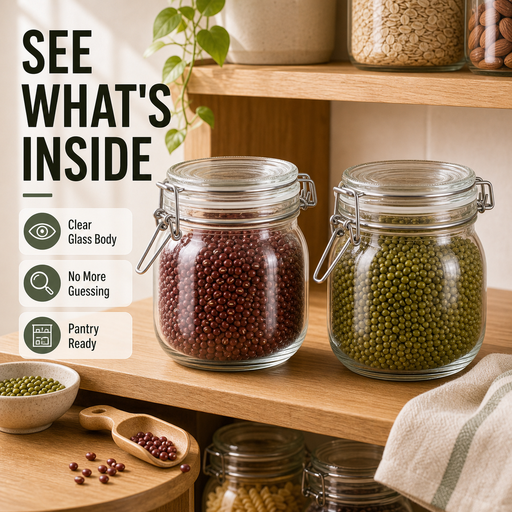
Why it stands out: This set is specifically designed for storing dry foods. The combination of borosilicate glass with a silicone sealing ring and stainless steel clips creates a robust and completely airtight seal. This makes them excellent glass pantry jars for the kitchen.
Pros:
Who is this a good choice for?: For anyone who wants to organise their pantry and keep dry goods like pasta, rice, nuts, or biscuits fresh for longer. The design is sleek and functional.
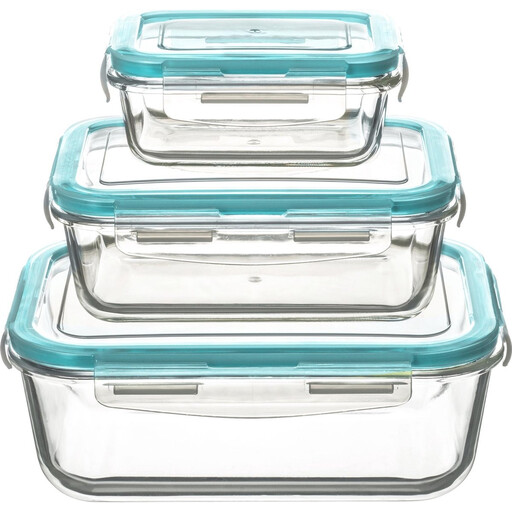
Why it stands out: This is a versatile set that is perfect for everyday use. The containers are designed to handle it all: from freezing to reheating and taking on the go. This makes them ideal meal prep containers or a glass lunch box.
Pros:
Who is this a good choice for?: For meal preppers, families who save leftovers, or anyone looking for a reliable and versatile set of glass food storage containers for daily use.
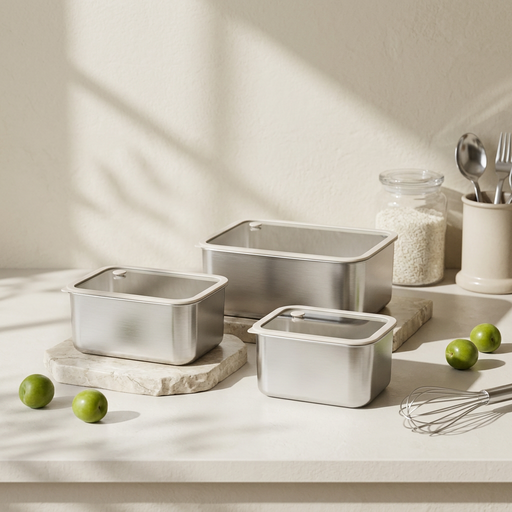
Why it stands out: This set combines the durability of stainless steel food containers with the convenience of a transparent lid. The containers are deep and stackable, making optimal use of space in your fridge or bag.
Pros:
Who is this a good choice for?: Ideal for people seeking a robust, lightweight solution for on-the-go, such as for picnics, work, or the gym. Also a great choice for those who want to avoid plastic but find glass too heavy or fragile.
The recommendations above are geared towards general use, from meal prep to pantry management. However, sometimes you need a solution for a very specific purpose.
For example, are you looking for a container perfectly designed for storing cheese? Then check out our range of specialised storage containers, such as a Cream Cheese Container.
Glass and plastic both have their advantages. Glass food storage containers are more hygienic because they don't absorb odours, flavours, or colours. They are also often oven-safe. Plastic is lighter, less expensive, and less fragile, which is convenient for on-the-go or for children. The choice depends on your priorities: hygiene and versatility (glass) versus weight and price (plastic).
This depends on the material. Borosilicate glass containers are generally resistant to thermal shock, but it's always safer to avoid extreme temperature changes. The manufacturer usually indicates if the product is microwave-safe. Important: always remove the lid or unlatch the clips before placing a container in the microwave to allow steam to escape. Stainless steel should never be put in the microwave.
A truly leak-proof container has two key features: a flexible silicone ring in the lid and a locking mechanism that holds the lid firmly in place, such as clips on four sides. The silicone ring creates the seal, while the clips provide constant pressure. Read the product description carefully to check if the manufacturer uses the term "leak-proof."
