
Vandaag of morgen in huis

Kwaliteit gegarandeerd

Welkomstaanbiedingen ontgrendelen: GRATIS bezorging | Tot 80% korting | Gratis 30 dagen JoyPlus-proefperiode
Download de app
Leftovers, meal prep, snacks and packed lunches are much easier to manage when your food storage containers suit your daily routine. A container that does not seal properly, is too big for your fridge or is not microwave-safe can quickly lead to wasted food and extra washing-up. Marketing terms such as “airtight” or “suitable for all temperatures” do not always tell the whole story.
In this buying guide, you’ll find out what to look for in food storage containers, food storage boxes and lunch boxes. You’ll also find recommendations for different households and uses.
A lid may feel secure, but that does not automatically mean the container is suitable for soup, sauce or dressing. Check whether the product description mentions a seal, clip closure or silicone rim. If you’re carrying it in a bag, a leakproof food container matters more than an attractive design alone.
Also consider how easy it is to open. A very tight-fitting lid can be tricky when you want a quick lunch at work or school.
Microwave-safe containers are not automatically suitable for a conventional oven. With many plastic storage containers, you need to remove the lid before heating. Some materials can also warp at high temperatures.
Always follow the specific usage instructions. For example, the Curver Fresh & Go product information states that the containers can be used in the freezer, microwave and dishwasher, but not in a conventional oven. The lid must be removed before microwaving.
A set with lots of containers sounds appealing, but different sizes are only useful if you can store them efficiently too. Check:
Containers that cannot be stacked can still be useful if you organise them side by side in the fridge. For example, the 5five Smart Fridge Storage Bins Set contains three transparent bins measuring 30.5 × 21 × 9 cm. The product description says they cannot be stacked, but can be placed side by side and have a handle.
Plastic storage containers are usually lightweight and practical for taking with you. Check whether the product is described as BPA-free and look at its temperature limits. According to the product information, the Curver Fresh & Go containers are BPA-free and suitable for temperatures from -40 °C to +100 °C.
Glass food storage containers are heavier, but can be handy for leftovers that you want to see and store straight away. Borosilicate glass is often chosen for its heat resistance, but always check whether the manufacturer explicitly states that the container is suitable for the microwave, freezer or oven. A glass container with a plastic lid may also have different usage restrictions from the glass itself.
Stainless steel food containers are suitable for lunch and taking food with you when you do not need a microwave. Metal must not go in the microwave. If a model has a silicone valve or seal, check the lid’s care instructions separately.
For snacks, fruit and sauces, 0.25 to 0.5 litres is often enough. For a full meal, 0.75 to 1.2 litres is a good guide. Larger storage containers are suitable for pasta, rice, flour or family-sized portions.
Rectangular shapes make efficient use of fridge shelves. Square lunch boxes are handy for small portions and ingredients. A set with several sizes is practical for meal prep, as long as it is clear which lids go with which containers.
Dishwasher-safe containers save time, but check whether this applies to the lids and silicone rims too. Some manufacturers recommend using the top rack or washing by hand to help the seal last longer. Allow containers to dry completely after washing before closing them to prevent trapped moisture and odours.
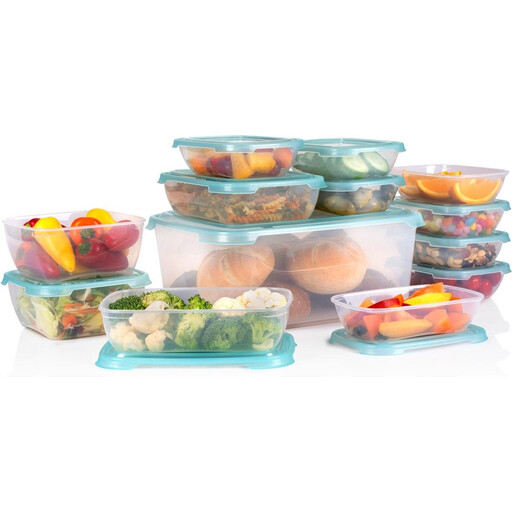
Why it suits this need: The set includes 13 containers in different sizes for leftovers, snacks, freezer storage and meal prep. One purchase can therefore cover a range of tasks around the home.
With a mix of 500 ml, 1,000 ml, 1,150 ml and 6.8 litres, you’re less likely to need a separate set for every portion size.
13 containers with lids; according to the product information, they are suitable for the dishwasher, microwave and freezer, but not the oven.

Why it suits this need: This set contains rectangular borosilicate glass containers with locking lids. It’s a good choice for households that want to keep several portions neatly organised.
The locking lids are designed to help prevent misplaced lids and unreliable seals. Before use, check the latest instructions for the microwave, freezer and dishwasher.
8-piece set; rectangular glass containers and blue locking lids, according to the product listing.
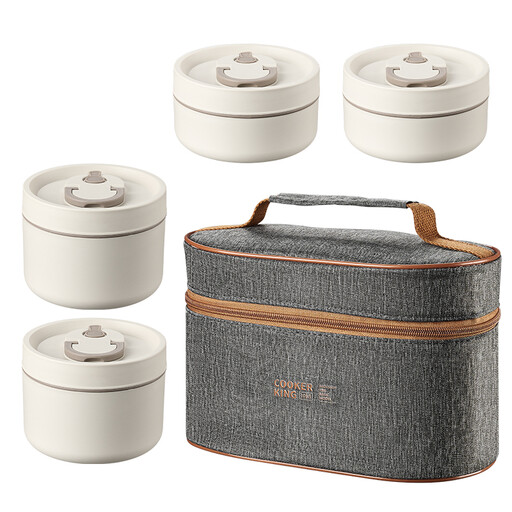
Why it suits this need: Stainless steel is practical for taking food to work, school or a picnic when you do not need to heat it in the microwave.
The product information mentions a silicone seal and pressure valve. For hot food, the instructions say to let the steam escape first.
304 stainless steel; according to the product description, the containers are dishwasher-safe. The bag and lids have separate care instructions.
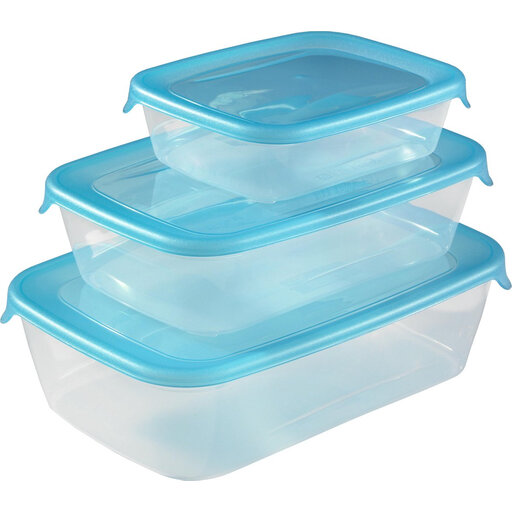
Why it suits this need: The three sizes—0.5, 1 and 2 litres—are useful for portions, lunches and larger leftovers. According to the product information, they can be stacked and nested.
Because the containers can be stacked and nested, the set makes better use of cupboard and fridge space than loose containers in assorted shapes.
BPA-free plastic; 0.5, 1 and 2 litres; according to the product description, suitable for the freezer, microwave and dishwasher.
We’ve put together a complete, up-to-date list of products that meet these strict selection criteria and current European safety regulations.
It depends on the product. Look for an explicit statement such as “freezer safe” or “suitable for the freezer”. Leave some space at the top of the container, as food can expand. Only seal the container properly once the contents have cooled, following the usage instructions.
Their lifespan depends on the material, how they are used and how they are cared for. Replace a container or lid if it has cracks, has warped, retains odours or no longer closes properly. Plastic can become scratched or discoloured over time; this does not necessarily mean the container is unusable, but any damage is worth checking.
Plastic is lightweight and practical for taking with you. Glass can be handy for storing and reheating food, but it is heavier and more fragile. Choose what works for your routine: lightweight meal prep containers are useful for taking food with you every day, while glass food storage containers are often better suited to use at home. In either case, check the instructions for the microwave, freezer, dishwasher and lids.
