
Families using several pans
You cook sauce, pasta and perhaps vegetables at the same time. The space available for your pans and the power available when using several zones together will affect your choice.


For lentil Bolognese cooked in several pans, choose a hob whose sauce-pan zone and available power both suit your electrical connection. Also check how steadily it simmers on a low setting. A built-in induction hob may be suitable if your pans and connection are compatible. A freestanding single-phase hob often needs no installation work, but may limit cooking on several high settings at once. Ceramic is an alternative if induction is not suitable; according to Milieu Centraal, its estimated annual electricity consumption is higher than that of induction.
You cook sauce, pasta and perhaps vegetables at the same time. The space available for your pans and the power available when using several zones together will affect your choice.
You want to let lentil Bolognese simmer gently. So look at how well the hob controls low heat, not just how quickly it heats up.
You want to cook electrically without immediate installation work or changes to your electrical connection. A suitable freestanding single-phase model may be the answer, but bear in mind that its power is shared between zones.
Choose this if: you often use a large saucepan alongside other pans, the cut-out dimensions are right and the required connection is already in place or can be installed.
Bear in mind: you’ll need induction-compatible pans and may need electrical work. A boost function doesn’t tell you how evenly a sauce will simmer.
Choose this if: you don’t want to cut out a space in your worktop and a model with a standard earthed plug suits your electrical connection and cooking habits.
Bear in mind: a low total power rating may limit cooking on several high settings at once. Also check which other appliances use the same circuit.
Choose this if: induction doesn’t suit your pans or circumstances, and the ceramic hob’s dimensions and connection are right.
Bear in mind: Milieu Centraal estimates that ceramic cooking uses more electricity per year than induction, and the hob itself gets hot.
First decide whether a built-in or freestanding model suits your kitchen and electrical connection. Then consider how well it simmers on low heat, how it performs when several zones are in use, and whether it works with the pans you already own.
| What to consider | What to look for | Who is this important for? |
|---|---|---|
| Cooking for the family at the same time | Compare your pan bases with the cooking zones and see how the hob performs when several zones are on at once. | If I’m making sauce, pasta and vegetables at the same time, I want my pans to fit and work together. Around 31% of consumers say cooking several things at once is their main consideration. |
| Gentle, steady simmering | Look for test results on low-heat simmering and check that your saucepan fits the relevant zone. | For a pan of lentil Bolognese that needs to cook gently, low-heat control is what matters most. Around 25% of consumers prioritise controlled simmering. |
| Electrical connection and installation | Check the connection type and installation instructions, the existing circuit, and, for a built-in model, the cut-out and overall dimensions. | If I want to keep my current connection, I want to know in advance whether the model can be connected to it and will fit the space. Around 25% of consumers prioritise keeping their existing connection. |
| Pans and switching over | For induction, check whether a magnet sticks to your pan base, and ask about the cost of any connection work if necessary. | If you want to keep using your existing pans, first check whether they’re suitable for induction. Around 19% of consumers prioritise compatible pans and the overall cost of switching. |
Consumentenbond assesses simmering separately, looking at how low and steady the temperature remains. A boost function doesn’t tell you this.
Look for information on low-heat performance on the zone that suits your saucepan.
On freestanding induction hobs with a lower total power rating, cooking on several high settings at once may be limited. Some models automatically share power between the zones in use.
Check the rated connection power, how power is shared and which other appliances are connected to the same circuit.
Your pans need to be suitable for induction. You may also need to upgrade your electrical connection.
Check your pans and electrical connection before choosing a hob. If necessary, factor in the possible cost of suitable pans or electrical work.
The KI170ZT is a 70 cm-wide built-in induction hob with four zones.
The freestanding VKI6010ZWA is an example of a model with four induction zones.
The ET631FFP8E is a ceramic hob with four zones.
The PIE63KBB5E is a built-in induction hob with four zones.
The OIO64A00FB is a built-in induction hob with adjustable power for single- or two-phase use.
These models are for anyone who uses several pans to prepare a family meal. The selection includes both ceramic hobs and induction models.
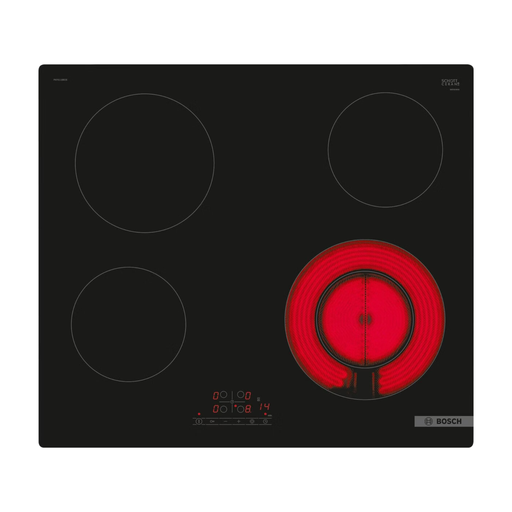 No image available
An option to consider if you use several pans to prepare a family meal and are looking for a ceramic hob.
The product name specifies a width of 60 cm. According to the product details, this model requires a two-phase connection and is supplied without a cable or plug.
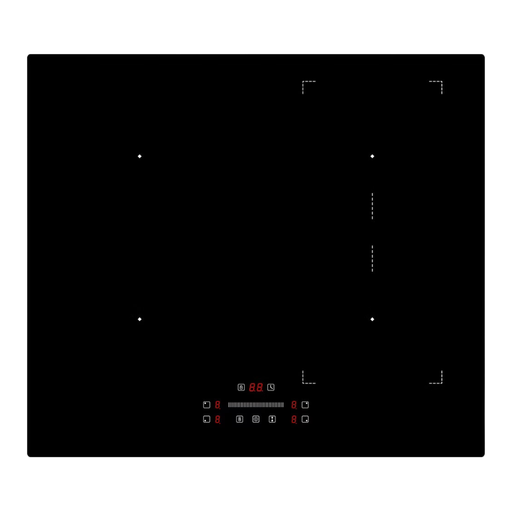 No image available
A built-in model to consider if you use several pans and induction suits your pans and electrical connection.
The product name specifies four cooking zones and a PowerBoost function. The model is supplied with a cable but no plug; the description recommends professional installation.
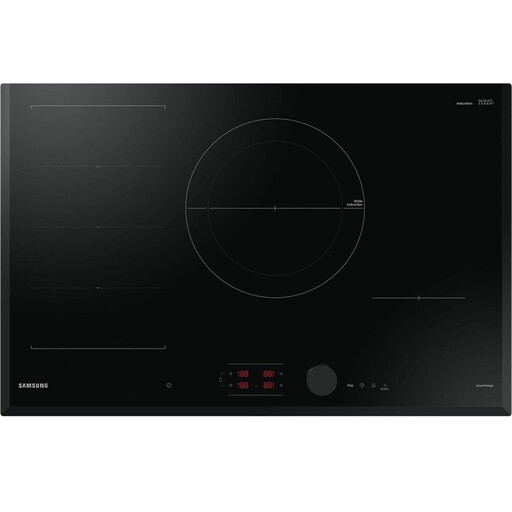 No image available
Its width and four zones may be useful if you cook with several pans at once for a family meal.
The product name specifies a width of 80 cm and four cooking zones. The description recommends installation by a qualified electrician.
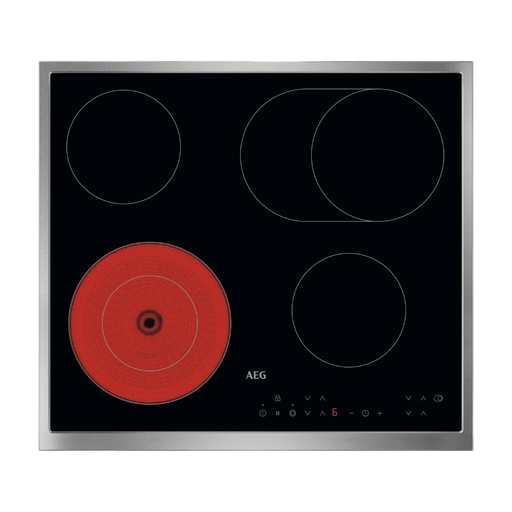 No image available
A ceramic option to consider if you use several pans while cooking and aren’t looking for an induction hob.
The product name specifies a width of 60 cm and four cooking zones. According to the product details, a two-phase connection is required, and the hob is supplied with a cable but no plug.
 No image available
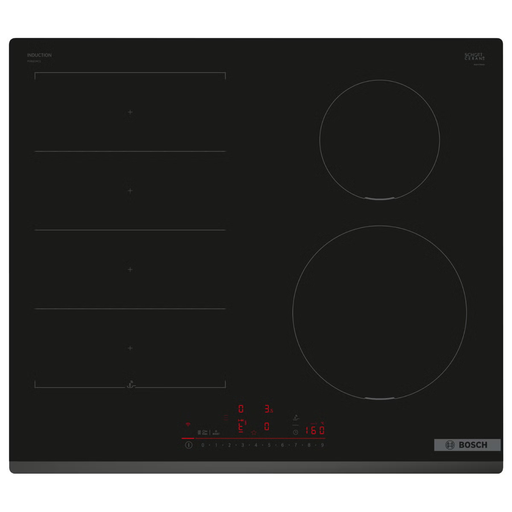
A built-in induction model to consider if you use several pans and the required connection and cut-out are suitable.
The product name specifies a width of 60 cm and four cooking zones.
Check whether a magnet sticks to the base of the pan. Also compare the base size with the cooking zone; if in doubt, follow the pan manufacturer’s guidance.
No, you can’t tell from the number of zones alone. A particular single-phase model may have a standard earthed plug, according to the manufacturer, while other models need a different connection. Compare the installation instructions with your electrical installation and get any necessary changes assessed.
Don’t leave the hob unattended. Brandweer Twente recommends staying near the hob while cooking; a kitchen timer can help remind you.
According to ACM ConsuWijzer, the seller must offer an appropriate solution if a product doesn’t perform as you could reasonably expect during normal use. The assessment depends on the circumstances; there is no single fixed statutory guarantee period for every hob.
Electrical equipment that falls within the scope of the relevant rules must comply with the applicable European product requirements. Dutch government information includes CE marking and an EU declaration of conformity; household appliances covered by the Low Voltage Directive have a range of 50–1000 V AC. CE marking is not a quality mark.