
Vandaag of morgen in huis

Kwaliteit gegarandeerd

Welkomstaanbiedingen ontgrendelen: GRATIS bezorging | Tot 80% korting | Gratis 30 dagen JoyPlus-proefperiode
Download de app
When you're in the market for an advanced 3D printer, you're quickly overwhelmed with specifications like print speed, build volume, and material support. Manufacturers make lofty promises, but in practice, these claims often lead to disappointment. Many users fall into the same traps: they buy a printer that looks impressive on paper but fails to deliver in practice. Let's discuss the most common missteps so you can make an informed choice.
Pitfall 1: The Myth of Maximum Print Speed A fast 3D printer with claims of 600 mm/s sounds fantastic, but this speed is often only achievable under ideal conditions and with a loss of quality. Without an extremely stable frame and advanced vibration compensation, high speeds result in 'ghosting' (shadow lines) and weak layers. The usable, consistent speed is often much lower.
Pitfall 2: Superficial Support for Engineering Materials Many printers claim to be compatible with materials like carbon fibre but lack the crucial components. An FDM printer for carbon fibre requires more than just a high nozzle temperature. Without active chamber heating and a wear-resistant, hardened steel nozzle, prints with materials like ABS, ASA, or PA-CF will warp or quickly wear out the nozzle.
Pitfall 3: A Cumbersome Multi-Colour System The promise of a multi-colour 3D printer is tempting, but the execution can be frustrating. Many systems are external add-ons that don't integrate seamlessly with the software, leading to significant filament waste during colour changes and complex calibration. A good system is fully integrated and designed to work efficiently.
To avoid these pitfalls, it's important to look beyond the marketing claims. Focus on the underlying specifications that determine actual performance.
A large-format 3D printer is only useful if its frame can guarantee precision across the entire surface. A large print bed (e.g., 350x350 mm) places high demands on stability. Printers with a die-cast aluminium frame and extra reinforcements offer significantly less vibration and torsion than models built from separate extrusions. This is essential for consistent quality at high speeds and on large models.
For printing with advanced filaments like PA-CF (carbon fibre nylon), three components are crucial:
A multi-colour 3D printer should be more than just a printer with a separate accessory. Look for systems like the Creality CFS (Colour Filament System) that are deeply integrated. This means the printer and the slicer software communicate directly with the system. Features like automatic filament detection (via RFID), moisture-free storage, and an efficient switching mechanism determine whether multi-colour printing is a practical tool or a source of frustration.
Based on these criteria, we have selected a few models suitable for different user profiles.
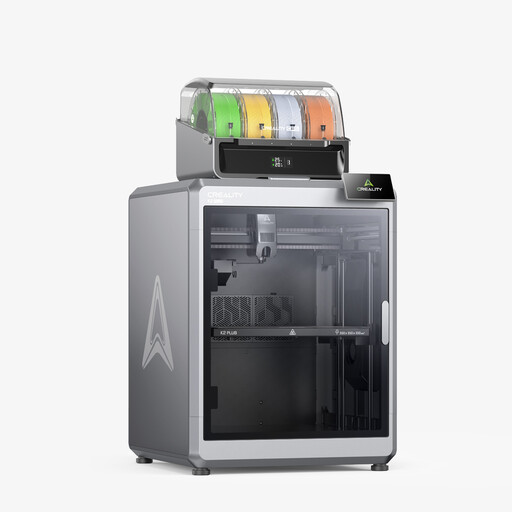
Why This Fits Their Persona: Ideal for engineers and small businesses that need to produce large, complex prototypes and functional parts in multiple colours or materials. Speed and volume are key to an efficient workflow here.
The large build volume is supported by a stable frame and active chamber heating (up to 60°C), which counteracts quality loss at high speeds and warping with engineering materials. The Creality CFS system is seamlessly integrated for reliable multi-colour printing.
Combines a large build volume (350x350x350 mm) with a high print speed (up to 600 mm/s), a 350°C nozzle, and an integrated 16-colour printing system. The dual 3D printer with AI camera monitors the process and detects errors.
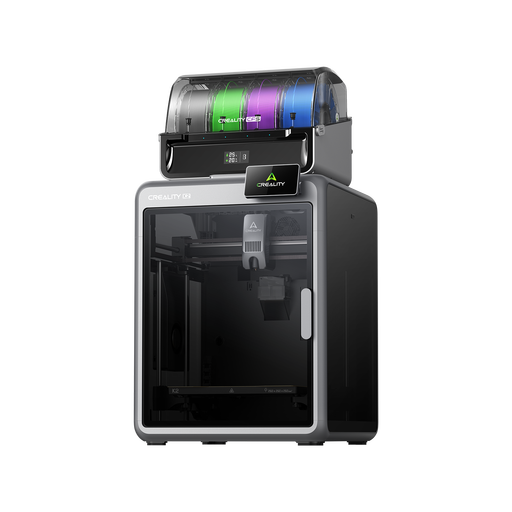
Why This Fits Their Persona: For the experienced maker who wants the benefits of multi-colour printing and high speed but doesn't need the huge build volume of the Plus model. Ease of use and quieter operation are important.
This model is pre-assembled and offers a 'plug-and-play' experience, removing the complexity of installation. The 'Silent Mode' and stable frame ensure reliable and quiet operation, even at higher speeds.
Offers the same core technology as the K2 Plus, including the Creality CFS multi-colour system and AI camera, but in a more compact size (260x260x260 mm). An excellent balance between advanced features and a desktop-friendly footprint.
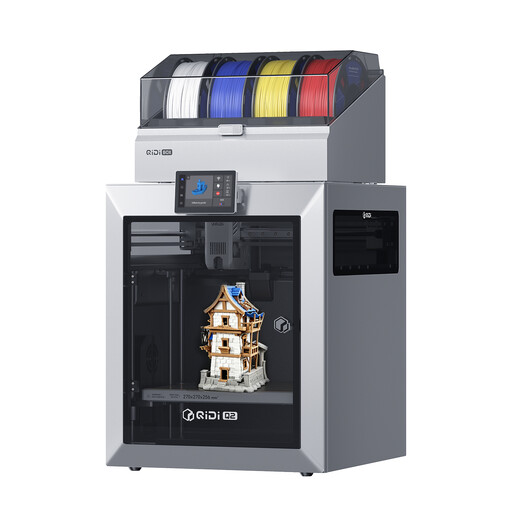
Why This Fits Their Persona: Designed for users who primarily focus on printing with demanding materials like ABS, ASA, and carbon composites. Reliability and minimising warping are their highest priorities.
Directly addresses the material compatibility pitfall with a PTC-heated chamber that maintains a constant temperature of 65°C. This is a significant advantage for printing large objects with materials prone to shrinkage.
The combination of an actively heated chamber and a 370°C all-metal hotend makes this printer highly suitable for a wide range of engineering filaments. The optional QIDI BOX adds multi-colour printing capabilities.
We have compiled a complete, up-to-date list of products that fully meet these strict selection criteria and local regulations.
For functional prototypes, it's a major advantage. You can colour-code parts, combine different materials in a single print (e.g., a rigid frame with flexible hinges), or use soluble support materials for complex geometries. For visual models, it saves you the time of painting and post-processing. So it depends on your application, but it certainly opens up new possibilities.
Modern printers like the K2 series are designed for minimal maintenance. Features like fully automatic calibration and 'anti-tilt' auto-levelling handle much of the work. Regular maintenance is usually limited to keeping the flexible build plate clean and periodically checking belt tension. Furthermore, the quick-swap nozzle makes replacing the print head a fast, tool-free operation.
Yes, the Creality K2 Plus Combo is prepared for this. The printer is equipped with a nozzle that can handle temperatures up to 350°C and is made of hardened steel, which prevents wear from abrasive filaments like PLA-CF or PA-CF. The enclosed and heated chamber (up to 60°C) provides the necessary temperature stability to prevent warping, allowing you to get started with these advanced materials right out of the box.
